
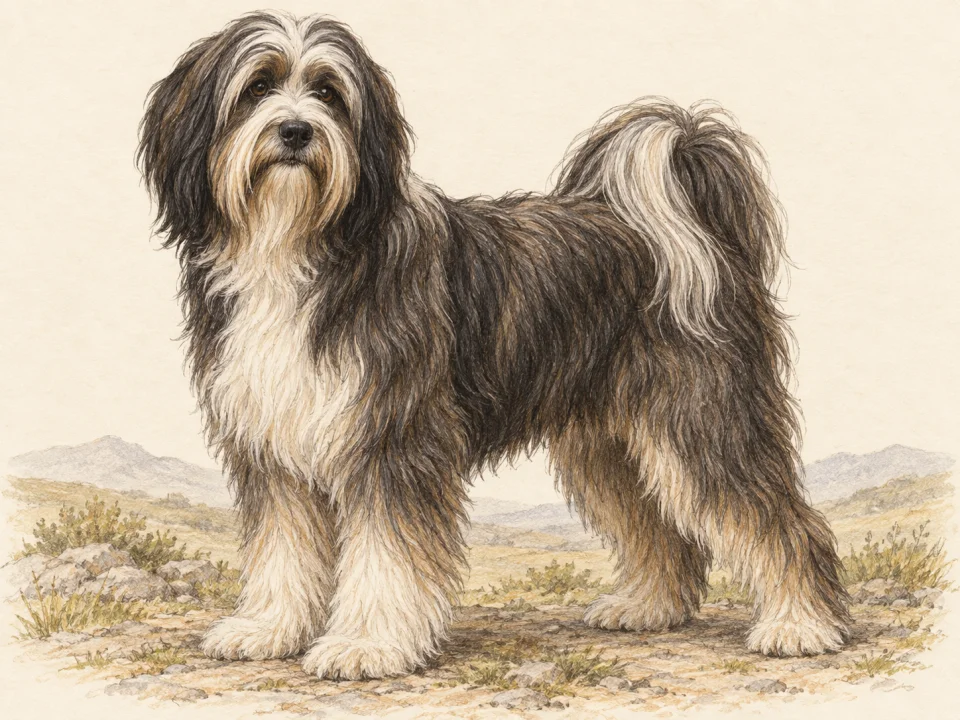
Plan for the adolescent coat, not just puppy fluff
The breed club warns that an easily managed puppy coat can become much more prone to matting as its texture changes. Some dogs need daily attention during this transition, and the duration varies. Arrange a grooming demonstration before tangles accumulate: learn to check through the coat rather than brushing only the surface. A shorter pet trim can reduce the workload, but does not eliminate mats or repeat grooming appointments. Reassess the schedule as the coat changes instead of blaming the puppy when an old routine stops working. The club also cautions that allergy responses vary between people. Spend time with adult dogs before deciding the breed suits an allergic household; a low-shedding reputation is not an allergy guarantee.[1]
Use cooperation to make everyday handling easier
AKC describes an independent learner that benefits from enjoyable training rather than harshness or repetitive drilling. Make coat care part of that learning: reward a brief, comfortable stand or a voluntary pause while you handle a foot, then release the dog before it becomes a struggle. Build duration gradually and ask for professional help when handling is painful or frightening. Away from grooming, choose walks and activities that fit the individual dog. The breed includes differing energy levels; discuss the actual adult dogs in the breeder’s household rather than expecting one exercise formula to fit every Tibetan Terrier. A brief scent game or a new practical skill can give the dog something to do with you without turning every outing into an endurance test.[2]
Read the health package as several different checks
The club’s updated statement recommends hip and patella assessment, BAER hearing certification and a CAER eye examination within twelve months before breeding. It also identifies DNA evidence for NCL, PLL, rcd4-PRA and PRA3, or documented clear-by-parentage status under OFA rules. These names refer to different conditions and methods, so a report for one does not stand in for the rest. Ask to see results or the matching OFA entries for both parents. Keep the examination date beside the dog’s identity, and ask the breeder to explain any inherited-clear status. Testing reduces particular breeding risks; it does not establish that a puppy will be free of every eye, joint, neurological or other health problem.[3]
Frequently asked questions
Will a puppy cut remove all Tibetan Terrier grooming work?
No. The breed club notes that even a shorter coat can mat and needs maintenance. Coat change during adolescence may require more attention than the easy puppy coat suggests.
Source [1]Should every Tibetan Terrier follow the same exercise plan?
No. AKC notes differences in activity preferences between individuals. Choose walks and shared tasks around the dog’s fitness and interests, and discuss the adult dogs in its family with the breeder.
Source [2]Is a PRA DNA result the same as the recommended eye examination?
No. The club lists a CAER examination separately from DNA evidence for specific inherited conditions. Review the examination date and each named genetic result.
Source [3]FAQ sources
Sources & methodology
Breed-level measurements and comparison scores provide context. They do not predict an individual dog's health, behaviour or suitability. Open the original publisher pages below to verify the facts and compare any later updates.
- Tibetan Terrier Club of America — Is a TT right for you? ↗Reference 1 · reviewed 2026-09-27
- American Kennel Club — Tibetan Terrier care and training ↗Reference 2 · reviewed 2026-09-27
- Tibetan Terrier Club of America — Health statement approved June 2022 ↗Reference 3 · reviewed 2026-09-27
Make it about your dog
Build a profile around your dog's age, experiences and everyday needs.
Meet your dog →Explore local care