
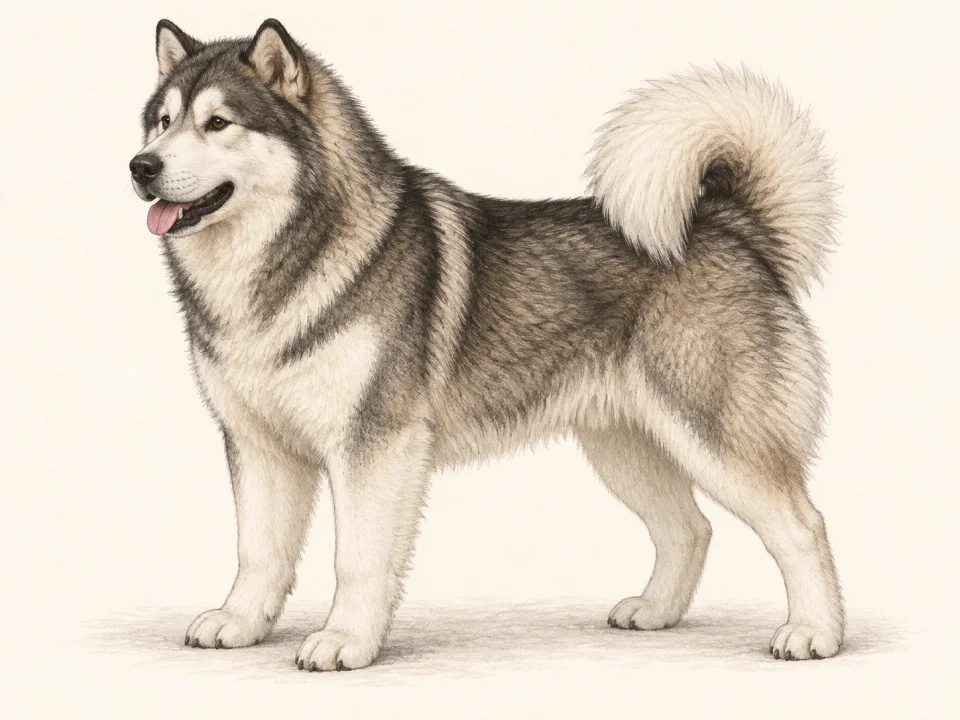
A freight worker is not simply a larger racing dog
The Malamute’s working background emphasizes strength and endurance for moving loads. AKC references males at 25 inches and 85 pounds, females at 23 inches and 75 pounds. These are planning references, not instructions to maximize a puppy’s size. Measure the actual dog for travel equipment and judge condition separately from the impression made by its thick coat.[1]
Inspect the bottom of the fence too
Digging can persist even when a dog has learned useful household manners. Walk the boundary and inspect loose ground, gate gaps and weak sections before allowing yard access. Secure the lower edge appropriately and supervise an unfamiliar dog’s use of the space. A tall fence answers only one part of the problem if the dog can excavate beneath it.[1]
Build activity around partnership
Plan daily movement and engagement appropriate to the dog’s age and health. A suitable hike or other shared activity can be rewarding, but heavy pulling is not an automatic assignment for every puppy or unconditioned adult. Ask for qualified guidance before starting load-bearing work. A yard offers space, while the owner still supplies structure, interaction and a routine that works on busy days.[1]
Teach strong-dog manners before they are urgently needed
Practise waiting at doors, walking without dragging the handler and settling around ordinary household activity. Use consistent rewards and gradual distractions rather than a contest of physical strength. Agree on the same cues between carers. A friendly dog can still overwhelm a child or visitor, so supervise greetings and provide a comfortable separate resting space when excitement is high.[1]
Budget daily time for the double coat
AKC recommends daily brushing and combing, with extra undercoat work during the twice-yearly shedding periods. Check through the coat instead of only smoothing its surface. A repeatable grooming route helps you notice tangles or a sore area early. Ask a knowledgeable groomer to demonstrate tools, and stop for advice when brushing appears painful rather than forcing the session to completion.[1]
Check identifiable health results
The lifespan reference is 10–14 years. Recommended breeding screening includes hips, eyes and Alaskan Malamute polyneuropathy DNA testing. Request actual dated results tied to the relevant dogs, and discuss family history beyond the listed panel. Clear screening addresses specific questions; it cannot certify lifelong health. Keep routine veterinary care and an individual exercise plan separate from assumptions based on a robust appearance.[1]
Frequently asked questions
How large is an Alaskan Malamute?
AKC references males at 25 inches and 85 pounds, and females at 23 inches and 75 pounds. These are breed reference figures rather than targets to reach through extra feeding.
Source [1]Will obedience training stop a Malamute from digging?
It may help establish alternatives, but digging can remain an instinctive activity. Inspect and secure the lower fence boundary as well as teaching useful behaviors.
Source [1]How often does a Malamute need brushing?
AKC recommends daily brushing and combing, with additional undercoat care during seasonal shedding. The dense coat needs attention near the skin, not only on the surface.
Source [1]Which DNA test should I ask a Malamute breeder about?
Ask about Alaskan Malamute polyneuropathy testing, alongside hip and eye evaluations. Request identifiable results and professional interpretation where needed.
Source [1]FAQ sources
Sources & methodology
Breed-level measurements and comparison scores provide context. They do not predict an individual dog's health, behaviour or suitability. Open the original publisher pages below to verify the facts and compare any later updates.
- American Kennel Club — Alaskan Malamute breed and care guidance ↗Reference 1 · reviewed 2026-09-27
Make it about your dog
Build a profile around your dog's age, experiences and everyday needs.
Meet your dog →Explore local care