
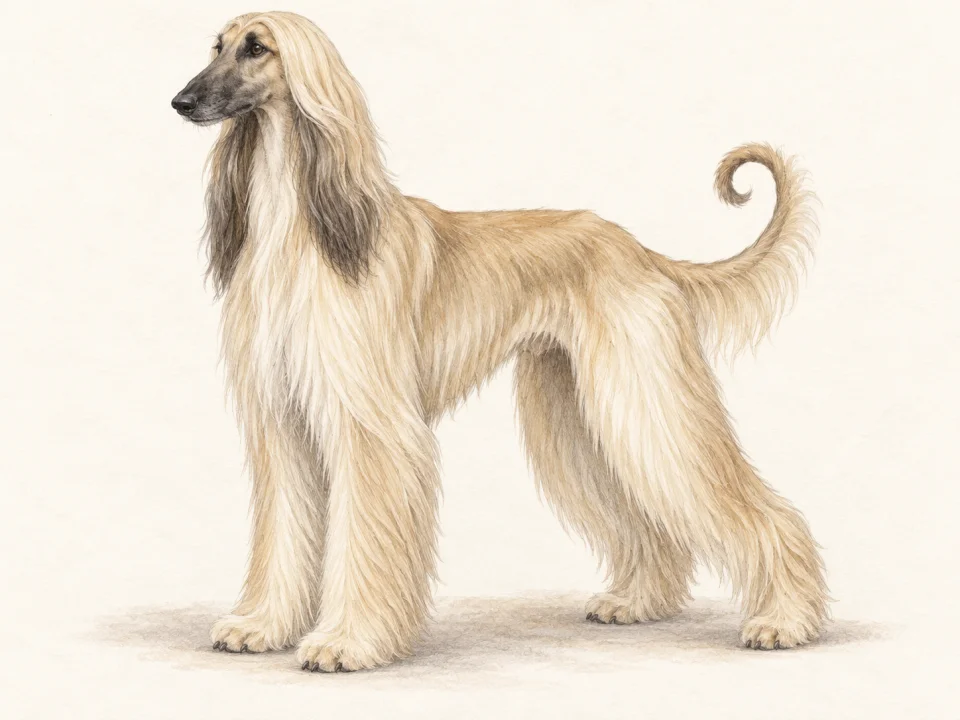
Look beyond the puppy coat
AKC describes a major change from the short puppy coat to a long adult coat requiring considerable maintenance. Meet an adult dog and ask the owner to demonstrate an ordinary grooming session. Price the supplies, bathing arrangements and professional help before committing. A puppy visit alone cannot show whether you can maintain the coat during a busy week or an unexpected absence.[1]
Make a realistic coat-care calendar
Write down where brushing and drying will happen, who can help and what you will do if a mat is found. Ask a qualified groomer which tasks are appropriate for you to perform. Leave enough time for breaks and avoid turning a missed appointment into a rushed session. Keep handling preferences with the grooming notes so the next carer can follow the same approach.[1]
Find the secure exercise space first
The breed’s sighthound pursuit instinct makes unsecured off-leash exercise inappropriate, according to AKC. Check the proposed exercise area before assuming it is suitable: access arrangements, gates, boundaries and other users all matter. Record how the dog will enter and leave. If the space is not available on a particular day, know which alternative routine you can manage with the individual dog.[1]
Agree on what recall can and cannot do
Treat coming when called as a skill to practice, not permission to disregard the setting. Ask the current handler where the dog has practiced successfully and what still interrupts its attention. Share that information with anyone who walks it. A carer should not discover an unfamiliar situation by testing the dog off leash; arrange the environment before increasing the challenge.[1]
Introduce the veterinary team early
AKC highlights the value of veterinary familiarity with sighthounds. Share the dog’s records before a planned procedure and let the clinician determine the appropriate care. Bring a list of the products and medicines already being used. This is an information handover, not a request to select an anesthetic or treatment from a breed article. Ask whom to contact outside regular hours.[1]
Plan an adult-dog transition patiently
Ask the previous carer for the dog’s familiar rest area, toileting routine and preferred handling sequence. Preserve the workable parts initially, then note the changes you need to make. Assign one person to maintain the shared record. A consistent handover makes it easier to identify which new experience needs support instead of interpreting every hesitation through the breed’s reputation for independence.[1]
Frequently asked questions
Does an Afghan Hound puppy need the same grooming as an adult?
No. The short puppy coat changes substantially. Arrange advice about adult-coat upkeep before the transition, rather than using puppy grooming time as your long-term estimate.
Source [1]Can an Afghan Hound exercise off leash?
Use a securely enclosed space. AKC cautions that pursuit instinct remains relevant even with training; an unsecured area is not an appropriate recall test.
Source [1]Is the long coat only decorative?
No. AKC connects the coat with protection in the breed’s original environment. In a household it also creates a substantial maintenance responsibility.
Source [1]What should I ask before taking an adult Afghan Hound home?
Ask for its established routine and handling preferences, plus a demonstration of coat care. Build the transition around documented experience with that dog.
Source [1]FAQ sources
Sources & methodology
Breed-level measurements and comparison scores provide context. They do not predict an individual dog's health, behaviour or suitability. Open the original publisher pages below to verify the facts and compare any later updates.
- American Kennel Club — Afghan Hound breed and care guidance ↗Reference 1 · reviewed 2026-09-26
Make it about your dog
Build a profile around your dog's age, experiences and everyday needs.
Meet your dog →Explore local care