
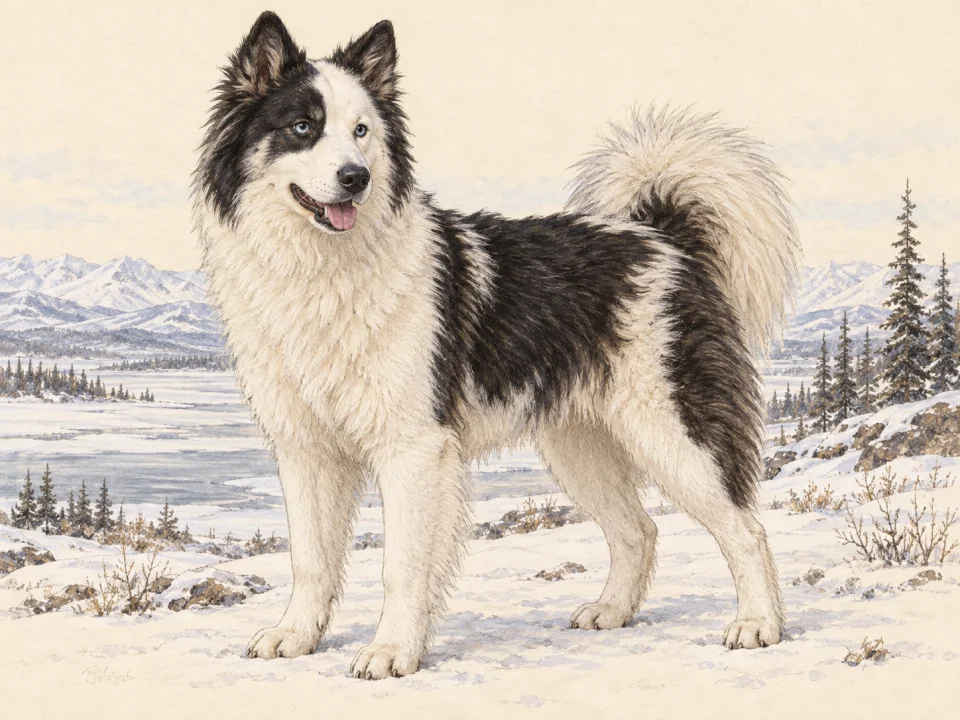
A sled-dog background is a starting point, not a training certificate
The FCI describes a sociable, energetic dog used for sledding and hunting, with a substantial coat adapted to Arctic work. Those origins explain the appeal of an active partnership, but they do not establish that a household dog is ready to pull equipment or join an unfamiliar team. If a pulling sport interests you, obtain appropriate instruction and introduce equipment and skills gradually. For ordinary walks, practice walking without pulling as its own task. Meet potential canine companions under supervision rather than assuming that a team-working history guarantees compatibility. Likewise, choose secure boundaries around smaller animals; a friendly social manner is not evidence that hunting interest has disappeared.[1]
Make the seasonal coat change part of the household plan
AKC recommends regular brushing and more frequent attention during heavy shedding. Set aside time to work through the undercoat with suitable tools, rather than brushing only the outer surface. Introduce handling in manageable sessions and ask a groomer for help if the coat is packed or the dog is uncomfortable. Check feet for trapped debris after outings. A thick coat does not replace companionship, and a yard does not replace exercise with you. AKC also describes a preference for reward-based teaching over corrective methods. Short sessions that build cooperation with grooming and daily handling are useful alongside outdoor activity, rather than trying to solve every difficulty by adding more running.[2]
Ask what a hearing result actually establishes
The national breed club’s document “Tests for diseases and advances in genetics” discusses BAER testing when hearing is in doubt. It says mandatory testing was still being investigated when that text was written; the document alone does not establish today’s requirements. Before collecting a puppy, ask which current club rules apply and request any actual hearing report with the dog’s identity and examination date. Keep it separate from joint examinations and genetic panels, since these answer different questions. If a hearing report is unavailable, ask your veterinarian what assessment is appropriate rather than treating an informal response to sound as complete health clearance. The breed’s working history and reputation for hardiness cannot establish an individual puppy’s health.[3]
Frequently asked questions
Does sled-dog ancestry mean my Yakutian Laika can immediately pull a bike?
No. Working ancestry is not evidence of individual fitness or training. Introduce pulling sports with suitable instruction and equipment rather than attaching the dog and expecting it to know the task.
Source [1]Will an occasional surface brushing manage the coat?
Heavy seasonal shedding needs more attention than a quick pass over the topcoat. AKC recommends regular brushing, increasing frequency during heavy shedding; seek help with packed or uncomfortable areas.
Source [2]Does the club genetics document prove BAER testing is mandatory today?
No. The document describes mandatory testing as under investigation at the time of writing. Ask for the current applicable requirements and the individual dog’s actual hearing results; this document alone cannot confirm either.
Source [3]FAQ sources
- FCI — Yakutian Laika standard No. 365 ↗FAQ reference 1
- American Kennel Club — Yakutian Laika care ↗FAQ reference 2
- National Breed Club Yakutian Laika — Tests for diseases and advances in genetics ↗FAQ reference 3
Sources & methodology
Breed-level measurements and comparison scores provide context. They do not predict an individual dog's health, behaviour or suitability. Open the original publisher pages below to verify the facts and compare any later updates.
- FCI — Yakutian Laika standard No. 365 ↗Reference 1 · reviewed 2026-09-27
- American Kennel Club — Yakutian Laika care ↗Reference 2 · reviewed 2026-09-27
- National Breed Club Yakutian Laika — Tests for diseases and advances in genetics ↗Reference 3 · reviewed 2026-09-27
Make it about your dog
Build a profile around your dog's age, experiences and everyday needs.
Meet your dog →Explore local care