
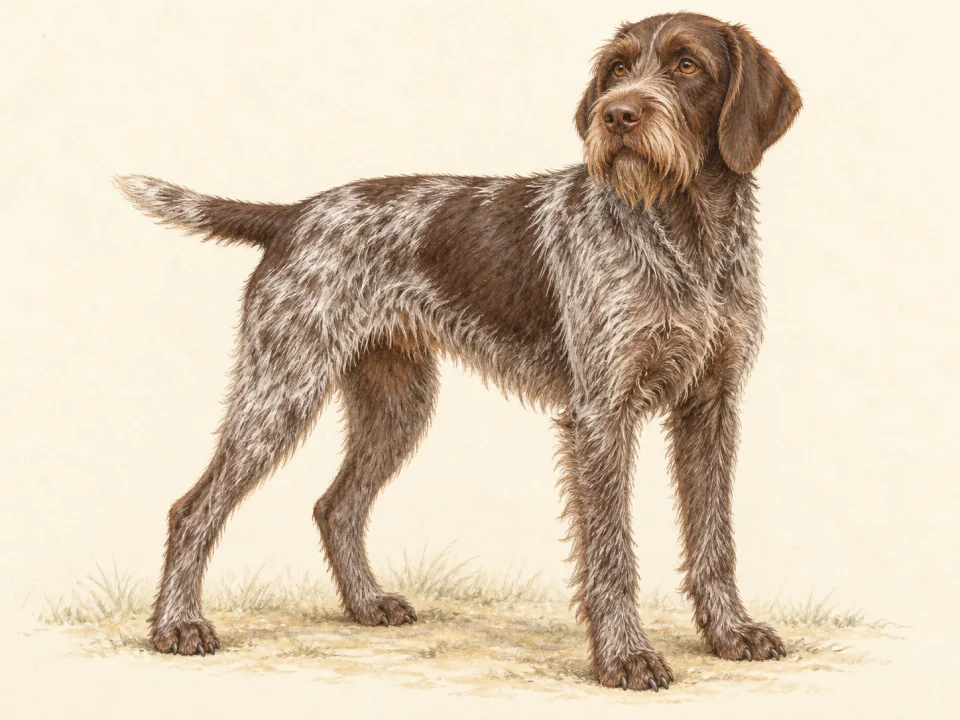
Low shedding is only one part of coat care
The Griffon’s harsh outer coat is not a reason to put away the comb. Weekly brushing and combing help prevent tangles, and some coats need hand-stripping to maintain their texture. Ask a groomer familiar with the breed to demonstrate the appropriate technique. Do not assume that low shedding guarantees suitability for a person with allergies.[1]
Check the coat after outdoor activity
A useful post-walk sequence is beard, ears, feet and the remaining coat. Look for material caught in the furnishings and separate tangles gently rather than pulling them out. Dry and inspect areas that stayed wet. If an ear is painful, smells unusual or has discharge, seek veterinary advice instead of starting an improvised ear-plucking or cleaning treatment.[1]
Offer work for both nose and body
This is a sporting dog, so an exercise plan should include purposeful activity as well as movement. Try a simple find-the-toy game, reward-based retrieving or another suitable task alongside walks. Increase challenge gradually, with breaks and an opportunity to settle. A busy dog still needs a routine it can sustain when the weather or the owner’s schedule changes.[1]
Put companionship into the timetable
The breed is strongly people-oriented and is not well served by treating it as a dog that lives alone in a kennel between outings. Before choosing a puppy, account for workdays as well as weekends. Practise short comfortable separations gradually and arrange care when needed. Outdoor enthusiasm does not remove the need for social contact and indoor rest.[1]
Allow for the difference between male and female size
AKC references males at 22–24 inches and 50–70 pounds, females at 20–22 inches and 35–50 pounds. Measure the individual for harnesses and travel equipment rather than ordering from a breed label alone. Keep body condition separate from size comparisons; the heaviest dog is not necessarily the fittest or the best example for your household.[1]
Check records and realistic longevity expectations
The AKC lifespan range is 12–15 years, and recommended screening includes hips, elbows and eyes. Ask a breeder to show dated results identifying the dogs tested. For an adopted adult, gather the available history and arrange an individual veterinary assessment. Breed-level information helps prepare questions, but it cannot establish the health or future lifespan of a particular dog.[1]
Frequently asked questions
Do Wirehaired Pointing Griffons shed?
They are relatively low-shedding dogs, but the coat still needs weekly brushing and combing and may need hand-stripping. Low shedding does not mean no coat maintenance.
Source [1]Can a Wirehaired Pointing Griffon live mainly in an outdoor kennel?
The breed needs close companionship as well as exercise. Plan daily involvement with the household and comfortable rest, rather than isolation between outdoor outings.
Source [1]How large is a Wirehaired Pointing Griffon?
AKC lists males at 22–24 inches and 50–70 pounds, and females at 20–22 inches and 35–50 pounds. Individual measurements should guide equipment choices.
Source [1]What health records should I request?
Request hip, elbow and eye screening results with the tested dog’s identity and date. These records address particular risks; they do not guarantee lifelong health.
Source [1]FAQ sources
Sources & methodology
Breed-level measurements and comparison scores provide context. They do not predict an individual dog's health, behaviour or suitability. Open the original publisher pages below to verify the facts and compare any later updates.
- American Kennel Club — Wirehaired Pointing Griffon breed and care guidance ↗Reference 1 · reviewed 2026-09-27
Make it about your dog
Build a profile around your dog's age, experiences and everyday needs.
Meet your dog →Explore local care