
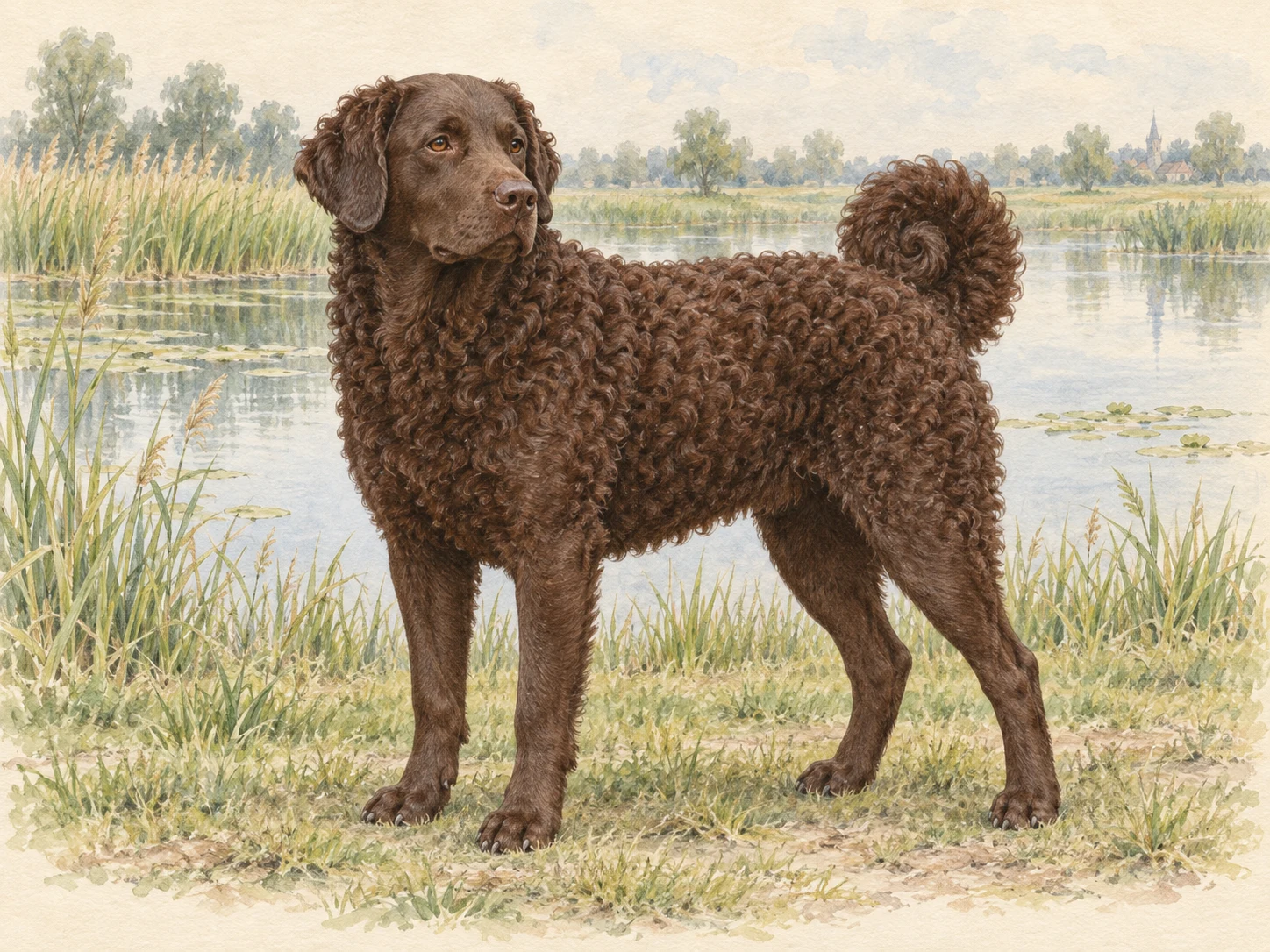
Plan introductions around a watchful family dog
The FCI standard combines affection for family with independence, watchfulness and interest in catching vermin. It allows initial reserve toward strangers but does not describe fear as desirable. Before a visitor arrives, arrange a place where the dog can observe without being crowded and decide who will manage the door. Let the introduction proceed calmly instead of asking a stranger to immediately touch the dog. Around small animals, use physical separation rather than assuming family affection removes hunting interest. These are practical precautions for the traits described in the standard, not predictions that every Wetterhoun behaves identically.[1]
Teach a useful task without turning it into a contest
AKC describes a strong-willed but sensitive dog and advises against harsh training. Choose one practical skill, such as coming away from the gate, and practice first when there is little competing for attention. Reward the response and keep the exercise understandable. If the dog is absorbed in another activity, reduce the distraction rather than repeating louder commands. Daily outings should provide movement and things to investigate as well as time with you. The breed’s oily, water-resistant coat usually needs little grooming, and frequent routine bathing is unnecessary. That does not mean dirt, discomfort or skin changes should be ignored. Ask for individual care advice when ordinary cleaning does not resolve a problem.[2]
Know where to check the coat and which records to request
Check behind the ears and the backs of the hind legs for tangles, as LICG advises; pay particular attention to loose undercoat during shedding. Its health guidance also distinguishes SCID DNA testing from orthopedic examinations. Ask for the actual parental SCID and hip results and check which club’s current elbow-testing rules apply. Keep dated copies for your veterinarian rather than accepting “health tested” as a complete answer. A result for one inherited condition cannot clear a dog of unrelated diseases.[3]
Read lifespan and weight figures as references, not promises
Our quick facts use AKC’s 13-year lifespan and 50–75-pound weight reference. LICG instead gives an average lifespan of about 10–11 years and approximate weights of 38 kg for males and 32 kg for females. The 2023 FCI standard gives different approximate weights again: 34 kg for males and 28 kg for females. These figures should not be combined into one precise prediction or feeding goal. For equipment, weigh the actual dog. For care planning, use its veterinary history and allow for changing needs with age.[3]
Frequently asked questions
Does a Wetterhoun’s reserve mean visitors should push it to socialize?
No. The standard distinguishes initial reserve from fear. Allow space and calm introductions; do not force physical contact to prove that the dog is friendly.
Source [1]Does the curly coat need frequent baths?
AKC says frequent bathing is generally unnecessary because the coat is naturally oily and water-resistant. Clean when needed and seek advice about persistent skin or coat problems.
Source [2]What should I ask about SCID testing?
Ask for the parents’ identifiable SCID results and which current breeding-club requirements were followed. Keep this DNA evidence separate from hip and any elbow evaluations.
Source [3]Is 13 years a guaranteed Wetterhoun lifespan?
No. AKC lists 13 years, while LICG gives an average of about 10–11. Neither predicts an individual dog’s lifespan; plan care around its own health and changing needs.
Source [3]FAQ sources
- FCI — Wetterhoun standard No. 221, 2023 ↗FAQ reference 1
- American Kennel Club — Wetterhoun care ↗FAQ reference 2
- LICG — Wetterhoun care and health guidance ↗FAQ reference 3
Sources & methodology
Breed-level measurements and comparison scores provide context. They do not predict an individual dog's health, behaviour or suitability. Open the original publisher pages below to verify the facts and compare any later updates.
- FCI — Wetterhoun standard No. 221, 2023 ↗Reference 1 · reviewed 2026-09-27
- American Kennel Club — Wetterhoun care ↗Reference 2 · reviewed 2026-09-27
- LICG — Wetterhoun care and health guidance ↗Reference 3 · reviewed 2026-09-27
Make it about your dog
Build a profile around your dog's age, experiences and everyday needs.
Meet your dog →Explore local care