
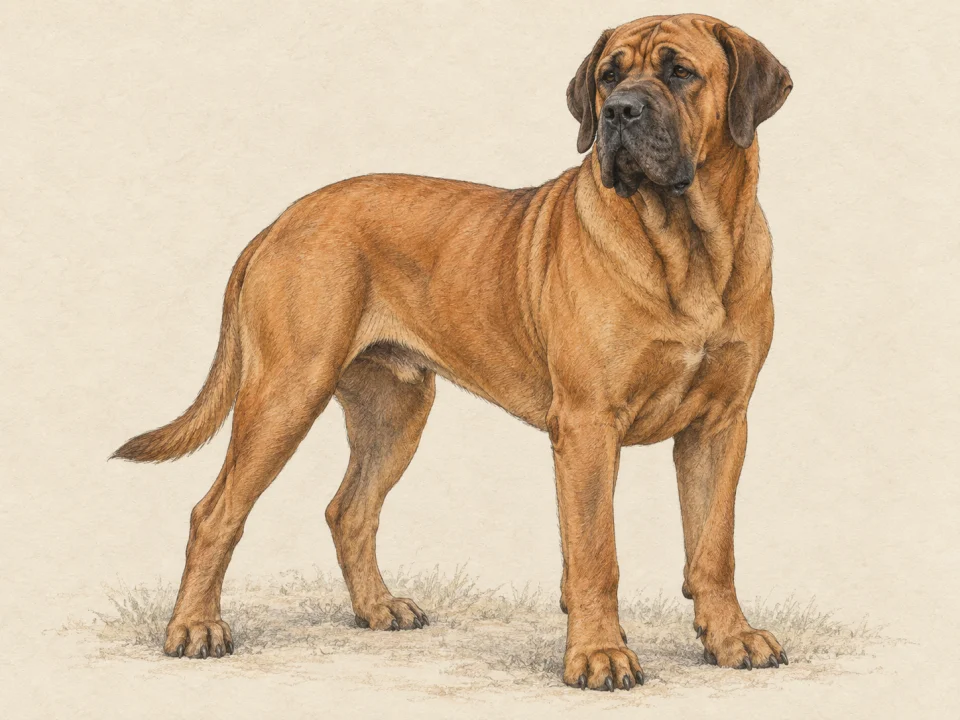
Plan for a powerful adult without chasing maximum size
The FCI standard sets minimum shoulder heights of 60 cm for males and 55 cm for females, not a single adult height range or a maximum. It gives no numeric weight target; the 100–200-pound reference in the quick facts comes separately from AKC’s overview. Neither figure is a feeding goal. Before choosing a Tosa, check whether an adult can enter your vehicle safely, turn through narrow doorways and be handled by your backup carer during a veterinary visit. Meeting mature relatives can help you picture the space required, although it cannot predict a puppy’s exact adult size. Choose equipment for the individual dog rather than buying to a supposed maximum height. The breed’s historical fighting role belongs in its background, not in activities an owner should recreate.[1]
Do not make unfamiliar dogs the exercise plan
AKC notes that a Tosa may react aggressively to a dog it perceives as an intruder. That makes a crowded off-leash park a poor default choice for exercise. Ask about the individual’s history with other animals, choose controlled walking routes and avoid forced greetings. A household with existing dogs needs a considered introduction and separation plan, with qualified help where appropriate. Quiet behavior indoors does not establish compatibility with every dog outdoors. The short coat needs relatively little grooming, but nails, ears and teeth still require care. Teach comfortable handling early and plan access to professional help; a low-maintenance coat does not make a very large dog a low-responsibility pet.[2]
Reward useful everyday choices
AVSAB recommends reward-based methods for training and behavior modification. For a Tosa household, practical priorities include walking with a loose lead in a quiet area, moving away from an opening door and resting behind a barrier while a visitor arrives. Start where the dog can succeed and increase distractions gradually. Keep physical management in place while those skills develop; do not test control by allowing a confrontation. If the dog stiffens, threatens or cannot settle around another animal or person, increase safe separation and seek qualified assistance rather than using pain or intimidation. Teach cooperation for examination and transport as well as obedience, since those skills matter throughout the dog’s life.[3]
Frequently asked questions
Does the Tosa standard set a maximum height or a target weight?
No. FCI gives minimum shoulder heights of 60 cm for males and 55 cm for females, with no maximum height or numeric weight target. AKC’s separate 100–200-pound overview range is a reference, not a goal to feed toward. Plan transport and handling around the individual adult.
Source [1]Does being quiet at home mean a Tosa will enjoy a busy dog park?
No. AKC cautions about reactions to unfamiliar dogs perceived as intruders. Assess the individual and use controlled exercise arrangements instead of assuming group play is suitable.
Source [2]Should a Tosa be trained through physical confrontation?
No. Use reward-based teaching and safe management, consistent with AVSAB guidance. Get qualified help for behavior concerns without staging encounters or escalating punishment.
Source [3]FAQ sources
- FCI — Tosa standard No. 260 ↗FAQ reference 1
- American Kennel Club — Tosa care and temperament ↗FAQ reference 2
- American Veterinary Society of Animal Behavior — Humane training position ↗FAQ reference 3
Sources & methodology
Breed-level measurements and comparison scores provide context. They do not predict an individual dog's health, behaviour or suitability. Open the original publisher pages below to verify the facts and compare any later updates.
- FCI — Tosa standard No. 260 ↗Reference 1 · reviewed 2026-09-27
- American Kennel Club — Tosa care and temperament ↗Reference 2 · reviewed 2026-09-27
- American Veterinary Society of Animal Behavior — Humane training position ↗Reference 3 · reviewed 2026-09-27
Make it about your dog
Build a profile around your dog's age, experiences and everyday needs.
Meet your dog →Explore local care