
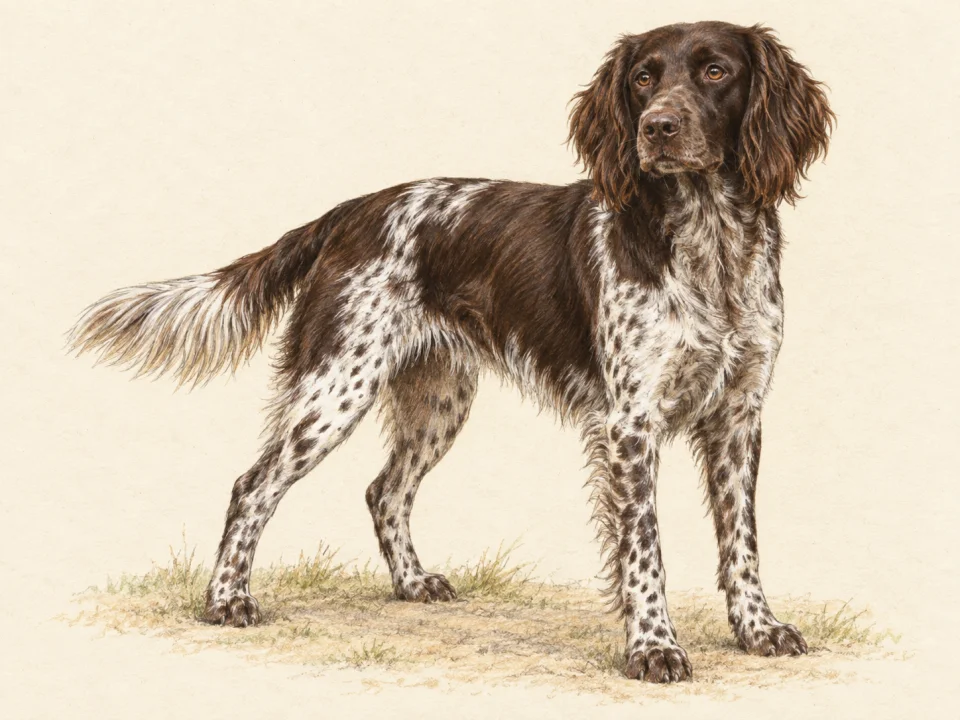
Teach the task before testing the hunting dog
SMCA describes an eager retriever whose steadiness still needs training. Natural interest in finding or carrying game is not the same as waiting, returning an object or responding amid distractions. Start a new skill in an easy setting, then change the location and distractions gradually. Keep a short note of where the skill works so that a difficult outing is not misread as deliberate defiance. The club cautions against overly repetitive drills and notes relatively slow maturation. An adult-sized adolescent may still need simpler practice and supervision. In the off-season, plan activities such as retrieving practice or suitable training classes rather than expecting the hunting instinct to switch off. A household that does not hunt should discuss its actual weekly plans candidly with breeders before assuming general exercise will meet a particular dog’s needs.[1]
Compare field records, health records and household fit separately
The club’s buyer guide suggests obtaining the parents’ pedigree, hunt-test reports and OFA or PennHIP reports. Put each document in the correct category: a field score concerns working performance; it is not a hip evaluation, and neither tells you everything about life in the home. For each parent, ask about ordinary behavior with visitors, time spent alone and how the dog settles after activity. Then discuss what the breeder hopes to achieve with this particular pairing. Write down your own hunting experience, workday schedule and available training support. A useful conversation may reveal a mismatch before a deposit is paid. Ask what help remains available after placement and how a change in your circumstances would be handled. Keep the agreement and the actual reports, rather than relying on a verbal description of a well-tested litter.[2]
Frequently asked questions
Does natural retrieving mean a puppy arrives fully trained?
No. SMCA distinguishes natural hunting interests from skills such as steadiness. Teach in manageable stages and add distractions after the dog understands the task.
Source [1]Is a high hunt-test score a health clearance?
No. Keep working-performance reports separate from health evaluations. The club’s buyer guide specifically recommends requesting the parents’ OFA or PennHIP reports as well as hunt-test information.
Source [2]What is the club’s Cooperating Breeders program for?
SMCA describes it as supporting breed health and reporting medical problems, with breeders monitored against club guidelines. Participation is useful context, but still review the individual parents’ records and discuss whether the litter fits your home.
Source [3]FAQ sources
Sources & methodology
Breed-level measurements and comparison scores provide context. They do not predict an individual dog's health, behaviour or suitability. Open the original publisher pages below to verify the facts and compare any later updates.
- Small Munsterlander Club of America — General Characteristics ↗Reference 1 · reviewed 2026-09-27
- Small Munsterlander Club of America — Interview with the Breeder ↗Reference 2 · reviewed 2026-09-27
- Small Munsterlander Club of America — Cooperating Breeders ↗Reference 3 · reviewed 2026-09-27
Make it about your dog
Build a profile around your dog's age, experiences and everyday needs.
Meet your dog →Explore local care