
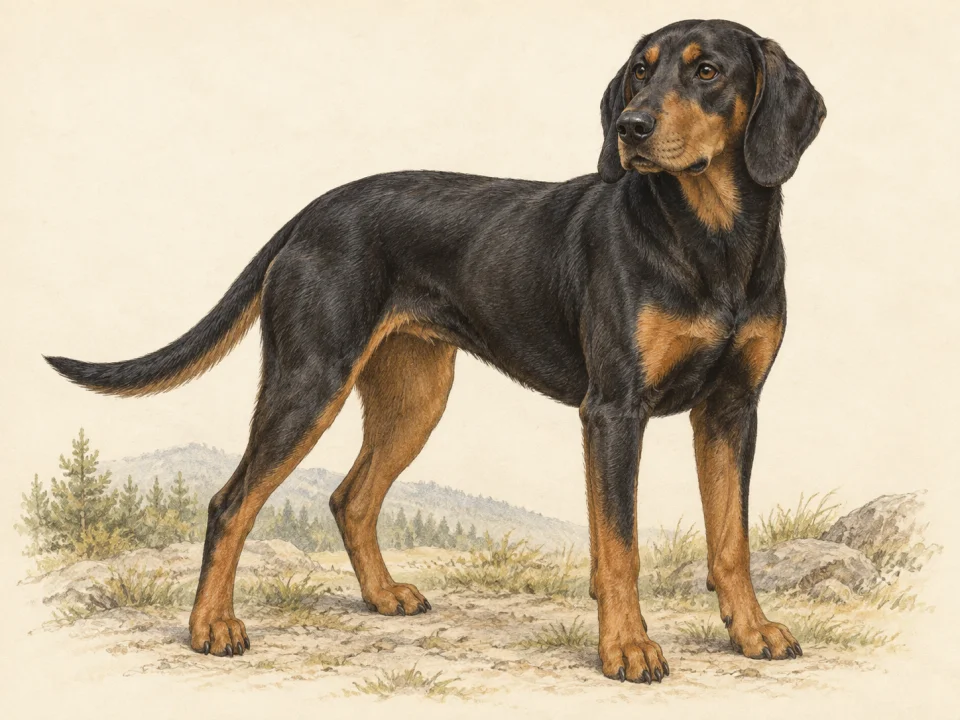
Evaluate the hunting role, not just the size
The FCI describes sustained scent-following with vocalization and a history of hunting wild boar. For a companion home, those facts suggest questions worth answering before adoption: what does this particular dog do when it finds an animal trail, how does it respond around smaller pets, and when does it vocalize? Ask for observations from ordinary life as well as hunting work. A good sense of direction does not mean a dog will return when called or avoid a road. Plan leash use and secure boundaries around the places you actually visit. Offer controlled searching activities rather than opportunities to pursue wildlife. If you share walls with neighbors, discuss the dog’s observed voice and settling habits instead of relying on the fact that it is only medium-sized. A trial visit or detailed history can reveal more about that fit than a breed photograph.[1]
A short coat still has an undercoat
AKC describes a close coat with seasonal shedding and increased brushing needs during those periods. Short outer hair therefore does not mean there will be no loose hair in the house. After a woodland outing, use the grooming check to look through the coat and examine the feet for collected debris, rather than judging only whether the black surface looks clean. Introduce paw and ear handling gently before it is needed for an uncomfortable problem. Ask the breeder or rescue what tools and handling the individual already accepts, and let a veterinarian assess pain, persistent scratching or an abnormal ear odor. The coat-care routine should be simple enough to maintain after regular outings, not just after unusually muddy trips. Request the dog’s actual veterinary history separately; a hardy working reputation is not a health test.[2]
Read the male and female measurements separately
AKC’s 16–20-inch overview combines the breed into one height range. FCI is more specific: males stand 45–50 cm at the withers and females 40–45 cm, with a weight range of 15–20 kg. Its separate “ideal type” example lists 16 kg; that example is not a prescribed weight for every Kopov. When meeting an adult, record its own shoulder height, chest measurement and current weight rather than ordering a harness from a breed average. Ask how its condition and activity have changed since leaving hunting work, if applicable. A dog can need a different daily routine without needing to match the example dog’s dimensions. Your veterinarian can assess weight in relation to the individual’s condition.[1]
Frequently asked questions
Does a strong sense of direction make this hound safe off leash?
No. Navigation ability does not establish recall around scent or traffic. Use a leash or secure enclosure and train return behavior without relying on the breed’s hunting reputation.
Source [1]Is the Slovensky Kopov a small companion dog with hunting-dog looks?
It is a medium-sized scent hound with an active working history. The FCI describes persistent scent-following with vocalization. Assess the individual’s activity, voice and response to animals before deciding it suits your household.
Source [1]Does its short coat mean it does not shed?
No. AKC notes a dense undercoat and seasonal shedding. Plan for extra brushing during those periods and routine checks after outdoor activity.
Source [2]Should every adult Slovensky Kopov weigh 16 kg?
No. FCI gives a 15–20 kg range and separately describes a 16 kg ideal-type example. Neither is a feeding prescription. Ask your veterinarian to assess the individual’s body condition and use actual measurements when fitting equipment.
Source [1]FAQ sources
- FCI — Slovensky Kopov standard ↗FAQ reference 1
- American Kennel Club — Slovensky Kopov care ↗FAQ reference 2
Sources & methodology
Breed-level measurements and comparison scores provide context. They do not predict an individual dog's health, behaviour or suitability. Open the original publisher pages below to verify the facts and compare any later updates.
- FCI — Slovensky Kopov standard ↗Reference 1 · reviewed 2026-09-27
- American Kennel Club — Slovensky Kopov care ↗Reference 2 · reviewed 2026-09-27
Make it about your dog
Build a profile around your dog's age, experiences and everyday needs.
Meet your dog →Explore local care