
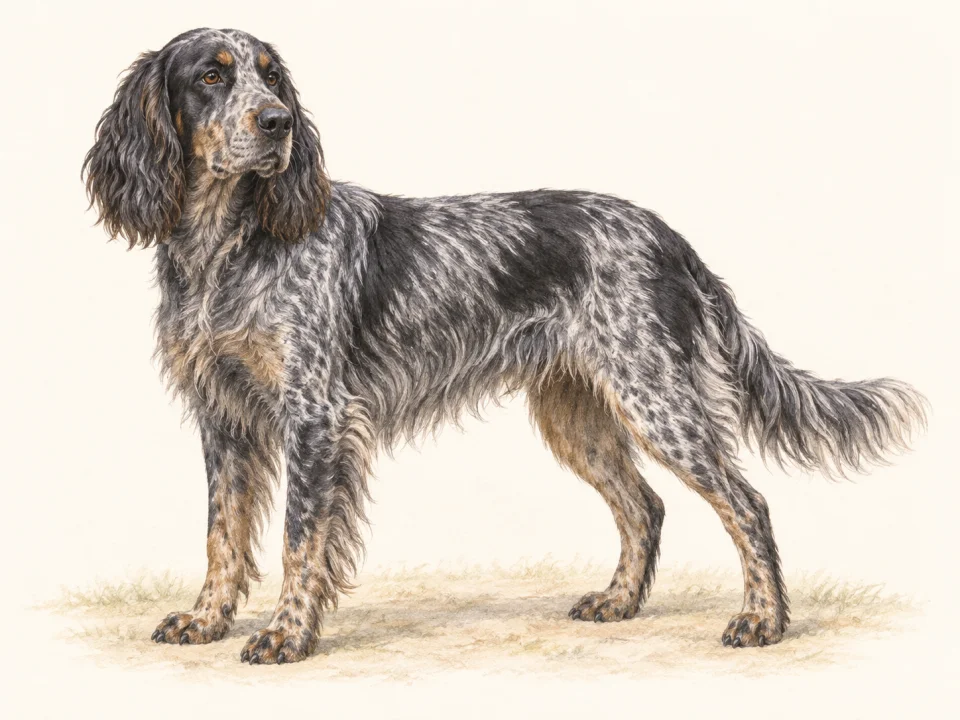
A roan coat belongs to a working sporting dog
AKC references males at 22–24 inches and 50–55 pounds, females at 21–23 inches and 45–50 pounds. The breed’s hunting and retrieving background matters more to daily planning than the unusual coat color. Measure the individual before selecting travel or walking equipment. A medium frame and friendly reputation do not establish that a largely inactive routine will be a suitable match.[1]
Include a task in the day rather than only distance
Suitable walks, controlled retrieving or another shared activity can provide movement and engagement. Teach a simple exchange so a toy game includes cooperation rather than an endless pursuit. Match intensity to age and health, and leave time for rest. A dog that settles calmly indoors may still need the consistent outings that helped make settling possible.[1]
Keep scent interest within a safe boundary
The source recommends secure fencing and leashed walks because this hunting dog may follow a scent away from home. Practise attention and recall in easy environments while maintaining control. A familiar route does not guarantee the same distractions every day. Check gates and the fit of walking equipment rather than assuming a cooperative temperament removes the need for containment.[1]
Use a gentle consistent training approach
Reward a clear action and build difficulty in small steps. A short lesson in waiting, returning attention or accepting care can be useful even when the household does not participate in dog sports. Avoid demanding instant performance in a new setting. If a task becomes confusing, simplify the environment and cue rather than adding pressure to a dog that has not yet understood.[1]
Check feathering and ears after outings
Weekly brushing with suitable tools helps maintain the moderate-length coat and prevent tangles. Inspect areas that catch vegetation and keep the long ears under regular observation. Ask your veterinarian about appropriate ear care; cleanliness cannot guarantee that infection never occurs. Pain, discharge or a new odor needs assessment rather than repeated routine grooming over an unresolved problem.[1]
Request joint records despite the blank panel
AKC lists a lifespan of 11–12 years. The consulted entry has no named formal test panel, but its health text specifically discusses hip and elbow screening. Ask for the actual results, identifying the dogs and dates, and review wider family history. A general healthy-breed description should not replace evidence or be presented as a promise about an individual’s future.[1]
Frequently asked questions
Does a calm Blue Picardy Spaniel still need purposeful exercise?
Yes. Its sporting background calls for suitable regular activity and engagement, even if the individual is relaxed indoors after an outing.
Source [1]Why does a Blue Picardy Spaniel need a secure yard?
The cited guidance notes that hunting and scent interests can draw it away from the property. Use fencing and leashed walks alongside recall practice.
Source [1]Can clean ears guarantee that ear infections will not happen?
No. Routine care is useful, but pain, discharge or unusual odor still needs veterinary assessment. Ask for an appropriate care method for the individual.
Source [1]Which health records does the source suggest requesting?
Although its formal panel is empty, the health text discusses hip and elbow screening. Request identifiable dated results rather than relying on a general health claim.
Source [1]FAQ sources
Sources & methodology
Breed-level measurements and comparison scores provide context. They do not predict an individual dog's health, behaviour or suitability. Open the original publisher pages below to verify the facts and compare any later updates.
- American Kennel Club — Blue Picardy Spaniel breed and care guidance ↗Reference 1 · reviewed 2026-09-27
Make it about your dog
Build a profile around your dog's age, experiences and everyday needs.
Meet your dog →Explore local care