
Choose for the guardian’s job, not the white puppy coat
The German breed club describes the Cuvac’s historical work protecting a flock and returning straying animals. For a prospective household, the practical question is how that responsibility transfers to modern routines. List the people who regularly enter your space: friends, children’s visitors, cleaners, maintenance workers and delivery staff. Decide where the dog can rest securely while an entrance is open, and whether every responsible adult can manage that arrangement. Do this before meeting a litter. A large property does not by itself solve the problem of people entering it. Ask to observe adult dogs in ordinary surroundings and discuss how the breeder prepares puppies for life beyond their familiar home.[2]
Make arrivals predictable rather than confrontational
A useful starting routine is to settle the dog behind a secure barrier before opening the entrance, complete the arrival, and then decide whether an introduction is appropriate. Visitors should not be asked to test the dog’s guarding response. Practice the resting-place cue with rewards when nobody is arriving, so the entire routine is not introduced during a stressful event. AVSAB recommends reward-based methods for training and behavior modification; the dog’s strength is not a reason to use intimidation or painful equipment. If the dog threatens, lunges or cannot settle safely around arrivals, maintain separation and seek veterinary or qualified behavior help. Breed heritage does not make an unsafe interaction acceptable.[3]
Expect the coat to change through the year
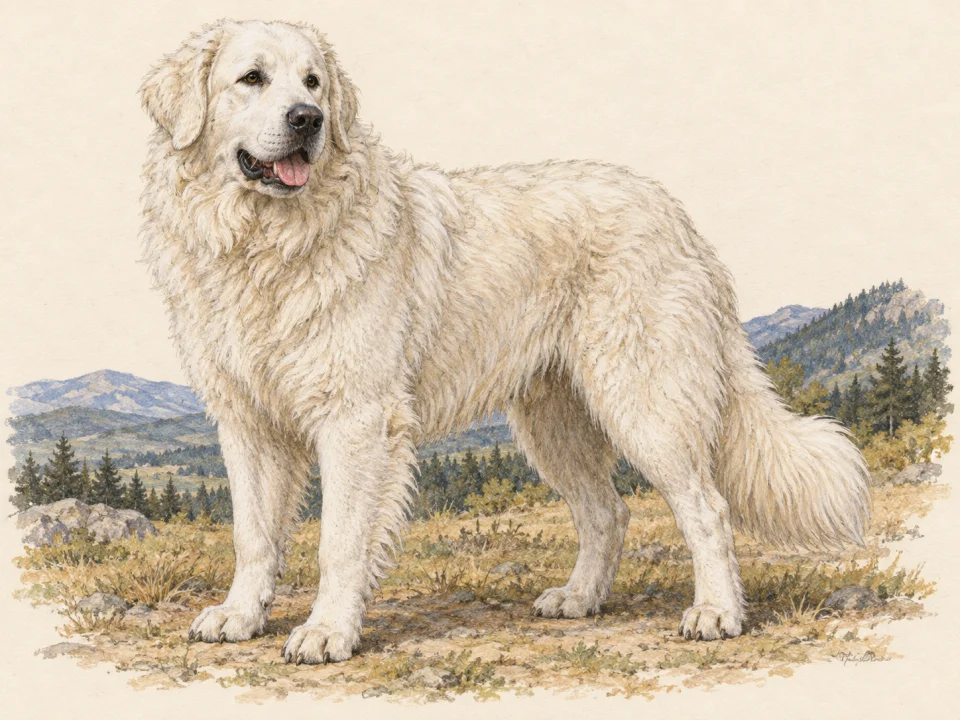
FCI describes a dense undercoat beneath a longer, somewhat wavy outer coat, with undercoat shed in summer. A less dense summer appearance can therefore differ from winter photographs. Part the coat gently during grooming to check what is happening underneath; do not judge cleanliness from the white surface alone. Check areas compressed by a collar or harness and ask a groomer for help with tight tangles. Distinguish a seasonal change from irritated skin or a new patch of hair loss. The mountain-dog description is not a promise of comfort in every temperature, so provide appropriate shelter, water and a comfortable resting place in the conditions where the dog actually lives.[1]
Plan the resting space for the adult you will live with
The combined AKC ranges in the quick facts hide a useful distinction. FCI lists males at 62–70 cm and 36–44 kg, and females at 59–65 cm and 31–37 kg. When planning the secure resting area for arrivals, look at adult relatives and measure the available floor space with an adult dog in mind. Include room to change position and access water, and keep the arrival route separate from that resting place. For an adopted adult, use its own measurements and observed comfort. Choosing a female is not a substitute for planning boundaries, and the smaller end of the range does not remove the need for safe handling. These measurements describe breed proportions, not a promise about a puppy’s eventual size or a target for feeding.[1]
Frequently asked questions
Should visitors challenge a Cuvac to show that they are in charge?
No. Use separation and controlled introductions rather than confrontation. AVSAB recommends reward-based training; threatening behavior calls for a safe management plan and professional assessment.
Source [1]Why can the coat look less full in summer?
The FCI standard describes seasonal loss of the dense undercoat. New skin irritation or patchy hair loss still deserves attention rather than automatically being called normal shedding.
Source [2]Is a large yard enough preparation for a Cuvac?
No. Work through who opens the gates, how visitors enter and where the dog can rest securely during arrivals. The breed’s flock-guardian history makes those household arrangements worth considering before ownership.
Source [3]Are male and female Cuvacs the same size?
FCI describes different adult ranges: males 62–70 cm and 36–44 kg; females 59–65 cm and 31–37 kg. The AKC overview combines them into broader figures. Plan space and fit equipment for the individual; a smaller dog still needs the same careful management of visitors and entrances.
Source [2]FAQ sources
- AVSAB — Humane training position statements ↗FAQ reference 1
- FCI — Slovakian Chuvach standard No. 142 ↗FAQ reference 2
- Club Slovensky Cuvac — The mountain shepherd dog ↗FAQ reference 3
Sources & methodology
Breed-level measurements and comparison scores provide context. They do not predict an individual dog's health, behaviour or suitability. Open the original publisher pages below to verify the facts and compare any later updates.
- FCI — Slovakian Chuvach standard No. 142 ↗Reference 1 · reviewed 2026-09-27
- Club Slovensky Cuvac — The mountain shepherd dog ↗Reference 2 · reviewed 2026-09-27
- AVSAB — Humane training position statements ↗Reference 3 · reviewed 2026-09-27
- American Kennel Club — Slovensky Cuvac overview ↗Reference 4 · reviewed 2026-09-27
Make it about your dog
Build a profile around your dog's age, experiences and everyday needs.
Meet your dog →Explore local care