
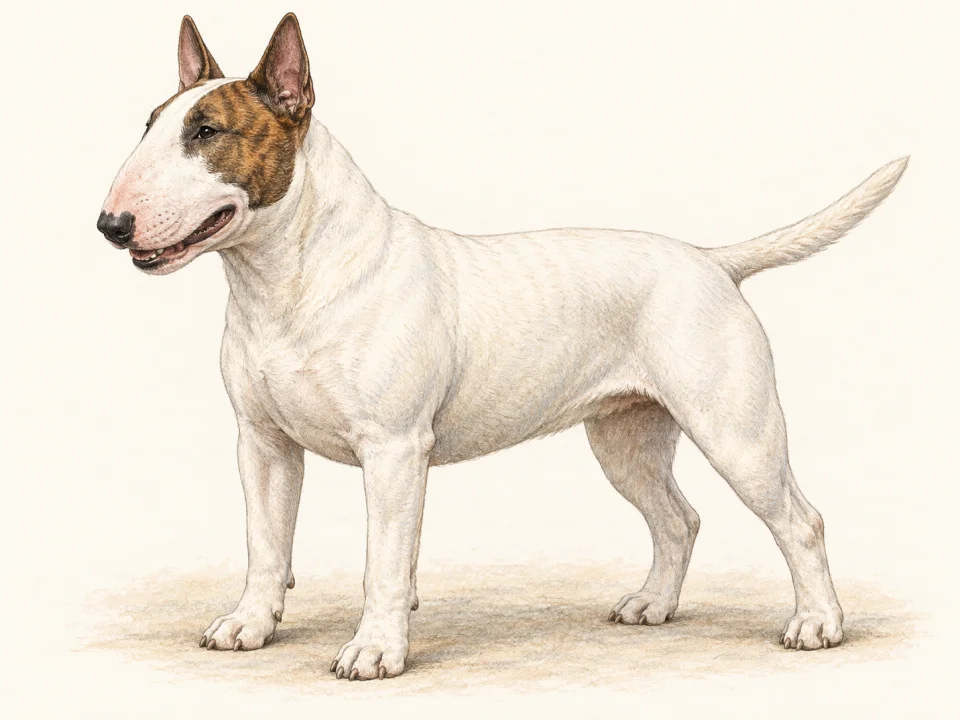
Know which Bull Terrier you are comparing
The full-size Bull Terrier is distinct from the Miniature Bull Terrier. AKC lists the full-size breed at 21–22 inches and 50–70 pounds, with a lifespan of 12–13 years. Check the actual breed and the individual dog when comparing housing or equipment needs. A familiar egg-shaped head does not tell you which size category an advertisement is describing.[1]
Make cooperation worth the effort
Bull Terriers can be playful and independently minded. Short, varied reward-based lessons are more useful than repeating a task until both handler and dog are frustrated. Pick one practical skill, such as releasing a toy in exchange for another reward, and end while the dog is engaged. Keep the cue and reward consistent between adults rather than continually changing the rules.[1]
Give physical energy a thinking task
Daily exercise should include more than an unstructured burst of excitement. Combine a suitable walk with a brief search game or simple training, then provide a place to settle. Watch how the dog recovers instead of assuming that more activity is always better. A youngster, a mature dog and a dog with a health limitation need different plans.[1]
Prepare for visitors before opening the door
A strong dog does not need to be unfriendly to knock someone off balance. Practise waiting behind a barrier and greeting when calmer before testing that skill with guests. Keep children away from food and resting spaces, and supervise interactions directly. Judge compatibility with another animal from the individual history and careful introductions, not from a promise attached to the breed name.[1]
Keep the short-coat routine thorough
Weekly brushing is usually enough for routine loose-coat care, but nails, ears and teeth still need attention. Teach the dog to accept a brief paw or ear check with a reward before attempting a longer grooming session. Record a new skin problem rather than assuming that every itch belongs to the breed; persistent changes deserve a veterinary assessment.[1]
Ask for identifiable screening results
Recommended breeding screens include patella and cardiac evaluations, BAER hearing testing and a kidney urine protein-to-creatinine assessment. Ask for the result, date and dog identity, not just the phrase health checked. Discuss what these records can and cannot establish with your veterinarian. Screening reduces uncertainty about particular conditions but cannot certify that a puppy will never become ill.[1]
Frequently asked questions
How long does a Bull Terrier live?
AKC gives a typical lifespan of 12–13 years for the Bull Terrier. It is a general breed range, not a guarantee for a particular dog.
Source [1]Is a Bull Terrier the same as a Miniature Bull Terrier?
No. They are separate breeds. The full-size Bull Terrier reference is 21–22 inches tall and 50–70 pounds; check the breed identity before using those figures for a smaller dog.
Source [1]What training style suits a Bull Terrier?
Use short, engaging reward-based sessions and consistent rules. Practise useful actions such as releasing a toy or waiting at a doorway, rather than relying on long repetitive drills.
Source [1]Which hearing test should I ask a Bull Terrier breeder about?
Ask about BAER hearing-test results for the relevant dog. Also request the recommended cardiac, patella and kidney screening records, with dates and identities that can be checked.
Source [1]FAQ sources
Sources & methodology
Breed-level measurements and comparison scores provide context. They do not predict an individual dog's health, behaviour or suitability. Open the original publisher pages below to verify the facts and compare any later updates.
- American Kennel Club — Bull Terrier breed and care guidance ↗Reference 1 · reviewed 2026-09-27
Make it about your dog
Build a profile around your dog's age, experiences and everyday needs.
Meet your dog →Explore local care