
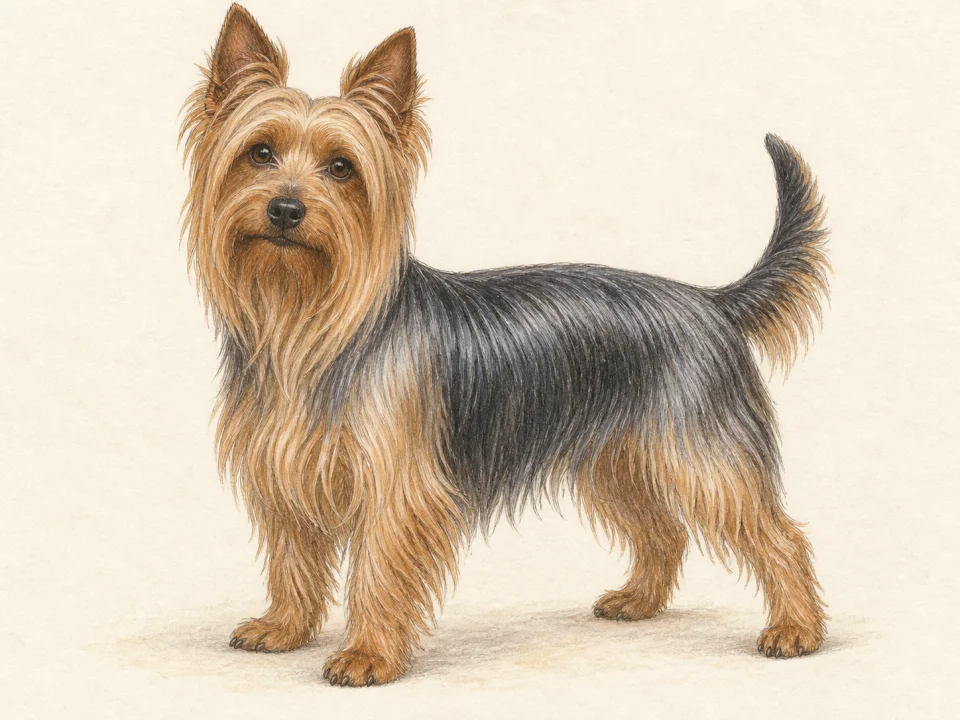
A Silky coat should not sweep the floor
The AKC standard describes a straight, single coat that follows the adult body’s outline without reaching floor length. It also leaves the feet visible rather than buried in furnishings. That distinction helps when discussing a grooming appointment: a dramatic floor-length silhouette is not the target described for this breed. Bring a photograph of the dog standing naturally and discuss a manageable pet finish with the groomer. Separate appearance from comfort: a tidy surface does not tell you whether there are tangles beneath it. Ask for a demonstration of checking the coat gently, especially wherever your dog’s equipment rubs, rather than trying to pull a comb through a resistant patch.[2]
Toy Group, terrier expectations
AKC identifies the Silky as an energetic terrier from Sydney and distinguishes it from its smaller Yorkshire Terrier relative. A small living space and a small dog are not, by themselves, a complete care plan. Before choosing one, write down who will handle walks, play, training and grooming on an ordinary workday. For an adult dog, ask to observe those activities instead of judging its energy from a brief cuddle. If the appeal is mostly a long-coated companion that can be carried everywhere, spend time with adult Silkys first. The useful question is whether you enjoy living with an active terrier as well as maintaining its coat.[1]
Read the health statement for what it actually says
The undated club statement hosted by AKC says that the club had no health requirements at the time of writing and that its committee was reviewing the policy. It does not say that Silkys cannot develop inherited disease, and it cannot establish today’s screening policy. When a seller describes a puppy as health tested, ask what was tested, on which dog, when, and where the result can be read. Bring those documents to your veterinarian and ask the club for its current recommendations. A missing formal requirement is not a reason to skip routine veterinary care or dismiss a change in movement, vision or behavior.[3]
Frequently asked questions
Should a Silky Terrier’s coat reach the ground?
No. The AKC standard describes an adult coat that follows the body without approaching floor length, with the feet still visible. Discuss a comfortable, maintainable pet finish with your groomer.
Source [1]Is a Silky Terrier simply another name for a Yorkie?
No. AKC describes the Australian Silky as a separate breed, larger than its Yorkshire Terrier relative. Meet adult dogs and compare everyday care rather than identifying a breed from coat color alone.
Source [2]Does no required health testing mean the breed has no health problems?
No. The undated club statement describes a policy at the time it was written, not a disease-free guarantee. Confirm current recommendations and ask for the actual records behind any testing claim.
Source [3]FAQ sources
- AKC — Official Silky Terrier standard ↗FAQ reference 1
- American Kennel Club — Silky Terrier ↗FAQ reference 2
- Silky Terrier Club of America — Health statement hosted by AKC, undated ↗FAQ reference 3
Sources & methodology
Breed-level measurements and comparison scores provide context. They do not predict an individual dog's health, behaviour or suitability. Open the original publisher pages below to verify the facts and compare any later updates.
- American Kennel Club — Silky Terrier ↗Reference 1 · reviewed 2026-09-27
- AKC — Official Silky Terrier standard ↗Reference 2 · reviewed 2026-09-27
- Silky Terrier Club of America — Health statement hosted by AKC, undated ↗Reference 3 · reviewed 2026-09-27
Make it about your dog
Build a profile around your dog's age, experiences and everyday needs.
Meet your dog →Explore local care