
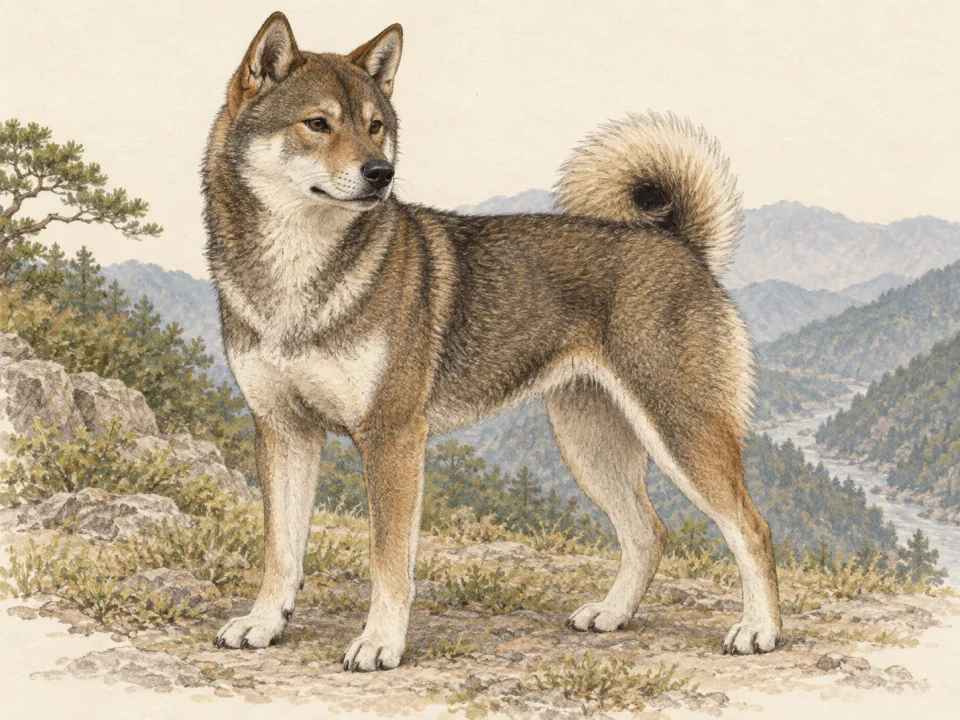
A hunting background is a question about daily life
The FCI describes the Shikoku as an energetic, alert hunter historically used for boar in Kochi’s mountains. That background does not tell you how a particular dog will behave in your apartment, with visitors or around another pet. Ask for concrete examples: what happens when it sees wildlife on a walk, how does it recover after an exciting outing, and what experience does it have living with other animals? Arrange introductions with appropriate supervision and separation rather than testing compatibility through free pursuit. Plan safe boundaries for outdoor activity and use reward-based practice for recall and handling. The dog’s relationship with a familiar owner is not a promise that every new person can immediately handle it. A realistic transition plan should cover ordinary weekdays, not only the hikes you hope to enjoy together.[1]
Genetic diversity information is not a disease clearance
UC Davis’s 2019 report describes a genetic-diversity panel as a supplement to pedigrees and other health information. Its preliminary sample comprised 27 dogs; the findings are not a complete current survey of every Shikoku population. If a breeder supplies a diversity report, ask separately for clinical screening results, any named disease tests and the family’s veterinary history. A diversity measure does not establish that hips, eyes or every inherited condition are normal. Keep the different reports clearly labeled so your veterinarian can review what was actually assessed. The useful question is not simply whether DNA testing was done, but which question each test answers and what remains unknown. Do not convert a small research sample into a prediction that an individual puppy will or will not develop disease.[2]
Look through the coat after outdoor activity
The Shikoku has a dense undercoat beneath a straighter, harsher outer coat. AKC recommends regular grooming and checking ears and nails. Build those checks into the return from outings: look through the coat for trapped debris, inspect the feet and practice brief, comfortable handling. Ask the breeder or rescue to demonstrate what the dog already accepts, especially if it has little experience with household grooming. Use the routine to notice changes rather than assuming a rugged history makes discomfort unimportant. Persistent scratching, pain or abnormal ear discharge needs veterinary assessment. No fixed bathing or nail-trimming calendar can replace looking at the individual dog and the surfaces and conditions it encounters.[3]
Compare shoulder height, not the top of the ears
The 17–22-inch range in the quick facts comes from AKC’s overview. The FCI standard instead names reference heights at the withers of 52 cm for males and 49 cm for females, with a stated tolerance; it does not give a numeric weight range. The 35–55-pound figure above is therefore AKC guidance, not an FCI requirement. When comparing an adult with either description, measure to the shoulder rather than the tips of its upright ears. For a carrier or vehicle space, also account for its full standing and resting dimensions. A breed height is not a ready-made equipment size, and a puppy’s current measurement is not its adult measurement.[1]
Frequently asked questions
Is a Shikoku guaranteed to get along with another pet?
No. A breed description cannot establish compatibility. Ask about the individual’s experience and arrange controlled introductions with supervision and a way to separate animals safely.
Source [1]Does a genetic-diversity report prove a Shikoku is clear of inherited disease?
No. The UC Davis report describes diversity testing as supplementary information. Ask separately for named disease tests and clinical screening records, and have your veterinarian explain their limits.
Source [2]Does a rugged outdoor breed need little routine checking?
No. Regular grooming and checks of feet, ears and nails still matter. Inspect the individual after outings and seek veterinary advice for pain or persistent changes.
Source [3]How tall is a Shikoku Ken, and where should I measure?
AKC gives a broad 17–22-inch range. FCI lists reference shoulder heights of 52 cm for males and 49 cm for females, with a tolerance. Measure to the withers, not the ears; use the individual’s full dimensions and the manufacturer’s instructions when fitting travel equipment.
Source [1]FAQ sources
- FCI — Shikoku standard, February 2017 English edition ↗FAQ reference 1
- UC Davis Veterinary Genetics Laboratory — Shikoku genetic diversity report, 2019 ↗FAQ reference 2
- American Kennel Club — Shikoku Ken care ↗FAQ reference 3
Sources & methodology
Breed-level measurements and comparison scores provide context. They do not predict an individual dog's health, behaviour or suitability. Open the original publisher pages below to verify the facts and compare any later updates.
- FCI — Shikoku standard, February 2017 English edition ↗Reference 1 · reviewed 2026-09-27
- UC Davis Veterinary Genetics Laboratory — Shikoku genetic diversity report, 2019 ↗Reference 2 · reviewed 2026-09-27
- American Kennel Club — Shikoku Ken care ↗Reference 3 · reviewed 2026-09-27
Make it about your dog
Build a profile around your dog's age, experiences and everyday needs.
Meet your dog →Explore local care