
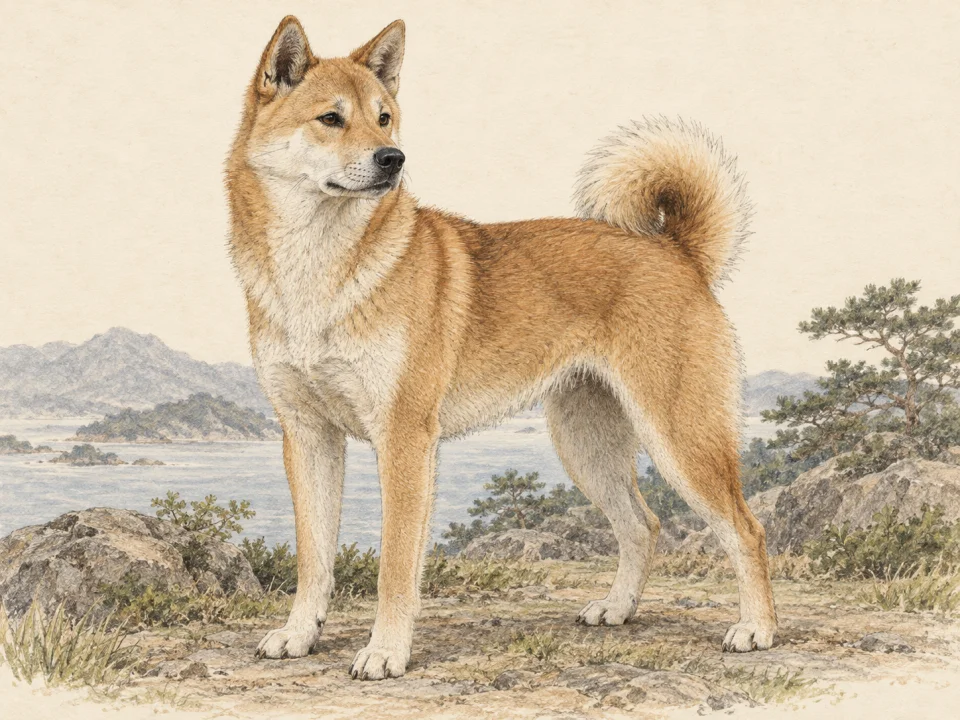
Loyalty does not rule out a new home
The FCI describes both attachment to a previous owner and acceptance of a new one. That is a useful corrective to the idea that an adult Jindo cannot form a new relationship, but it does not set a timetable for an individual rescue dog. Before a move, ask for a practical handover: familiar walking equipment, food routine, handling preferences, known escape attempts and reactions to other animals. Use that information to reduce avoidable surprises. Arrange a quiet resting area and secure exits before arrival. The aim is to make ordinary care predictable while the new household learns about the dog, rather than testing loyalty with a busy welcome or an off-leash outing.[1]
Separate three questions: people, dogs and prey
AKC describes reserve with strangers, strong prey drive and potential difficulty with unfamiliar dogs. These are different issues, so one friendly meeting should not be used to answer all three. Ask how the particular dog has behaved with visitors, resident animals and animals seen outdoors, and which observations are simply unknown. Plan physical separation where needed and seek qualified help for introductions. Do not assume that a dog’s attention to its familiar person makes chasing impossible. AKC also notes discomfort with forced restraint by a stranger; tell veterinary and grooming staff what handling the dog already knows so they can plan an appropriate approach. Avoid deliberately provoking a reaction to establish what the dog will tolerate.[2]
A tidy coat still has a shedding season
AKC describes weekly brushing during much of the year and substantial undercoat loss during seasonal shedding. Keep suitable tools and cleanup time available rather than treating the breed’s reputation for cleanliness as a promise of little hair indoors. Make coat checks part of comfortable handling practice. New skin changes, discomfort or unusual hair loss should be assessed on their own merits instead of automatically being attributed to a normal molt.[2]
Frequently asked questions
Can an adult Jindo build a relationship with a new owner?
The FCI standard explicitly describes acceptance of a new owner alongside attachment to the previous one. Give an individual dog a careful transition; the breed description does not promise an instant bond or a fixed settling-in period.
Source [1]Are Jindos always white?
No. The FCI standard lists red fawn, white, black, black and tan, wolf gray and brindle. Coat color alone does not establish ancestry or predict behavior.
Source [1]FAQ sources
- FCI — Korea Jindo Dog standard No. 334 ↗FAQ reference 1
Sources & methodology
Breed-level measurements and comparison scores provide context. They do not predict an individual dog's health, behaviour or suitability. Open the original publisher pages below to verify the facts and compare any later updates.
- FCI — Korea Jindo Dog standard No. 334 ↗Reference 1 · reviewed 2026-09-27
- American Kennel Club — Korean Jindo Dog ↗Reference 2 · reviewed 2026-09-27
Make it about your dog
Build a profile around your dog's age, experiences and everyday needs.
Meet your dog →Explore local care