
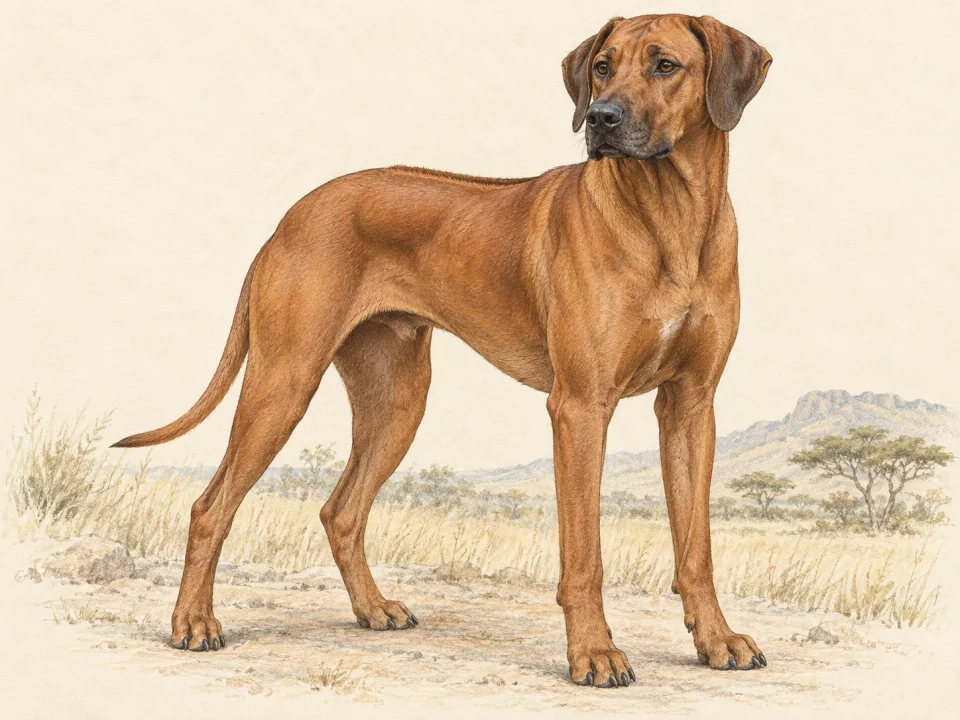
Ask about a dermoid sinus check separately from the ridge
Dermoid sinus is a congenital skin abnormality, not simply the backward-growing hair that gives the breed its name. The Midland and Northern club explains that it can occur along the midline, including areas outside the visible ridge, and that some cases have no draining opening. A photograph of a tidy ridge therefore cannot substitute for examination. Before collecting a puppy, ask who checked it, when it was checked and whether any abnormality or treatment was recorded. Share that history with your veterinarian and ask for someone familiar with the condition if further assessment is needed. If the dog has had surgery, request the veterinary report and follow-up instructions rather than accepting only a verbal assurance that it was fixed. Do not attempt to probe or squeeze a suspicious opening yourself.[2]
Keep joint, organ and DNA records separate
The RRCUS October 2023 statement distinguishes preliminary hip and elbow screening in younger breeding dogs from final evaluations in dogs over 24 months. It also encourages thyroid, cardiac and eye assessments, along with DNA testing for named conditions including degenerative myelopathy, juvenile myoclonic epilepsy and early onset adult deafness. Ask which of these records exist for each parent and what the findings were. A generic genetic-panel certificate does not replace joint imaging or an eye examination. Keep the report dates visible when discussing a litter with your veterinarian, and confirm current recommendations with the club. RRCUS also makes clear that a CHIC number records completion of testing, not a guarantee of normal findings. Neither a good-looking ridge nor a long list of tests should decide the purchase on its own.[3]
Prepare for an athletic adult without prescribing an athlete’s workload
AKC recommends secure enclosure when a Ridgeback is off leash because of its prey drive, alongside positive-reinforcement training from puppyhood. Plan where the adult can move safely and who will handle it when something worth chasing appears. Rehearse calm exits from the house and car, and avoid making an open gate the place to test recall. Choose walks and play according to the individual’s age, condition and response rather than the breed’s historical reputation. At home, keep food out of reach: AKC specifically notes counter-surfing. Store tempting items before leaving the kitchen instead of relying on supervision that will not always be available. These simple arrangements support training and reduce occasions when the dog can rehearse behavior you do not want.[1]
Frequently asked questions
Does an attractive ridge prove a puppy has no dermoid sinus?
No. The hair pattern and the medical examination answer different questions. A sinus may occur outside the visible ridge and may lack an obvious opening; ask for the examination history and veterinary guidance.
Source [1]Are preliminary hip results the same as final adult results?
No. The RRCUS October 2023 statement explicitly distinguishes them by age. Read the report date and status instead of relying on the phrase hips tested.
Source [2]Is off-leash running appropriate anywhere because this is an athletic hound?
No. AKC recommends a safely enclosed area when off leash because of prey drive. Athletic ability does not remove the need for containment or individual conditioning.
Source [3]FAQ sources
Sources & methodology
Breed-level measurements and comparison scores provide context. They do not predict an individual dog's health, behaviour or suitability. Open the original publisher pages below to verify the facts and compare any later updates.
- American Kennel Club — Rhodesian Ridgeback care ↗Reference 1 · reviewed 2026-09-27
- Midland and Northern Rhodesian Ridgeback Club — Dermoid sinus ↗Reference 2 · reviewed 2026-09-27
- Rhodesian Ridgeback Club of the United States — October 7, 2023 health statement ↗Reference 3 · reviewed 2026-09-27
Make it about your dog
Build a profile around your dog's age, experiences and everyday needs.
Meet your dog →Explore local care