
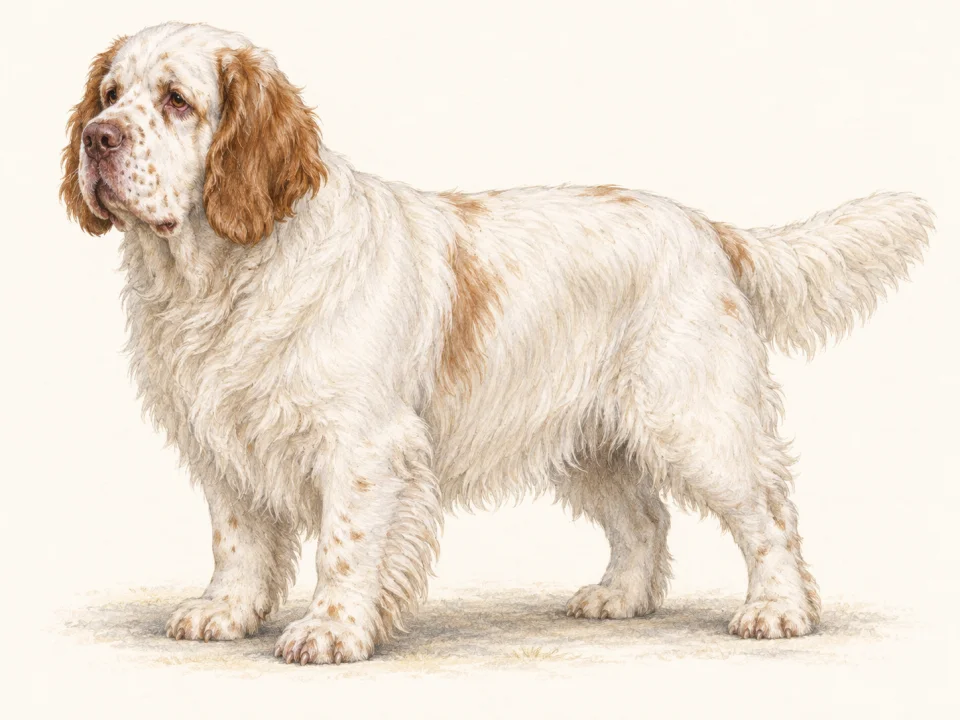
Do not mistake the low outline for a small dog
AKC references males at 70–85 pounds and females at 55–70 pounds, despite heights of roughly 17–20 inches across the sexes. Plan transport, resting space and handling for that substantial adult. Meet dogs when possible and ask about daily mobility. A relaxed manner is welcome, but it does not solve the practical problem of helping a heavy dog when it cannot move comfortably.[1]
Let a walk include time to investigate
The Clumber’s bird-dog background includes determined scent work. Suitable walks with controlled opportunities to sniff can provide both movement and engagement. Add manageable retrieving or searching games if the individual enjoys them. Adapt the plan to age and health rather than assuming the breed’s slow-looking outline means no exercise is needed or that sporting ancestry justifies unlimited effort.[1]
Make training interesting and allow processing time
The cited guidance notes that Clumbers can pause and consider a task. Give a clear cue, reward the desired response and keep the session engaging rather than escalating pressure when the response is not immediate. Practice in manageable settings before adding distractions. A thoughtful learner benefits from predictable information, while repeated harsh corrections can make cooperation more difficult.[1]
Keep food rewards visible in the daily plan
AKC emphasizes avoiding excess weight because of strain on the breed’s heavy frame. Account for treats used in training and food given by different caregivers. Ask your veterinarian about appropriate body condition and feeding needs instead of using a reference weight as the sole target. A food-oriented dog can enjoy rewards without every successful task requiring an unplanned extra meal.[1]
Inspect ears and facial folds alongside the coat
The cited routine includes brushing and combing once or twice weekly, plus regular attention to low-set ears and folds. Ask for a demonstration of suitable cleaning and drying rather than improvising care for an irritated area. Do not assume odor or discomfort is inevitable in a drooling spaniel. Nails and teeth need separate attention even when the coat looks tidy.[1]
Separate recommended tests from broader health history
AKC lists hip, elbow and ophthalmologist evaluations plus a PDP1 deficiency DNA test. Request the actual reports and veterinary interpretation. Its broader discussion includes thyroid, eyelid and spinal concerns, so screening is not complete protection from every condition. Share known medical history and medication concerns with the veterinarian; do not independently choose or withhold treatment based on a breed profile.[1]
Frequently asked questions
Is a Clumber easy to lift because it is low to the ground?
Not necessarily. AKC references males at 70–85 pounds and females at 55–70 pounds. Plan handling and transport for the individual’s adult weight.
Source [1]How can training work with a Clumber that pauses before responding?
Use a clear cue, manageable tasks and rewards, and allow time to process. Keep lessons interesting instead of increasing pressure for an immediate response.
Source [1]What routine care goes beyond brushing?
Low-set ears and facial folds need appropriate checks and care, along with nails and teeth. Ask for suitable cleaning and drying guidance and address discomfort rather than accepting it as normal.
Source [1]Which DNA test appears in the cited panel?
PDP1 deficiency testing is listed alongside hip, elbow and ophthalmologist evaluations. Obtain identifiable reports and discuss their meaning with a veterinarian.
Source [1]FAQ sources
Sources & methodology
Breed-level measurements and comparison scores provide context. They do not predict an individual dog's health, behaviour or suitability. Open the original publisher pages below to verify the facts and compare any later updates.
- American Kennel Club — Clumber Spaniel breed and care guidance ↗Reference 1 · reviewed 2026-09-27
Make it about your dog
Build a profile around your dog's age, experiences and everyday needs.
Meet your dog →Explore local care