
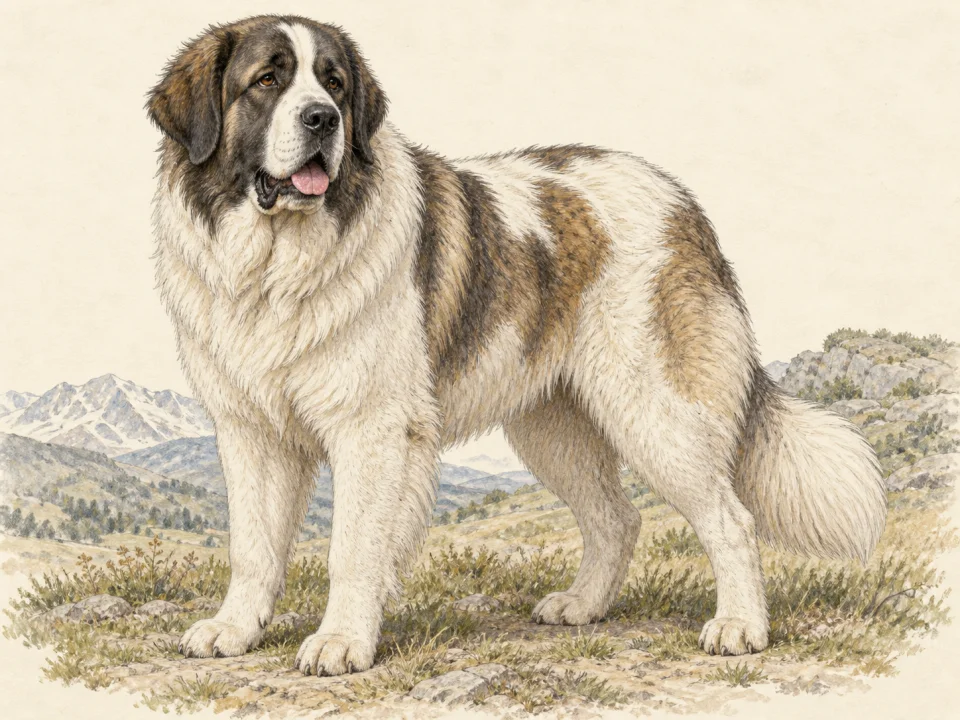
Plan for the adult dog before the puppy arrives
Its history is guarding flocks, not simply accompanying people on walks. Do not assume that a description such as gentle means every visitor or animal introduction will be straightforward. Ask about the individual’s experience and arrange supervised introductions with a way to separate animals comfortably. Then walk through an ordinary day at adult scale: where will the dog rest without blocking a passage, how will it enter your vehicle, and who can manage it when the usual carer is away? Check the size and weight limits of transport equipment rather than buying for the puppy you see now. Discuss safe assistance with your veterinarian before an injury makes moving the dog urgent. These arrangements matter even in a home with a large yard.[1]
Look beneath the outer coat during routine care
AKC highlights feathering, dewclaws and the skin beneath the double coat as areas needing attention. Work through small, comfortable handling sessions so the dog learns to accept checks without needing to be physically held down. After wet outings or bathing, check that deeper coat areas have dried; a dry-looking surface is not enough. Include the drool-prone area beneath the neck in your cleanup routine. When checking nails, account for dewclaws rather than assuming that walking wears every nail. Ask a groomer to demonstrate the tasks you will maintain at home. If skin looks sore or the dog resists a previously comfortable check, stop and seek veterinary advice rather than treating the reaction as disobedience.[1]
Compare the parents’ screening records with the club protocol
The PMAA health statement approved in November 2024 recommends hip, elbow and cardiac screening plus a degenerative myelopathy DNA result. It specifies assessments at two years or older for the hip, elbow and basic cardiac components, and distinguishes optional spine and eye evaluations. Ask for dated results identifying both parents, including the actual findings rather than only proof that tests occurred. A puppy’s routine examination is not the same evidence as adult breeding-stock screening. If a report is missing or was done at a younger age, ask what follow-up is planned. Take unfamiliar results to your veterinarian; avoid judging a pairing from a certificate count or a reassuring description alone.[2]
Keep an emergency plan for suspected bloat
This deep-chested breed warrants a conversation with your veterinarian about gastric dilatation-volvulus, or GDV. ACVS describes it as a rapidly progressing emergency. Repeated attempts to vomit without producing anything, a swelling abdomen, marked distress or collapse need immediate veterinary attention; do not wait for every sign to appear. Save the emergency hospital’s number and route, and decide how this very large dog could be transported with help. Discuss individual risk and whether preventive gastropexy is appropriate during a routine visit. Gastropexy addresses stomach twisting, not every episode of stomach enlargement, so it does not replace an emergency response.[3]
Frequently asked questions
Does a calm Pyrenean Mastiff need no daily activity?
No. AKC describes a generally calm dog that still needs exercise. Build suitable activity around age, health and conditioning rather than expecting a growing giant to keep up with an adult hiking routine.
Source [1]Which parent health records should I ask to see?
The PMAA’s November 2024 statement lists hips, elbows, cardiac screening and a degenerative myelopathy DNA result. Request dated findings for both parents and check the club for updates.
Source [2]Should I wait if the dog is retching but cannot vomit?
No. Unproductive retching can be a sign of GDV. Contact an emergency veterinarian immediately and arrange transport; do not wait for a visibly swollen belly or collapse.
Source [3]FAQ sources
Sources & methodology
Breed-level measurements and comparison scores provide context. They do not predict an individual dog's health, behaviour or suitability. Open the original publisher pages below to verify the facts and compare any later updates.
- American Kennel Club — Pyrenean Mastiff care and background ↗Reference 1 · reviewed 2026-09-27
- Pyrenean Mastiff Association of America — Health testing ↗Reference 2 · reviewed 2026-09-27
- American College of Veterinary Surgeons — Gastric dilatation-volvulus ↗Reference 3 · reviewed 2026-09-27
Make it about your dog
Build a profile around your dog's age, experiences and everyday needs.
Meet your dog →Explore local care