
Ask what the working background looks like at home
The FCI describes work across fields, woodland and water, alongside a strong hunting instinct. Turn that description into specific questions when meeting a breeder or rescue: What does this dog do on days without field work? Can you see it settling after activity, rather than only performing outdoors? What experience does it have around the animals and distractions in your household? Ask for examples of ordinary weekdays and introductions, not just accomplishments or a statement that the parents are calm. For your own planning, write down where supervised activity will happen, who will provide it and what the alternative is when that person is unavailable. An impressive working record and an appropriate home routine answer different questions.[1]
Check the actual coat rather than choosing by the name
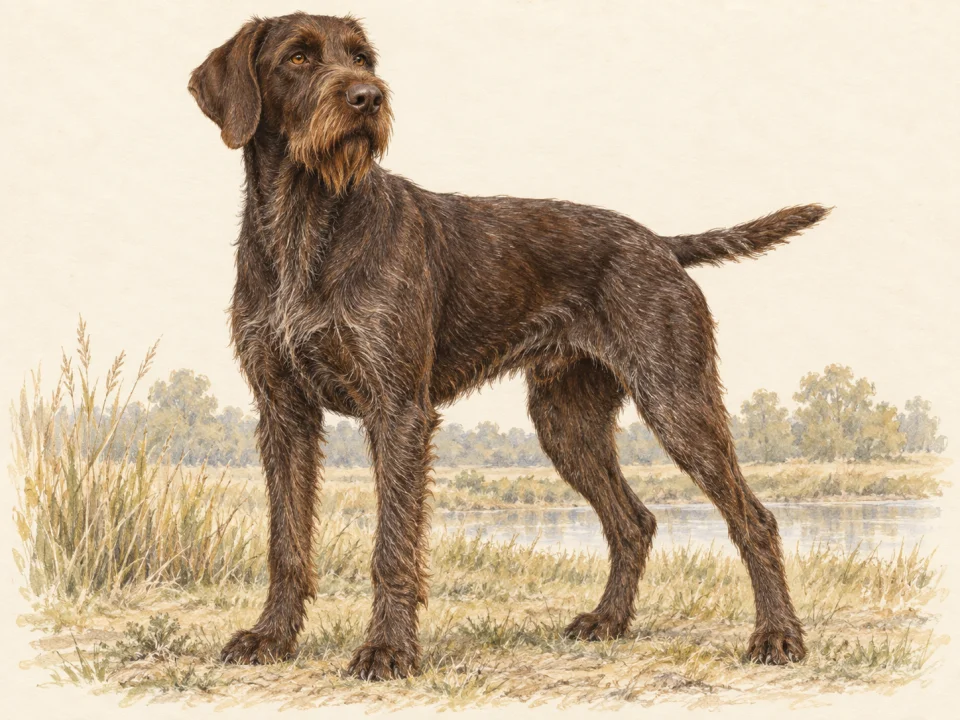
AKC describes variation in coat appearance and notes seasonal shedding. Poodle ancestry does not tell you how much hair this particular dog will leave in the house. Meet adult relatives where possible and ask to see the grooming tools and technique used on their coats. A useful demonstration includes parting the coat to inspect the undercoat and showing how debris is removed after outdoor activity. Ask which areas need attention after the routes you expect to use—muddy ground and brush create different cleanup jobs. If someone advertises a smooth-coated dog, ask which registration standard they mean: the FCI standard specifies a rough coat and lists a short coat as a disqualifying fault. That distinction concerns the standard; it is not a diagnosis of the individual dog’s health.[2]
Request health evidence with names and dates
AKC identifies hip dysplasia and epilepsy as concerns in the breed. Ask what hip evaluation documentation is available for the parents and whether seizures have occurred in related dogs. Keep the actual reports, registered names and dates together so your veterinarian can interpret what has been assessed. A general statement that a line is healthy does not answer either question, and absence of known family history cannot promise that a puppy will remain unaffected. If a seller mentions a genetic panel, request the named conditions it covers; do not assume that a large number of tests means these particular concerns have been excluded.[2]
Frequently asked questions
Is a Pudelpointer simply a Poodle crossed with a Pointer?
Those breeds supplied its foundation, but the Pudelpointer is an established breed with its own standard. A newly bred Poodle–Pointer cross is not interchangeable with documented Pudelpointer ancestry.
Source [1]Do Pudelpointers shed?
Yes. AKC notes seasonal shedding. Ask about the individual coat and meet adult dogs instead of assuming the Poodle part of the name means a shed-free household.
Source [2]Does a calm temperament mean little hunting interest?
No. The FCI standard describes composure alongside a distinct hunting instinct. Assess everyday behavior and practical exercise arrangements rather than treating calmness and hunting interest as opposites.
Source [1]FAQ sources
Sources & methodology
Breed-level measurements and comparison scores provide context. They do not predict an individual dog's health, behaviour or suitability. Open the original publisher pages below to verify the facts and compare any later updates.
- Fédération Cynologique Internationale — Pudelpointer standard ↗Reference 1 · reviewed 2026-09-27
- American Kennel Club — Pudelpointer breed and care information ↗Reference 2 · reviewed 2026-09-27
Make it about your dog
Build a profile around your dog's age, experiences and everyday needs.
Meet your dog →Explore local care