
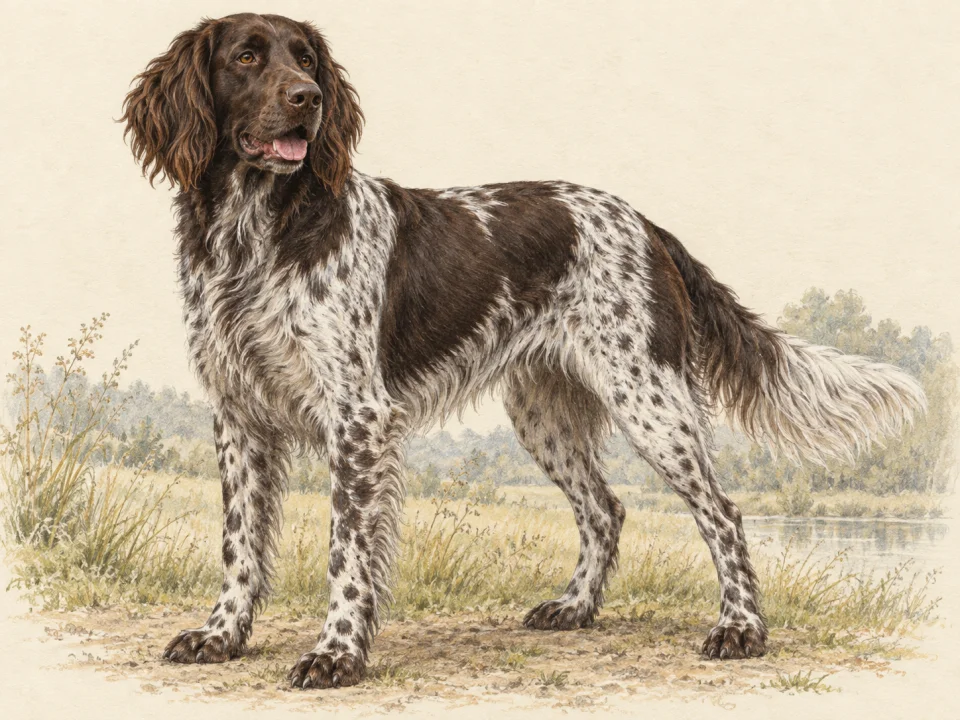
A separate breed with a longhaired pointing-dog history
The FCI places the Large Munsterlander in the German longhaired pointing-dog family and traces its organized breeding to black-and-white German Longhairs. Its standard describes work in field, forest and water, both before and after the shot. This is a separate breed, not simply a size option selected from the Small Munsterlander. The coat is long and dense but sleek, with feathering on the legs, tail and ears. Accepted coloring includes white with black patches and spots, blue roan and black, with a black head that may have a white marking. When researching a litter, use the full breed name and its records so information for a similarly named breed does not become an accidental substitute.[1]
Plan the weekday outlet before imagining the weekend
AKC describes a high-activity hunting breed that needs frequent exercise and stimulation, warning that an underoccupied dog may wander and hunt on its own. A non-hunting household should therefore decide what it can reliably offer on ordinary days. Discuss structured searching, retrieving or other suitable activities with a knowledgeable trainer, and identify secure places where the dog can work with you. A large property is not itself a training plan, and a description of a calm adult at home says little about the activity that came before that moment. Ask the breeder or rescue to describe a complete normal day for the dog, including recovery and time alone, so the proposed match rests on more than enthusiasm for outdoor weekends. AKC recommends regular coat care, with more attention during seasonal shedding. Include inspection of the feathering and ears after outings in the care routine, and seek help for tangles or discomfort rather than pulling through them.[2]
Frequently asked questions
Is a Large Munsterlander just a larger Small Munsterlander?
No. The FCI describes the Large Munsterlander’s own development from black-and-white German Longhairs. Research the specific breed and the individual dog rather than treating the names as size varieties.
Source [1]Can a non-hunting home meet a Large Munsterlander’s needs?
It needs a credible plan for regular activity and mental engagement. AKC advises non-hunting owners to provide other outlets; assess your ordinary weekday capacity with someone who knows the dog, not only your weekend plans.
Source [2]FAQ sources
- FCI — Large Munsterlander standard No. 118 ↗FAQ reference 1
- American Kennel Club — Large Munsterlander ↗FAQ reference 2
Sources & methodology
Breed-level measurements and comparison scores provide context. They do not predict an individual dog's health, behaviour or suitability. Open the original publisher pages below to verify the facts and compare any later updates.
- FCI — Large Munsterlander standard No. 118 ↗Reference 1 · reviewed 2026-09-27
- American Kennel Club — Large Munsterlander ↗Reference 2 · reviewed 2026-09-27
Make it about your dog
Build a profile around your dog's age, experiences and everyday needs.
Meet your dog →Explore local care