
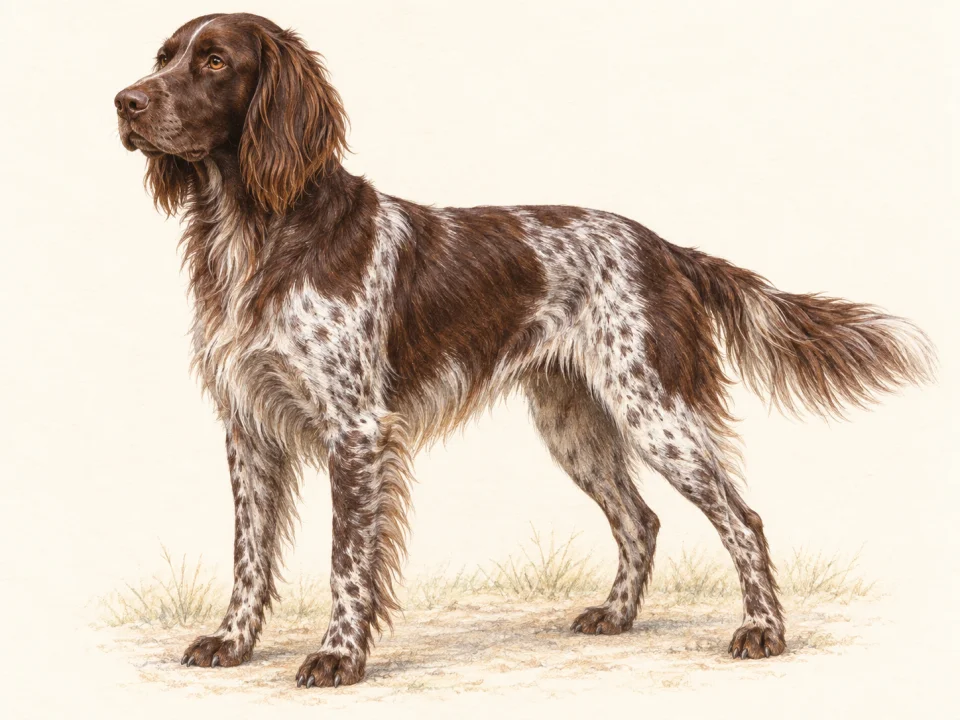
Start with the working role rather than a setter-like silhouette
FCI describes a gundog expected to work on land and in water, before and after the shot. That is a broader role than simply having a long coat and pointing at birds. When evaluating a litter or an adult, ask which activities the dogs actually perform and what the breeder expects from a prospective home. Be specific about the facilities, instruction and time you can provide throughout the year. A future intention to take up a sport is not the same as an established plan. Discuss any non-hunting placement candidly with people who know the individual and its family; a calm visit indoors does not show the full pattern of needs. The standard gives an average weight of 30 kg, but that is descriptive context rather than a weight every dog should be fed toward.[2]
Make the return from heavy cover part of the outing
AKC points out practical coat issues including burrs, knots near the ear bases and possible abrasions to the full tail after work through heavy cover. Those details deserve a place in the routine before the dog is left to rest. Inspect the coat and tail gently, note material caught in the hair and get help with anything you cannot remove comfortably. Do not pull through a tight knot or cut close to skin without appropriate skill. If there is injury, pain or persistent irritation, seek veterinary advice rather than treating it as a grooming inconvenience. Prepare a stable place, suitable tools and enough time for this check, especially when another person takes the dog out. A short handover describing the terrain and anything noticed helps the next carer know where to look. Routine coat care and an injury assessment are different tasks; completing one does not establish that the other is unnecessary.[1]
Frequently asked questions
Is Deutsch Langhaar another name for this breed?
Yes. The FCI standard uses Deutsch Langhaar for the German Longhaired Pointer and describes it as a versatile working gundog.
Source [1]What needs attention after a German Longhaired Pointer works through brush?
AKC specifically mentions burrs, knots around the ear bases and tail abrasions. Check gently, obtain help with difficult tangles and seek veterinary assessment for injury or discomfort.
Source [2]Should every German Longhaired Pointer weigh 30 kg?
No. FCI lists that as an average. Individual size, development and body condition should guide care with veterinary input.
Source [1]FAQ sources
- FCI Standard No. 117 — Deutsch Langhaar ↗FAQ reference 1
- American Kennel Club — German Longhaired Pointer ↗FAQ reference 2
Sources & methodology
Breed-level measurements and comparison scores provide context. They do not predict an individual dog's health, behaviour or suitability. Open the original publisher pages below to verify the facts and compare any later updates.
- American Kennel Club — German Longhaired Pointer ↗Reference 1 · reviewed 2026-09-27
- FCI Standard No. 117 — Deutsch Langhaar ↗Reference 2 · reviewed 2026-09-27
Make it about your dog
Build a profile around your dog's age, experiences and everyday needs.
Meet your dog →Explore local care