
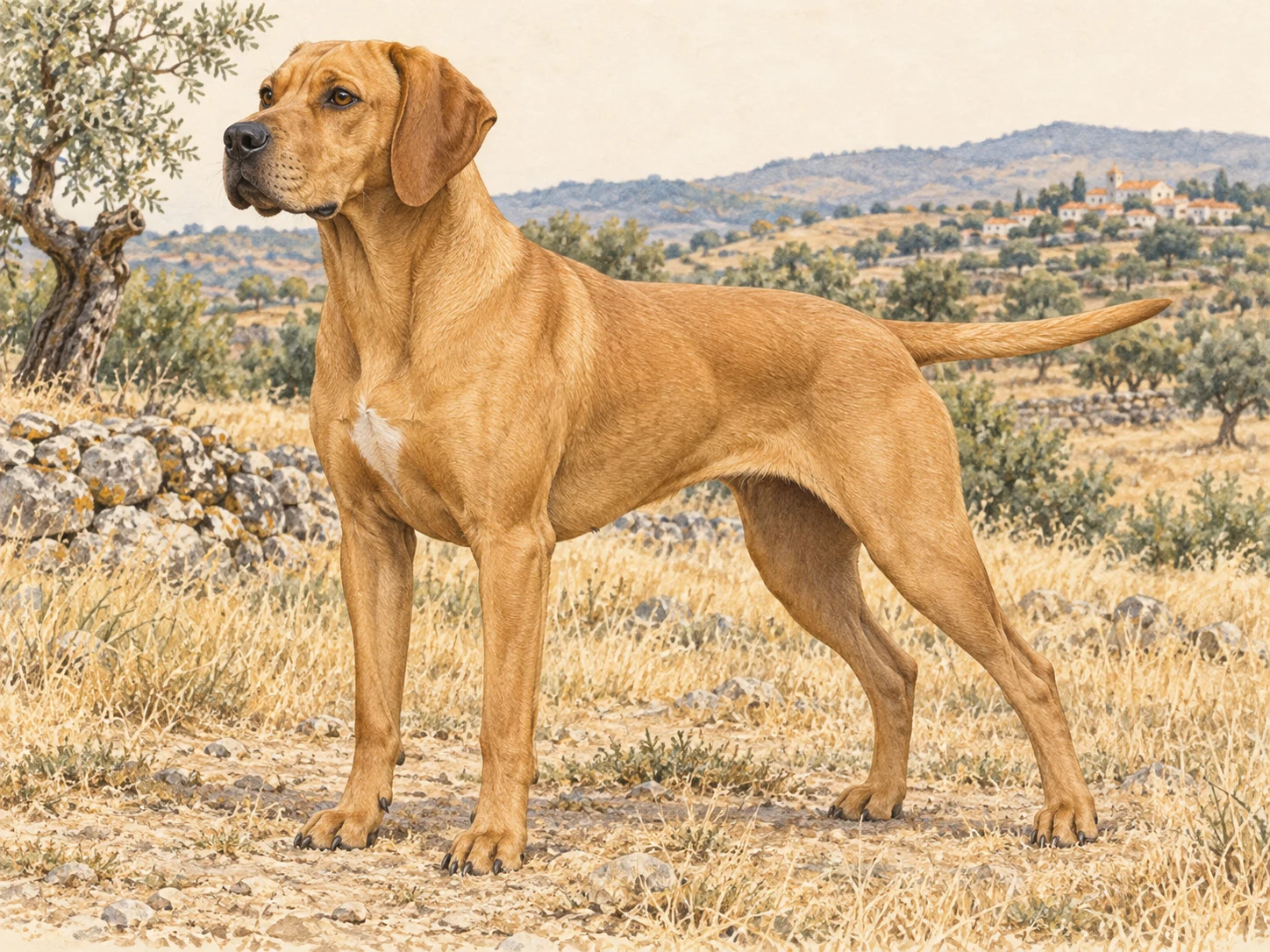
Build on the close working relationship
The FCI describes a persistent hunting dog that stays in contact with the hunter. The name Perdigueiro is linked to the Portuguese word for partridge. For a companion home, the useful feature is the opportunity to work together, not an assumption that the dog arrives trained. Start with easy tasks in a quiet setting, reward attention and increase distractions gradually. AKC recommends a gentle approach for this affectionate breed. If a young dog struggles, shorten the task and consider whether the surroundings are too exciting rather than repeating the cue more forcefully. When meeting a breeder or rescue, ask how the dog behaves during an ordinary walk and how it rests afterward. Close working tendencies do not guarantee reliable recall around birds, roads or unfamiliar animals; keep practice safely controlled.[1]
Judge the routine behind the relaxed house dog
AKC describes considerable sporting energy, particularly in young dogs, alongside the ability to live calmly indoors when exercise needs are met. Before deciding the breed fits, map out where shared outdoor activity will happen on workdays as well as weekends. Include an alternative for unsuitable weather and a person who can help when your schedule changes. Adapt activities to age, condition and comfort instead of trying to match another dog’s endurance. The short, close coat requires relatively little grooming, with brushing to remove dead hair and ordinary nail, ear and dental care. Use that handling time to notice changes in movement or comfort. Ask about health history in relatives as well as the individual, and request available veterinary records; a general description of a robust breed cannot establish that a particular puppy is free of future health risks.[2]
Read the height range in context
The 20.5–22-inch height in the quick facts is AKC’s breed-profile summary. The FCI standard gives a more detailed, sex-specific reference: 56 cm for males and 52 cm for females, with a 4 cm tolerance either way. That corresponds to 52–60 cm for males and 48–56 cm for females, so the short AKC range is not the full span allowed by that standard. FCI also separates weight into 20–27 kg for males and 16–22 kg for females. For household planning, ask for an adult dog’s actual measurements rather than rejecting an otherwise suitable companion because a directory range is narrower. Measure the dog before buying travel equipment, and use veterinary advice about body condition rather than a show-standard weight to decide how much to feed.[1]
Frequently asked questions
What does Perdigueiro Português refer to?
It is the Portuguese name of the Portuguese Pointer. The FCI history connects perdigueiro with perdiz, the Portuguese word for partridge.
Source [1]Does a Portuguese Pointer have an undercoat?
The FCI standard describes a short, dense coat without undercoat, with finer hair on the head and ears. Coat type alone does not establish safe exposure to every weather condition.
Source [1]Does its close bond with people remove the need for exercise?
No. AKC describes an energetic sporting dog that needs regular outdoor activity. Companionship, training and exercise are parts of the routine, not substitutes for one another.
Source [2]Why do Portuguese Pointer height figures differ between sources?
AKC gives a compact 20.5–22-inch breed overview. FCI specifies 56 cm for males and 52 cm for females, each with a tolerance of 4 cm. Those are different presentations: the overview should not be read as the entire permitted FCI range. Use the individual dog’s measurements when checking equipment fit.
Source [1]FAQ sources
- Fédération Cynologique Internationale — Portuguese Pointing Dog standard ↗FAQ reference 1
- American Kennel Club — Portuguese Pointer ↗FAQ reference 2
Sources & methodology
Breed-level measurements and comparison scores provide context. They do not predict an individual dog's health, behaviour or suitability. Open the original publisher pages below to verify the facts and compare any later updates.
- Fédération Cynologique Internationale — Portuguese Pointing Dog standard ↗Reference 1 · reviewed 2026-09-27
- American Kennel Club — Portuguese Pointer ↗Reference 2 · reviewed 2026-09-27
Make it about your dog
Build a profile around your dog's age, experiences and everyday needs.
Meet your dog →Explore local care