
Take breathing sounds seriously when choosing or caring for a dog
The Royal Veterinary College shares expert advice that noisy breathing at rest or during light exercise can signal a welfare problem in flat-faced dogs. Do not accept persistent snorting as reassurance that a Pekingese is simply behaving as expected. Arrange a veterinary assessment and describe when the sound occurs: during sleep, at rest, on a gentle walk or in warmer conditions. A short recording may help explain the pattern, but never delay urgent help to obtain one if the dog is struggling to breathe. When considering a puppy or adult, ask about previous respiratory assessments and discuss the individual dog’s needs with a veterinarian. Plan activities around comfort and conditions, rather than making the dog complete a distance because another dog can manage it.[2]
Make eye checks part of the normal care conversation
ACVO explains that flat-faced anatomy can leave eyes exposed, with incomplete blinking or hair rubbing the surface. Reduced surface sensitivity means a significant problem may not produce an obvious pain response. Seek prompt veterinary attention for redness, rubbing, squinting, cloudiness or changed tearing and discharge. Do not wait for the dog to cry out. ACVO recommends at least annual veterinary eye examinations for brachycephalic pets; an existing problem may require a different schedule. For a practical home check, look for objects or rough play that could strike the face at the dog’s height. Tell carers which eye changes need a call to the veterinarian and where the emergency contact is kept. Diagnosis and treatment require an examination, so do not choose eye medication from a symptom description.[3]
Plan coat care without a prolonged struggle
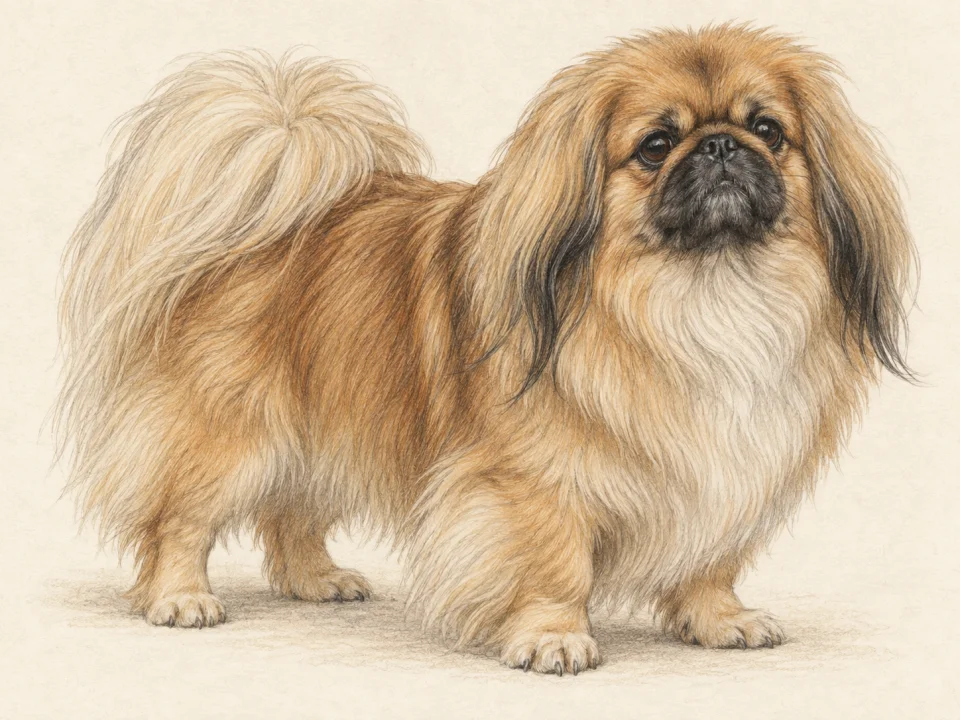
AKC describes a thick double coat with seasonal shedding and a substantial grooming commitment. Divide comfortable handling into manageable sessions and ask a groomer to demonstrate how to check through the coat for tangles. A surface that looks neat is not proof that the hair underneath is clear. Record any areas left unfinished so another carer does not assume the whole dog was brushed. Avoid rough play and give the dog an undisturbed resting place, especially around children. The goal is a companion who can move, rest and be handled comfortably; a large coat or a regal breed description should never take priority over those everyday needs.[1]
Frequently asked questions
Is noisy breathing normal for a Pekingese?
It should not be dismissed as a harmless breed trait. RVC’s expert guidance flags noise at rest or during light exercise as a reason for concern. Have a veterinarian assess persistent noise; struggling to breathe needs urgent help.
Source [1]Can an eye problem be serious if my Pekingese is not showing much pain?
Yes. ACVO notes reduced eye-surface sensitivity in flat-faced pets. Redness, squinting, rubbing, cloudiness or a change in discharge warrants prompt veterinary attention even when the dog otherwise seems comfortable.
Source [2]Does a Pekingese’s small size mean little grooming?
No. Its dense double coat needs regular, thorough maintenance. Ask a groomer to demonstrate care for your dog’s coat and use comfortable sessions instead of leaving tangles until a long, difficult appointment.
Source [3]FAQ sources
Sources & methodology
Breed-level measurements and comparison scores provide context. They do not predict an individual dog's health, behaviour or suitability. Open the original publisher pages below to verify the facts and compare any later updates.
- American Kennel Club — Pekingese ↗Reference 1 · reviewed 2026-09-27
- Royal Veterinary College — Expert warning on noisy breathing in flat-faced dogs ↗Reference 2 · reviewed 2026-09-27
- American College of Veterinary Ophthalmologists — Understanding Brachycephalic Ocular Syndrome, March 2026 ↗Reference 3 · reviewed 2026-09-27
Make it about your dog
Build a profile around your dog's age, experiences and everyday needs.
Meet your dog →Explore local care