
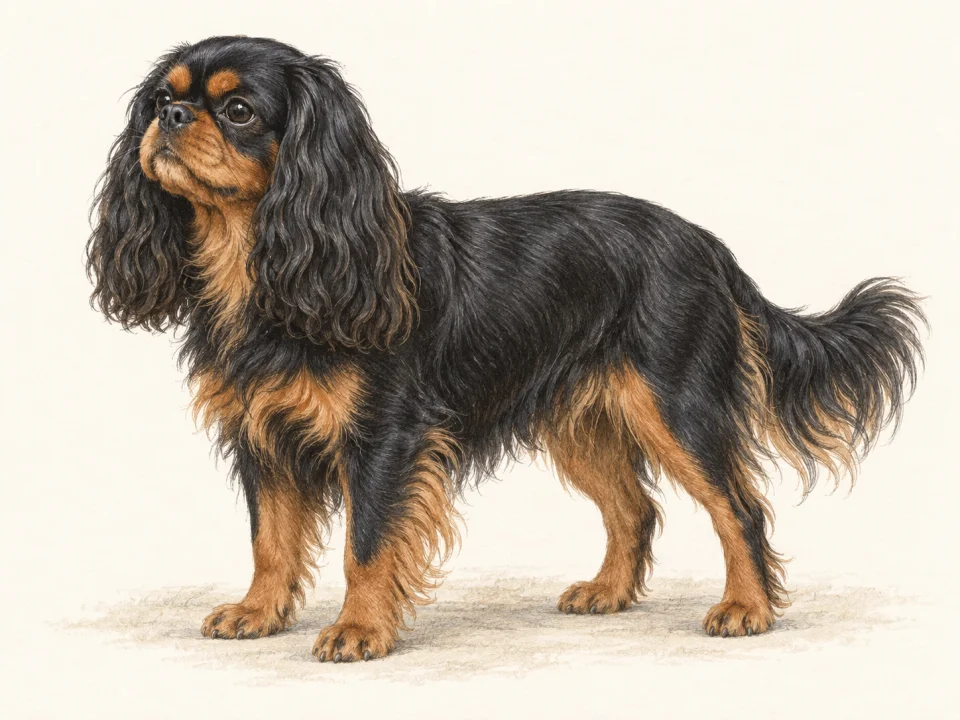
Check the full breed name before comparing puppies
English Toy Spaniels and Cavalier King Charles Spaniels share familiar coat colors, but the US English Toy club describes different standards and proportions. The English Toy has a more domed head, a very short muzzle and a compact square outline; the Cavalier has a longer muzzle and a less domed skull. The club gives an English Toy adult weight reference of 8–14 pounds, compared with 13–18 pounds for the Cavalier. Overlap in weight is another reason not to identify a puppy from size alone. Confirm the full breed name in the breeder or rescue paperwork and use the corresponding health and care information. Do not buy on a promise that one is simply a miniature version of the other.[2]
Take breathing comfort seriously, even on a short outing
ACVS explains that short-headed conformation can be associated with obstructed breathing. Noisy breathing, poor exercise tolerance, gagging and difficulty coping with heat or humidity deserve veterinary assessment rather than being dismissed as a cute breed trait. Severe breathing difficulty, blue gums or tongue, or collapse require emergency veterinary care. This is not a diagnosis of every English Toy Spaniel: an examination is needed to evaluate an individual. For routine planning, consider the entire outing, including a warm car park or an outdoor wait, rather than only the length of the walk. Arrange a cool alternative and discuss an appropriate activity plan with your veterinarian. Avoid deliberately testing the dog’s limits to see how much heat it can tolerate.[3]
A lap-sized dog can still need substantial coat care
AKC describes a long, silky coat requiring brushing at least twice weekly, with attention to developing tangles. Ask for a demonstration that includes the less visible feathering rather than only brushing the surface of the back. Introduce handling gently and keep sessions manageable; being small does not justify holding a struggling dog through painful grooming. If several people share care, note where a tangle remains so it is not overlooked until the next appointment. AKC also identifies cardiac, eye and patella concerns in the breed. Keep health examinations separate from grooming observations: noticing a change is a reason to seek appropriate advice, not to diagnose it during a coat check. Before choosing a dog, request identifiable health records rather than relying on the claim that a small companion needs little care.[1]
Frequently asked questions
Is the English Toy Spaniel a small Cavalier?
No. They are separate breeds with different standards, including head shape, muzzle length and proportions. Similar colors and overlapping weights can make photographs confusing.
Source [1]Should noisy breathing be accepted as normal for this short-faced breed?
Do not dismiss it. Ask a veterinarian to assess breathing and exercise tolerance. Severe difficulty breathing, blue gums or tongue, or collapse need emergency care.
Source [2]Does its small size make the coat low maintenance?
No. The long coat and feathering require regular attention. AKC recommends brushing at least twice weekly; the individual coat may need more care.
Source [3]FAQ sources
Sources & methodology
Breed-level measurements and comparison scores provide context. They do not predict an individual dog's health, behaviour or suitability. Open the original publisher pages below to verify the facts and compare any later updates.
- American Kennel Club — English Toy Spaniel ↗Reference 1 · reviewed 2026-09-27
- English Toy Spaniel Club of America — Comparing the ETS to the Cavalier ↗Reference 2 · reviewed 2026-09-27
- American College of Veterinary Surgeons — Brachycephalic Syndrome ↗Reference 3 · reviewed 2026-09-27
Make it about your dog
Build a profile around your dog's age, experiences and everyday needs.
Meet your dog →Explore local care