
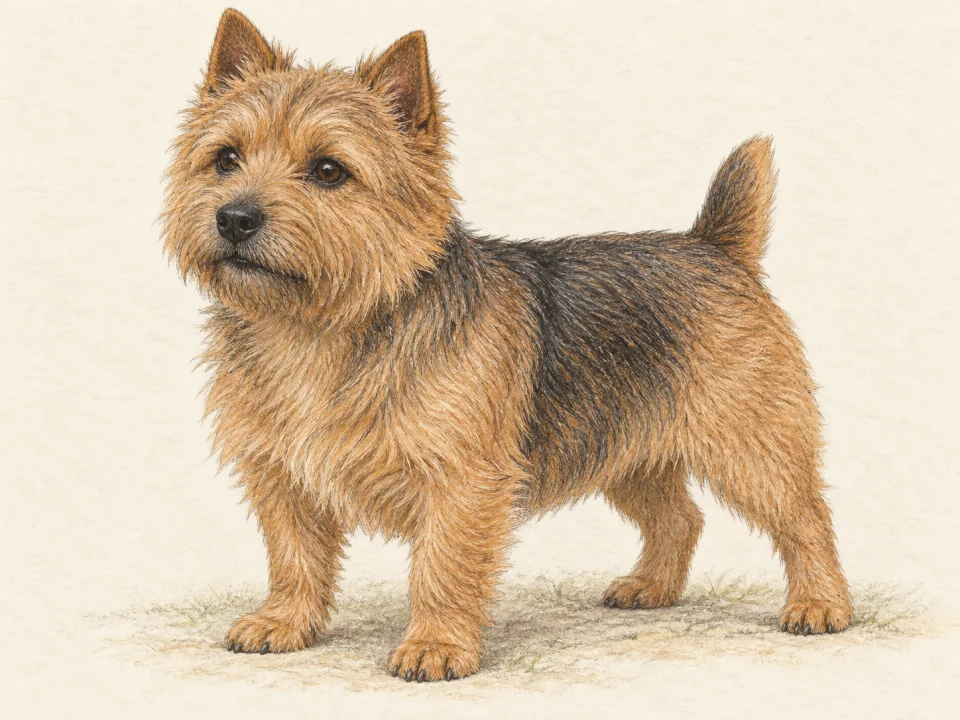
Do not dismiss raspy breathing as a breed quirk
The Norwich Terrier Club of America describes upper airway syndrome affecting the larynx, with signs ranging from noisy breathing to serious difficulty tolerating heat or exercise. It also cautions that a dog without obvious symptoms may still be affected and that other problems can cause airway sounds. Ask a veterinarian to assess persistent or changing noise rather than diagnosing it from the sound alone. A short video taken without delaying care, together with notes about whether the sound occurs at rest, during sleep or with activity, can help describe what you observed. If the dog is struggling to breathe, seek urgent veterinary help instead of trying to reproduce the noise for a recording. When considering a puppy or adult, ask what airway assessment has actually been performed and obtain the report. The published clinical literature describes this syndrome in a nonbrachycephalic terrier, so an ordinary-looking muzzle is not an all-clear.[2]
Plan coat care and activity for a working terrier
AKC describes a harsh outer coat and softer undercoat, with hand stripping used to maintain the wire texture. Clipping can change the texture and color, so discuss the care options with a groomer before choosing a routine. Learn what comfortable home maintenance looks like and which tasks require professional help. The same practical approach applies to activity: choose secure walks and play rather than trusting a small terrier to ignore an animal it wants to pursue. Keep sessions suited to the individual and respond to changes in breathing or comfort rather than insisting on finishing a planned route. For food, remember that the familiar 12-pound breed figure is not a target for every dog; AKC notes variation in height, bone and muscle. Ask your veterinarian to assess body condition and include training treats in the food record, especially when several people share care.[1]
Frequently asked questions
Can a Norwich Terrier have an airway problem without a flat face?
Yes. Published veterinary research describes a distinct upper-airway obstructive syndrome in this nonbrachycephalic breed. Face shape alone cannot establish normal breathing.
Source [1]Does every snorting sound mean Norwich Terrier Upper Airway Syndrome?
No. The breed club notes that other causes can obstruct the airway. A veterinarian needs to investigate; do not dismiss persistent noise or assign a diagnosis from sound alone.
Source [2]Is 12 pounds the correct weight for every Norwich Terrier?
No. AKC notes differences in height, structure and muscle. Use an individual body-condition assessment rather than feeding solely to achieve that breed-standard figure.
Source [3]FAQ sources
Sources & methodology
Breed-level measurements and comparison scores provide context. They do not predict an individual dog's health, behaviour or suitability. Open the original publisher pages below to verify the facts and compare any later updates.
- American Kennel Club — Norwich Terrier ↗Reference 1 · reviewed 2026-09-27
- Norwich Terrier Club of America — Norwich Terrier Upper Airway Syndrome ↗Reference 2 · reviewed 2026-09-27
- Johnson and colleagues — Upper airway obstruction in Norwich Terriers: 16 cases, 2013 ↗Reference 3 · reviewed 2026-09-27
Make it about your dog
Build a profile around your dog's age, experiences and everyday needs.
Meet your dog →Explore local care