
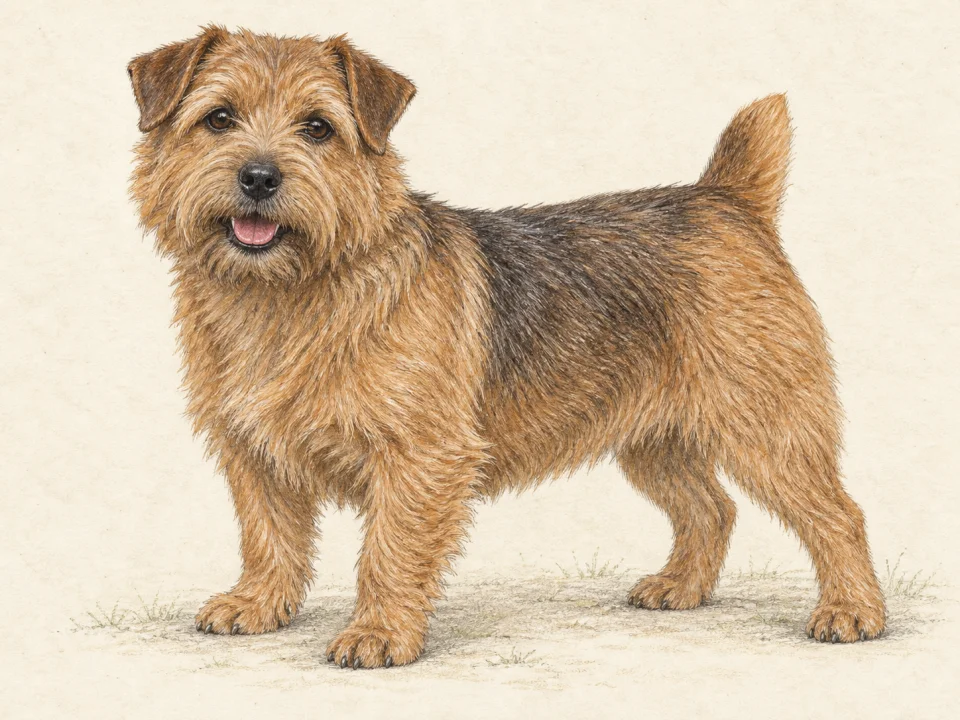
Look for folded ears, then assess the dog beyond its outline
The Norfolk has dropped ears; its close relative, the Norwich Terrier, has upright ears. The Norfolk standard describes a compact working dog, normally 9–10 inches at the shoulder, with weight suited to its structure and balance. Do not turn the familiar 11–12-pound figure into a target that overrides an individual dog’s body condition. When meeting an adult, observe ordinary movement and handling as well as appearance. Ask about walks, time with visitors and experience with other animals. A reputation for being sociable is not a substitute for those details. The breed’s working history also matters at home: decide where a pet hamster or other small animal will live before bringing a terrier into the household, rather than waiting to see whether an unsupervised introduction goes well.[1]
Arrange the coat work and secure outings before arrival
AKC describes a hard outer coat over a softer undercoat and identifies hand stripping as an important grooming consideration. Ask a groomer experienced with this coat to explain the available care routine, demonstrate comfortable handling and clarify the work you will do between appointments. Make that arrangement before assuming any nearby salon offers the same service. For outdoor activity, AKC recommends a leash on outings and a securely fenced yard because of the breed’s prey drive. Walk the boundary from a small dog’s perspective: note openings under gates and the points where someone regularly enters. Share the same exit routine with visitors and sitters. Training can help the dog respond to you, but it should not be the only protection between an interested terrier and a small animal beyond an open gate. Plan enjoyable walks and play without needing to test that boundary.[2]
Frequently asked questions
How can I distinguish a Norfolk Terrier from a Norwich Terrier?
The familiar visible distinction is the ears: Norfolk ears fold down, while Norwich ears stand upright. That difference does not tell you everything about an individual’s behavior or care needs.
Source [1]Must every Norfolk Terrier weigh exactly 11–12 pounds?
No. The AKC standard also allows weight appropriate to the individual’s structure and balance. Discuss healthy body condition with your veterinarian rather than changing food simply to reach a printed breed figure.
Source [2]Does the Norfolk’s small size make off-leash outings straightforward?
No. Its prey interest still needs management. AKC recommends a leash outside securely fenced areas; a small frame does not remove the risk of pursuing another animal.
Source [2]FAQ sources
- American Kennel Club — Norfolk Terrier ↗FAQ reference 1
- American Kennel Club — Norfolk Terrier breed standard ↗FAQ reference 2
Sources & methodology
Breed-level measurements and comparison scores provide context. They do not predict an individual dog's health, behaviour or suitability. Open the original publisher pages below to verify the facts and compare any later updates.
- American Kennel Club — Norfolk Terrier breed standard ↗Reference 1 · reviewed 2026-09-27
- American Kennel Club — Norfolk Terrier ↗Reference 2 · reviewed 2026-09-27
Make it about your dog
Build a profile around your dog's age, experiences and everyday needs.
Meet your dog →Explore local care