
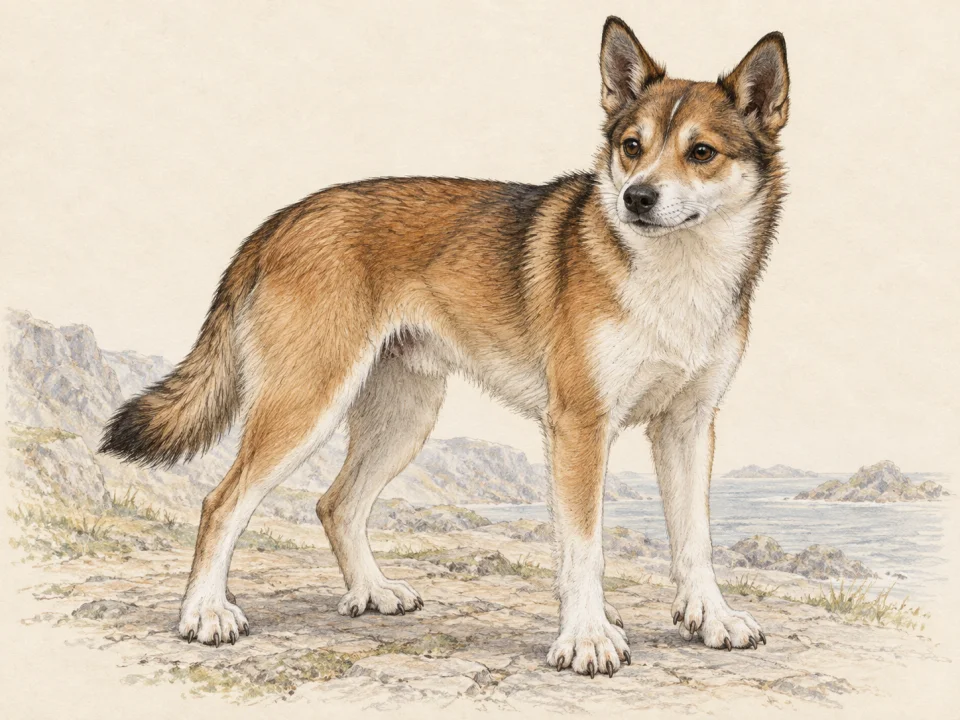
Care for the unusual feet without turning flexibility into a test
The AKC standard describes at least six toes on each foot, extra pads and unusually flexible neck and shoulders, associated with the dog’s former work in narrow puffin nesting places. The useful household response is careful, comfortable handling. Ask your veterinarian or groomer to show you how to check every nail and pad so an extra toe is not overlooked. Keep a simple record if one nail or area needs particular attention. Do not bend the neck or spread the legs to recreate a dramatic breed photograph. Being able to move differently is not an invitation for a person to force that movement. Let the dog demonstrate its ordinary gait naturally and have a new change in comfort or movement assessed rather than dismissing it as another unusual breed feature.[1]
Discuss digestive history before a problem becomes a surprise
The Norwegian breed club highlights intestinal lymphangiectasia and other gastrointestinal problems as important owner concerns. It also stresses that similar signs can have other causes, so a breed-associated condition is not a diagnosis for every episode of diarrhea. Before taking a dog home, request its history of vomiting, loose stool, weight changes, investigations and prescribed diets or medicines. Keep those records together for your veterinarian. If symptoms recur or persist, contact the clinic promptly instead of repeatedly changing food without assessment. A useful observation note records onset, frequency, appetite, drinking, weight and any recent food or medication change. Marked weakness or breathing difficulty needs urgent veterinary attention. Ask the clinician to determine the investigation and treatment plan; an online breed guide should not decide which tests to refuse or supply a universal homemade diet.[2]
Build trust through predictable care
AKC describes a sensitive dog for which harsh training is unsuitable. Make daily handling and learning predictable: introduce one manageable task, reward participation and stop before the session becomes a struggle. This matters for ordinary brushing and nail care as much as for learning a cue. A new caregiver should know the dog’s usual food, any veterinary instructions and the handling routine it accepts, rather than relying on the description “easy-care spitz.” Provide appropriate activity and chances to explore safely, while noticing how the individual copes with unfamiliar people and settings. A quiet recovery space and consistent routine are practical ways to support adjustment without assuming every dog will immediately welcome the same experiences.[3]
Frequently asked questions
Should I demonstrate my Lundehund’s flexibility by moving its neck or legs?
No. The breed’s unusual structure is historical context, not a handling exercise. Allow natural movement and ask a professional to demonstrate comfortable routine care.
Source [1]Does diarrhea automatically mean Lundehund syndrome?
No. The breed club warns that gastrointestinal signs can have several causes. Recurring or persistent signs warrant veterinary assessment, with the dog’s previous records and an observation log.
Source [2]What should a new caregiver know about my Lundehund?
Provide the current feeding and medical instructions, digestive-health history and comfortable handling routine. Clear individual information is more useful than assuming the breed’s small size makes care straightforward.
Source [1]FAQ sources
- American Kennel Club — Norwegian Lundehund breed standard ↗FAQ reference 1
- Norsk Lundehund Klubb — Health and care ↗FAQ reference 2
Sources & methodology
Breed-level measurements and comparison scores provide context. They do not predict an individual dog's health, behaviour or suitability. Open the original publisher pages below to verify the facts and compare any later updates.
- American Kennel Club — Norwegian Lundehund breed standard ↗Reference 1 · reviewed 2026-09-27
- Norsk Lundehund Klubb — Health and care ↗Reference 2 · reviewed 2026-09-27
- American Kennel Club — Norwegian Lundehund ↗Reference 3 · reviewed 2026-09-27
Make it about your dog
Build a profile around your dog's age, experiences and everyday needs.
Meet your dog →Explore local care