
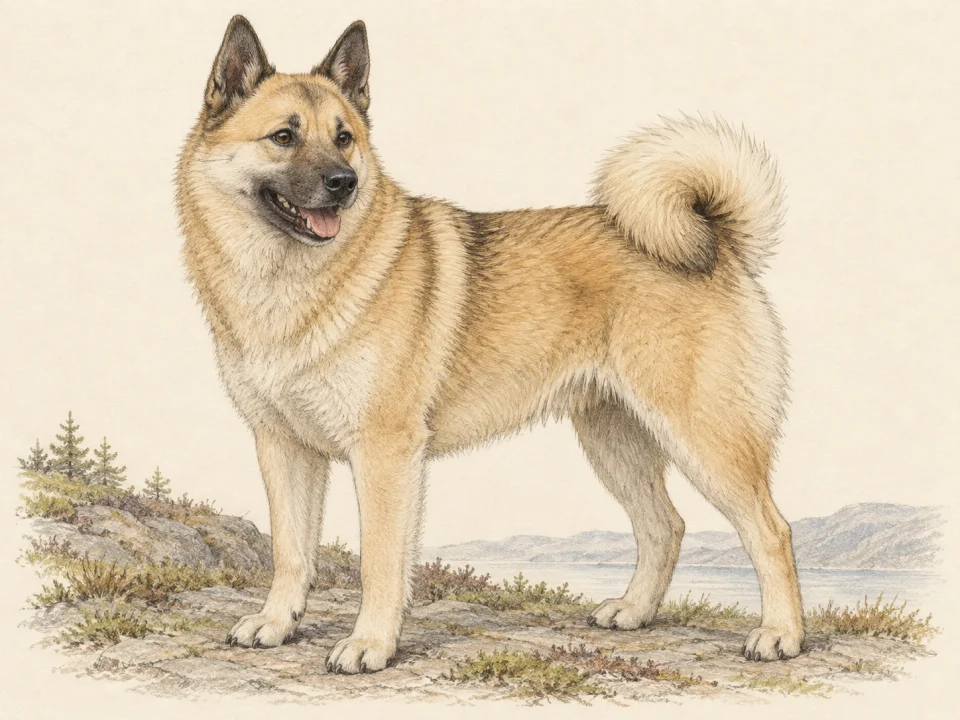
Think farm partner rather than decorative spitz
The FCI standard identifies the Buhund as a farm dog and herder, and explains its name as farmstead dog. Its square build and upright ears belong to a working background, not simply a recognizable outline. The current standard allows wheaten and black coats; color should not become a shortcut for judging a puppy’s behavior. Ask about the actual parents and the individual’s response to movement, visitors and quiet time. If your home has no livestock work, plan how the dog will take part in your everyday life through suitable outings and learning. Write down the routine for an ordinary busy day, not only what you hope to do on a free weekend. That reveals whether your interest in an energetic farm dog matches the time and environment you can consistently provide.[1]
Make learning easier before making the exercise harder
AKC describes a dog that can be independent and sensitive to its surroundings, with positive, reward-based training well suited to it. If a familiar cue stops working in a busy location, first reduce the distraction and ask for an easier response rather than simply repeating the cue more forcefully. Keep notes on where the dog can concentrate and build from there. Activity and learning should work together; a long outing is not a substitute for practicing a calm doorway exit or comfortable handling. The coat adds another recurring task. AKC recommends brushing several times a week and more during undercoat shedding. Arrange short, comfortable grooming sessions and learn how to reach the undercoat without pulling. A caregiver should know both the normal activity routine and what handling the dog has learned, so a change of person does not mean starting over with unfamiliar expectations.[2]
Frequently asked questions
Can a Norwegian Buhund be black rather than wheaten?
Yes. The FCI standard lists both wheaten and black. Choose an individual based on documented health, behavior and household suitability rather than assuming color predicts temperament.
Source [1]What does the name Buhund refer to?
The FCI history explains it as farmstead dog. Herding and farm work provide useful context for its energetic character and the kind of active partnership a companion home should plan.
Source [2]Should I use stronger corrections if a Buhund becomes distracted?
Start by making the task and environment easier. AKC describes sensitivity to surroundings and suitability for positive training. Reward a response the dog can manage and build difficulty gradually rather than escalating frustration.
Source [1]FAQ sources
Sources & methodology
Breed-level measurements and comparison scores provide context. They do not predict an individual dog's health, behaviour or suitability. Open the original publisher pages below to verify the facts and compare any later updates.
- Fédération Cynologique Internationale — Norwegian Buhund standard, March 2026 edition ↗Reference 1 · reviewed 2026-09-27
- American Kennel Club — Norwegian Buhund ↗Reference 2 · reviewed 2026-09-27
Make it about your dog
Build a profile around your dog's age, experiences and everyday needs.
Meet your dog →Explore local care