
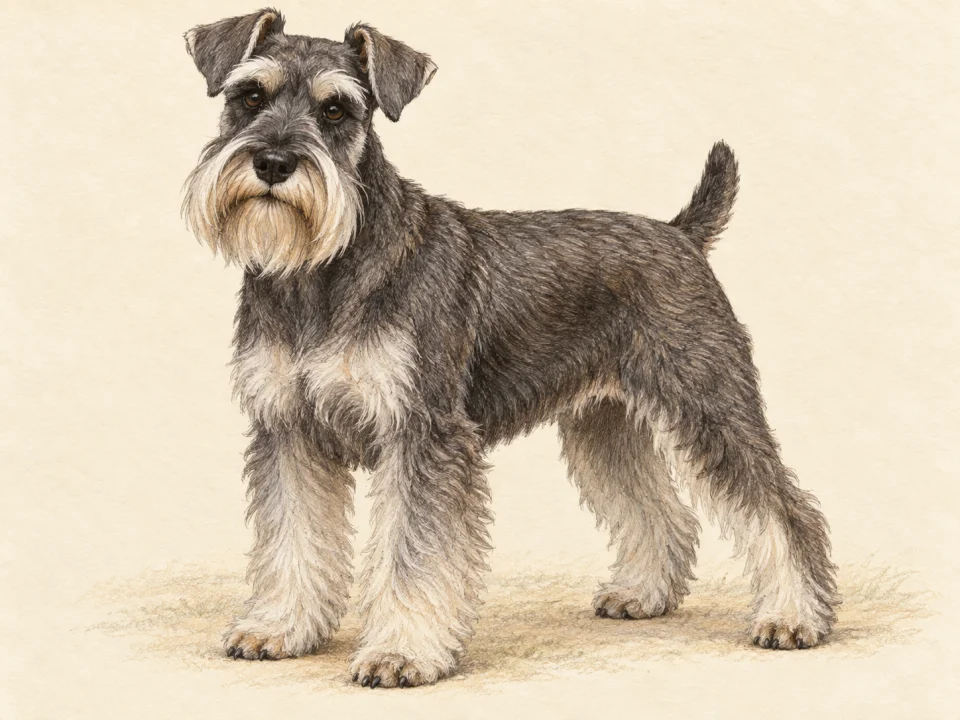
Choose a coat routine you can maintain between appointments
AKC describes a wiry outer coat over a soft undercoat, with frequent brushing and combing needed despite little shedding. Show preparation may involve hand stripping; many pet owners choose professional clipping. Discuss the intended coat length, the work required between visits and how to handle the beard comfortably before choosing a style from a photograph. Ask the groomer to demonstrate a small area so you know how to reach tangles without pulling. Put home care and the next appointment on the same calendar: a neat haircut does not replace the intervening routine. Outdoors, remember the breed’s ratting background. AKC recommends a leash outside fenced areas because of pursuit of small animals. Choose a secure place for play and practice responding to you before distractions become difficult, rather than testing recall near a road.[1]
Read the exact eye-test name on the certificate
The American Miniature Schnauzer Club’s July 2024 statement recommends annual ACVO eye examinations and cardiac evaluation. It also recommends optional DNA testing for myotonia congenita, Mycobacterium avium complex susceptibility and PRA Type B, specifically identifying HIVEP3 as important for the correct PRA test. If a breeder provides a panel result, locate that exact test rather than assuming every item labeled PRA means the same thing. Keep the clinical eye examination date separate from the inherited-condition results. Record the dog’s identity, the named test, the result and any follow-up recommendation. That gives your veterinarian something concrete to interpret and makes it easier to see what information is absent. A long list of tests is useful only when the reports actually apply to the dogs being discussed.[2]
Ask about blood lipids without assuming every Schnauzer needs the same diet
The University of Minnesota describes familial primary hyperlipidemia in Miniature Schnauzers: increased blood triglycerides, sometimes cholesterol, without a known underlying cause. Breed susceptibility does not establish the result for your dog. At a veterinary visit, ask whether lipid assessment is appropriate and what preparation the clinic wants before sampling. Bring the current food, treat and medication information so the discussion is based on what the dog receives. If a result is high, ask what further assessment and follow-up are needed. Avoid choosing supplements or a restrictive diet from another owner’s experience. Keep future results with their dates and the veterinarian’s plan so a new clinic can understand what has changed, rather than relying on the memory that one test was once abnormal.[3]
Frequently asked questions
Does low shedding mean a Miniature Schnauzer needs little grooming?
No. The double coat needs regular brushing and combing as well as appropriate trimming or stripping. Agree on a manageable home routine with a groomer rather than relying only on occasional haircuts.
Source [1]Why does the club name HIVEP3 in its PRA testing recommendation?
Its July 2024 statement specifically identifies HIVEP3 for the recommended PRA Type B DNA test. Check the actual report; an unspecified PRA entry does not demonstrate that this named test was included.
Source [2]Does every Miniature Schnauzer have high blood fats?
No. The University of Minnesota documents breed susceptibility, which is not an individual diagnosis. Ask your veterinarian whether testing is appropriate and how any abnormal result should be investigated and managed.
Source [3]FAQ sources
- American Kennel Club — Miniature Schnauzer ↗FAQ reference 1
- American Miniature Schnauzer Club — Health statement approved July 2024 ↗FAQ reference 2
- University of Minnesota — Hyperlipidemia research ↗FAQ reference 3
Sources & methodology
Breed-level measurements and comparison scores provide context. They do not predict an individual dog's health, behaviour or suitability. Open the original publisher pages below to verify the facts and compare any later updates.
- American Kennel Club — Miniature Schnauzer ↗Reference 1 · reviewed 2026-09-27
- American Miniature Schnauzer Club — Health statement approved July 2024 ↗Reference 2 · reviewed 2026-09-27
- University of Minnesota — Hyperlipidemia research ↗Reference 3 · reviewed 2026-09-27
Make it about your dog
Build a profile around your dog's age, experiences and everyday needs.
Meet your dog →Explore local care