
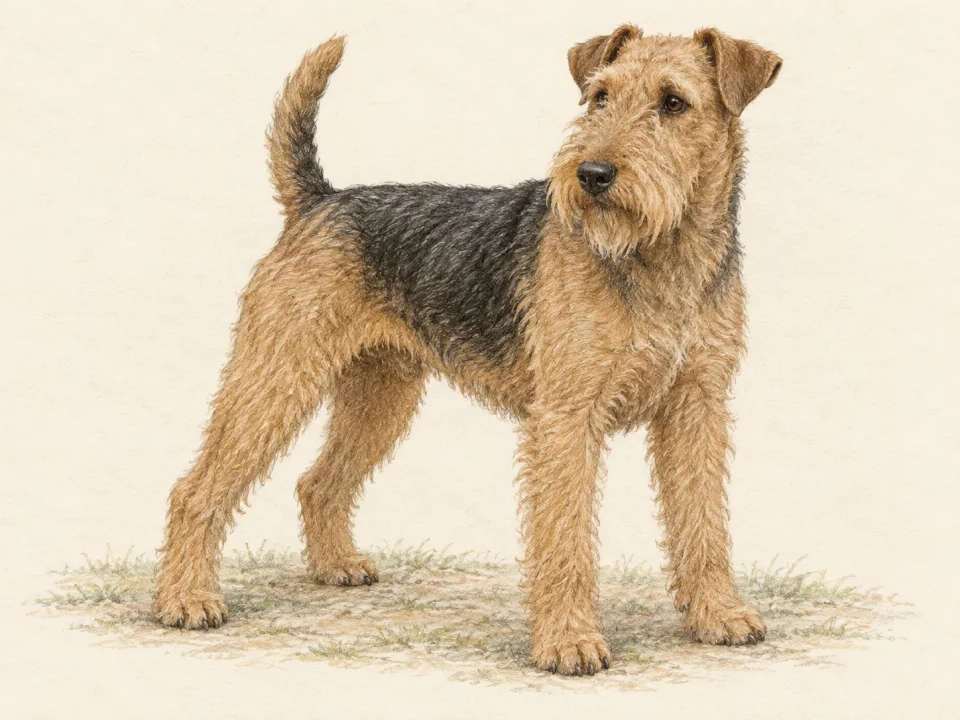
A compact body built for rough country
The AKC standard describes a relatively narrow, deep body and enough leg length to work over the rocky terrain of the Lake District. The intended outline is sturdy and balanced, not a miniature heavy-bodied dog. It recognizes both solid colors and saddle markings, so a dark saddle is not essential to identifying the breed’s accepted appearance. This background is useful when planning outings: the Lakeland’s small size does not mean its interests end at the sofa. At the same time, historical working ability is not a prescription to take a puppy or an unconditioned adult over difficult ground. Choose activity for the dog in front of you, with secure access and attention to its comfort.[1]
Discuss hand-stripping versus clipping before the appointment
AKC explains that hand-stripping maintains the harsh coat, while clipping is an option for a companion but can change its texture and color. The show standard calls for hand-stripping; a pet owner should distinguish that presentation requirement from a practical grooming decision. Ask a groomer experienced with hard-coated terriers what each method involves for this dog, how long it will take and what care is needed between visits. Weekly brushing helps manage loose hair retained in the coat and prevent mats. If the dog is uncomfortable, reassess the technique rather than insisting on a particular finish. A low-shedding coat still needs maintenance, and a breed description should not be treated as an allergy guarantee.[2]
Make learning varied instead of simply repeating it longer
AKC describes a quick learner that can lose interest in repetitive training and recommends rewarding good choices. Build a few useful tasks into ordinary life: waiting while a door is secured, returning attention to you and settling after an outing. Change the setting gradually, keeping the task achievable, rather than drilling the same response after interest has faded. Arrange opportunities for movement and investigation in a secure place. The aim is an engaged companion with workable routines, not to meet an arbitrary mileage target or to prove that a small terrier can keep going indefinitely.[2]
Frequently asked questions
Can a pet Lakeland Terrier be clipped?
AKC describes clipping as an option, while noting changes to coat texture and color. Discuss it with an experienced groomer; hand-stripping is the method specified for the show coat.
Source [1]Must a Lakeland Terrier have a dark saddle?
No. The AKC standard accepts several solid colors as well as saddle-marked dogs. Color alone does not establish pedigree, health or temperament.
Source [2]FAQ sources
- American Kennel Club — Lakeland Terrier ↗FAQ reference 1
- AKC — Official Lakeland Terrier Standard ↗FAQ reference 2
Sources & methodology
Breed-level measurements and comparison scores provide context. They do not predict an individual dog's health, behaviour or suitability. Open the original publisher pages below to verify the facts and compare any later updates.
- AKC — Official Lakeland Terrier Standard ↗Reference 1 · reviewed 2026-09-27
- American Kennel Club — Lakeland Terrier ↗Reference 2 · reviewed 2026-09-27
Make it about your dog
Build a profile around your dog's age, experiences and everyday needs.
Meet your dog →Explore local care