
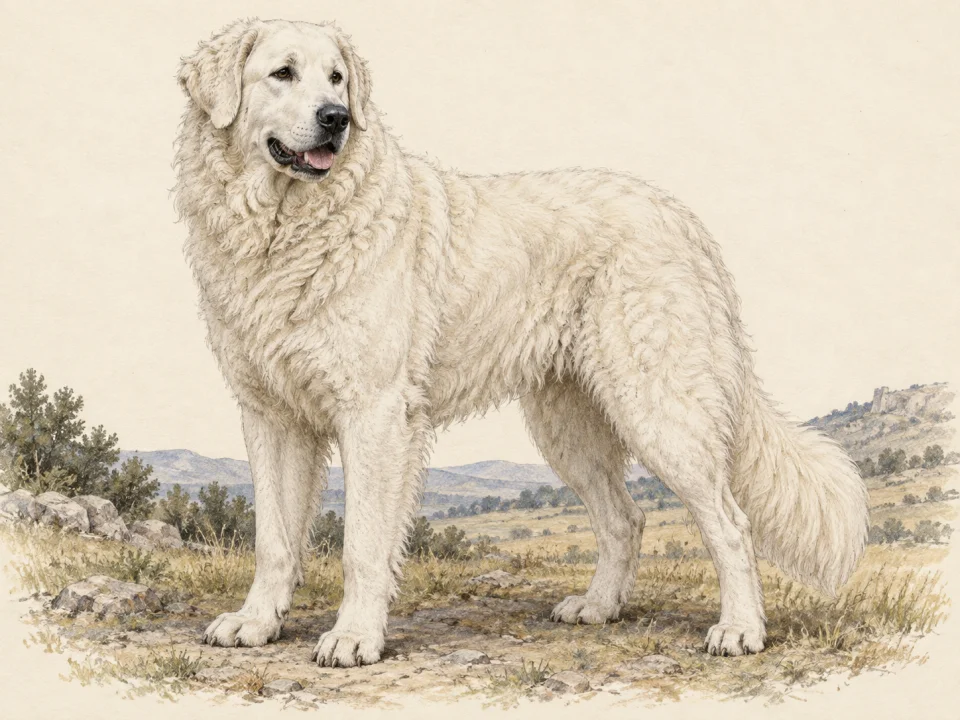
Plan for the adult you will actually handle
AKC lists adult males at 100–115 pounds and females at 70–90 pounds, with a breed lifespan reference of 10–12 years. These figures describe a substantial, long-term care commitment rather than an individual growth or lifespan target. Before collecting a puppy, check the vehicle loading space and the route from your door to the veterinary practice. For an adult adoption, arrange a supervised handling session with its current carer. Find out whether your backup carer can safely manage this dog, not merely whether they have owned smaller dogs.[1]
Keep visitors outside the dog’s decision-making role
The club describes a guardian that may appear quiet before becoming alert to a change. A calm first meeting therefore does not settle how a Kuvasz will respond to a delivery or an unfamiliar visitor. Plan a secure place for the dog before opening the entrance; guests should wait for the household’s instructions. Check gate latches and discuss the enclosure with an experienced breed owner. The club warns against allowing the dog to roam. Being a livestock guardian is not permission to patrol the neighborhood or decide which visitors may enter.[2]
Do not confuse intelligence with immediate compliance
AKC describes the Kuvasz as independent, sensitive and slow to mature, and cautions that it can challenge a novice owner. Keep reward-based practice short and purposeful: for example, settling away from the entrance while a familiar person opens the door. Practice the arrangement without the excitement of an actual party. Do not escalate to harsh handling when progress is slow. Ask a qualified reward-based trainer for help if you cannot manage arrivals comfortably; a breed-wide trainability score cannot tell you how an individual dog will respond in that situation.[1]
Check behind the ears, not only the visible white coat
The club’s grooming guidance specifically identifies the fine hair behind the ears as prone to matting. Ask a groomer to demonstrate how to check this area without pulling. Weekly brushing is a starting routine; shedding and tangles may require more attention. A coat that sheds surface dirt still needs hands-on care. Use brief, rewarded sessions so checking the undercoat becomes familiar. If a mat is tight or handling hurts, seek grooming or veterinary help rather than forcing a comb through it.[2]
Read health results beyond the CHIC number
AKC lists hip, elbow and thyroid evaluations. The linked club statement is dated November 23, 2014: it also names several breeder-option examinations and explains that a CHIC number does not mean every result is normal. Do not treat that dated document as confirmation of today’s complete requirements. Ask which current recommendations apply, then request the actual reports tied to the dog’s identity. Keep the examination date, test name and result together. A parent’s screening record, a puppy examination and an adult’s current symptoms answer different questions and should be discussed separately with your veterinarian.[3]
Frequently asked questions
How long does a Kuvasz live?
AKC gives a 10–12-year reference range. It is not a forecast for a particular dog; review that dog’s health and ongoing care needs when planning an adoption.
Source [1]Does a high trainability score make a Kuvasz easy for a beginner?
No. AKC’s care guidance also describes independence, sensitivity and slow maturity. Choose based on the individual dog and the support you can provide, not a single comparison score.
Source [1]Can a Kuvasz be left to roam as a property guardian?
No. The breed club calls for secure containment and warns against roaming. Arrange controlled entrances and visitor access rather than relying on guarding instincts.
Source [2]Where does a Kuvasz coat need extra attention?
Check the fine hair behind the ears for tangles, as highlighted by the breed club. Do not pull through painful mats; ask a groomer for help.
Source [2]Does a CHIC number prove every health test was normal?
No. The club’s dated health statement explicitly separates a CHIC number from normal results. Read the individual reports and verify current screening recommendations rather than treating the number as an all-clear.
Source [3]FAQ sources
- American Kennel Club — Kuvasz ↗FAQ reference 1
- Kuvasz Club of America — owner brochure (2012) ↗FAQ reference 2
- Kuvasz Club of America — health statement dated November 23, 2014 ↗FAQ reference 3
Sources & methodology
Breed-level measurements and comparison scores provide context. They do not predict an individual dog's health, behaviour or suitability. Open the original publisher pages below to verify the facts and compare any later updates.
- American Kennel Club — Kuvasz ↗Reference 1 · reviewed 2026-09-27
- Kuvasz Club of America — owner brochure (2012) ↗Reference 2 · reviewed 2026-09-27
- Kuvasz Club of America — health statement dated November 23, 2014 ↗Reference 3 · reviewed 2026-09-27
Make it about your dog
Build a profile around your dog's age, experiences and everyday needs.
Meet your dog →Explore local care