
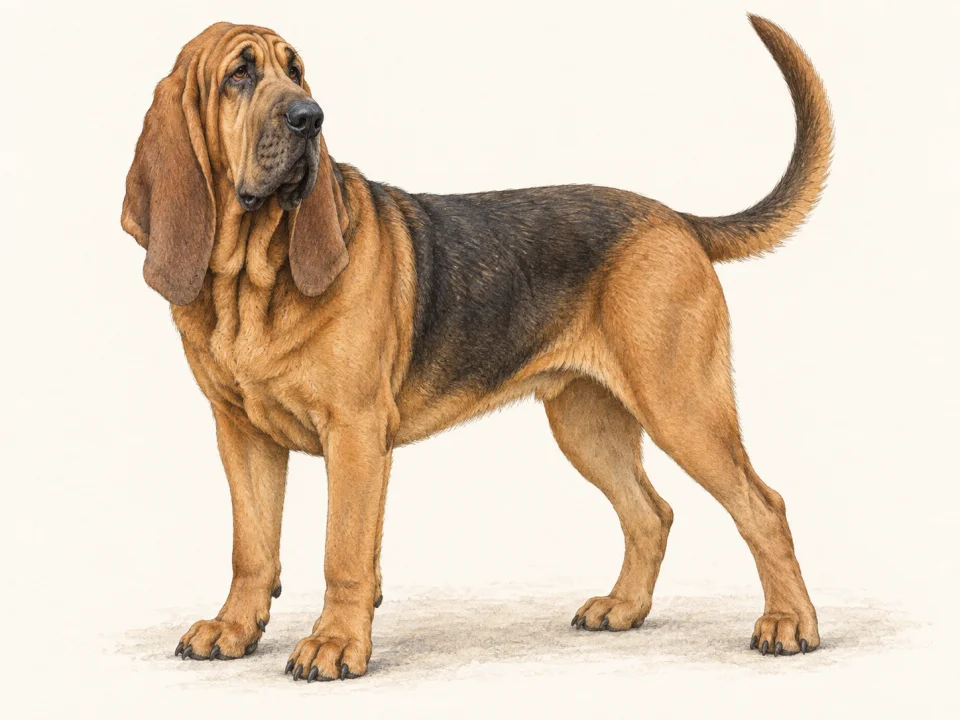
Prepare for the weight behind the nose
AKC references males at 25–27 inches and 90–110 pounds, females at 23–25 inches and 80–100 pounds. Consider transport, walking control and assistance if the adult is injured. A soft expression is not an equipment specification. Measure the individual and teach cooperative movement early, before a sudden interest in a trail makes ordinary handling much more difficult.[1]
Offer sniffing without surrendering control
The Bloodhound was developed to follow scent for extended periods. Suitable walks should provide opportunities to investigate while remaining on leash. Choose routes where the handler can manage the surroundings and teach attention in quieter conditions. A practiced indoor cue may not interrupt a compelling outdoor trail, so do not let successful basic training replace physical control.[1]
Inspect the enclosure below as well as above
The source describes digging and escape behavior. Check the base of fences, gates and places where loose soil invites investigation, then supervise a new dog’s use of the yard. Make sure every carer understands the entrance routine. A boundary that worked yesterday still needs maintenance, especially after weather, deliveries or repeated digging changes the ground.[1]
Make ears and folds a daily check
AKC recommends daily attention to hanging ears and skin wrinkles for irritation or odor. Ask your veterinarian to demonstrate appropriate care and drying, rather than improvising treatment for a sore area. Keep handling gentle and familiar through small rewarded sessions. Persistent redness, pain or a new smell should be assessed separately from routine drool cleanup or ordinary coat grooming.[1]
Reduce access to swallowable household objects
The cited health guidance highlights the breed’s tendency to eat inappropriate items. Keep laundry, small toys and food waste out of reach and inspect the areas the dog uses. Teach exchanging an object for a reward, but do not depend on training as the only barrier. If something concerning may have been swallowed, contact a veterinarian rather than waiting for a breed page to identify the risk.[1]
Pair routine screening with individual care
AKC lists a lifespan of 10–12 years and recommends hip, elbow and cardiac evaluations. Request dated reports and family history while keeping ongoing veterinary care in the plan. Weekly brushing manages the short coat, but does not replace nail, dental or ear attention. A large dog’s comfort and changes in movement deserve investigation even when its usual manner is calm and tolerant.[1]
Frequently asked questions
Are Bloodhounds naturally inactive porch dogs?
No. The cited AKC guidance describes an active scent-working dog needing regular suitable exercise. A relaxed appearance at rest does not describe the whole daily requirement.
Source [1]Can a Bloodhound ignore recall when following a scent?
It may. Keep walks on leash and use secure enclosures for free movement rather than assuming a cue learned elsewhere will interrupt every trail.
Source [1]How often should I check a Bloodhound’s ears and skin folds?
AKC recommends daily checks for irritation or odor. Ask a veterinarian to demonstrate appropriate care and seek assessment for painful or persistent changes.
Source [1]What household preparation helps with indiscriminate swallowing?
Keep laundry, small objects and waste inaccessible, and supervise the dog’s environment. If an unsafe item may have been swallowed, seek veterinary advice rather than relying on training or waiting for symptoms.
Source [1]FAQ sources
- American Kennel Club — Bloodhound breed and care guidance ↗FAQ reference 1
Sources & methodology
Breed-level measurements and comparison scores provide context. They do not predict an individual dog's health, behaviour or suitability. Open the original publisher pages below to verify the facts and compare any later updates.
- American Kennel Club — Bloodhound breed and care guidance ↗Reference 1 · reviewed 2026-09-27
Make it about your dog
Build a profile around your dog's age, experiences and everyday needs.
Meet your dog →Explore local care