
Plan for a guardian’s response before the gate opens
The FCI standard identifies Portugal as the breed’s origin and describes a livestock guardian with distrust of strangers. That background is relevant to a household where delivery drivers, visiting children or tradespeople regularly enter. Write down the arrival sequence before bringing the dog home: who secures the dog, who opens the gate and where a visitor waits. Everyone with access must be able to follow it. A guardian reputation does not mean a dog can distinguish every invited person from a threat without guidance. Ask about the individual’s experience with visitors and arrange introductions with suitable management and professional help when needed. Do not invite someone to provoke or challenge the dog to demonstrate its protective ability.[2]
Choose a care arrangement that still works when you are absent
AKC describes an Estrela as a dog closely attached to its family. That makes the backup-care question more substantial than finding someone willing to fill a bowl. Before travel or an emergency, arrange for the intended carer to learn the dog’s routine and handling needs under controlled conditions. Cover entry to the property, feeding arrangements, walks and veterinary transport. If the dog has not met that person, record the gap rather than assuming affection toward the family extends to a substitute carer. Practice comfortable handling and reward-based learning while the dog is young, with guidance suited to a large guardian breed. A household should be able to manage daily situations without relying on overpowering the adult dog.[1]
Long and short coats share a substantial dog underneath
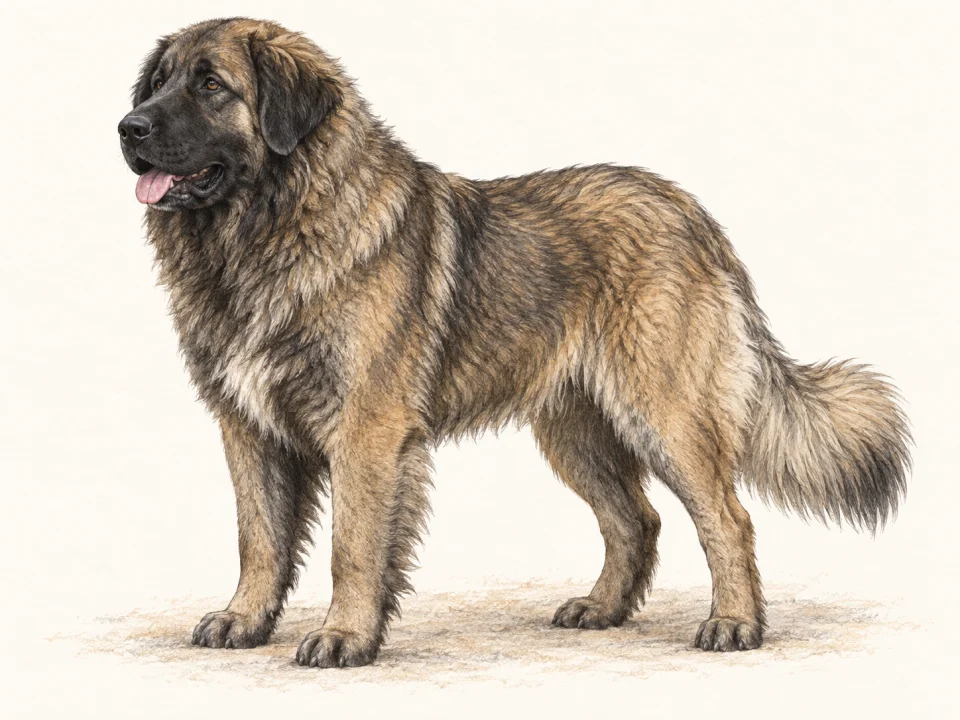
The FCI standard recognizes both long- and short-haired Estrelas. The long variety carries more hair around the neck, tail and rear quarters; the short variety lacks that feathering. Neither description makes coat length a measure of temperament. Have a groomer demonstrate care for the individual coat and plan a stable, comfortable handling space. For transport planning, the FCI weight references are 45–60 kg for males and 35–45 kg for females. Check vehicle access and what help would be available if the dog could not get in independently. Those reference weights are context, not a target to feed toward. Equipment and veterinary handling should fit the actual dog, and a large puppy’s apparent strength should not be mistaken for completed physical development.[2]
Lifespan estimates need context
The AKC profile currently gives different estimates in different sections: 10–14 years in its breed facts and 8–10 years in its nutrition guidance. Those figures do not establish a single reliable prediction for an individual Estrela. For an older dog, obtain its known age, health history and current veterinary assessment. For a puppy, plan for long-term care without treating either endpoint as a guarantee. This guide leaves the conflicting estimates visible rather than combining them into a new range.[1]
Frequently asked questions
Is the Estrela Mountain Dog a Portuguese breed?
Yes. The FCI standard gives Portugal as its origin and connects it with the Serra da Estrela region.
Source [1]Are short-haired Estrelas a different breed?
No. The FCI standard recognizes long- and short-haired varieties of the same breed.
Source [1]Can I assume an Estrela will welcome a pet sitter because it loves its family?
No. Familiarity with family does not establish comfort with a new carer. Prepare introductions and handling arrangements before relying on backup care.
Source [2]FAQ sources
- FCI Standard No. 173 — Estrela Mountain Dog ↗FAQ reference 1
- American Kennel Club — Estrela Mountain Dog ↗FAQ reference 2
Sources & methodology
Breed-level measurements and comparison scores provide context. They do not predict an individual dog's health, behaviour or suitability. Open the original publisher pages below to verify the facts and compare any later updates.
- American Kennel Club — Estrela Mountain Dog ↗Reference 1 · reviewed 2026-09-27
- FCI Standard No. 173 — Estrela Mountain Dog ↗Reference 2 · reviewed 2026-09-27
Make it about your dog
Build a profile around your dog's age, experiences and everyday needs.
Meet your dog →Explore local care