
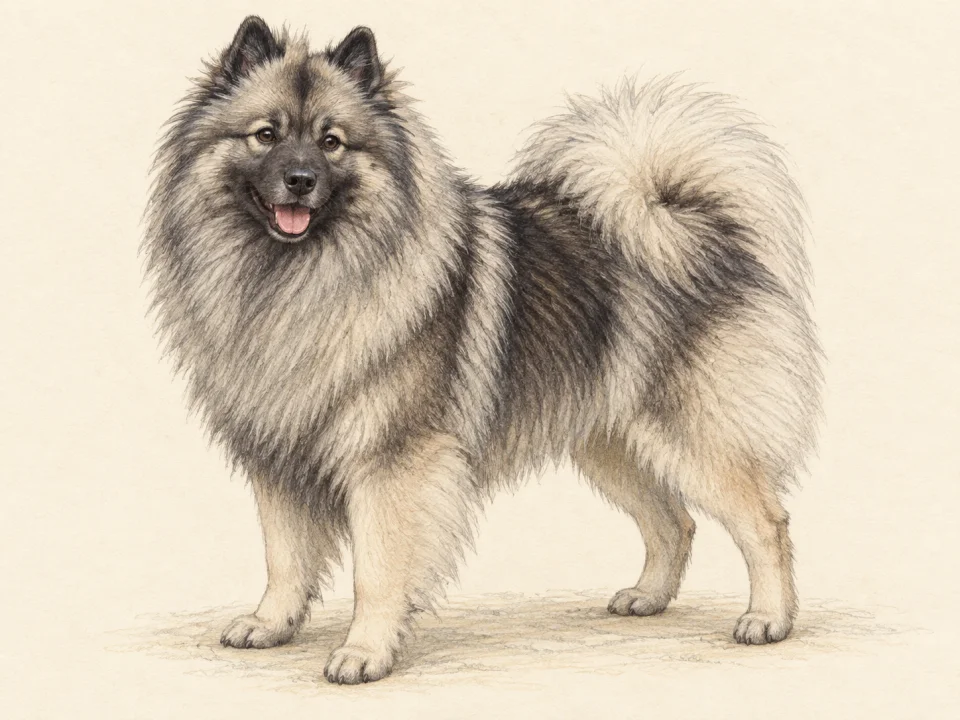
Plan care beneath the fluffy outline
AKC recommends working through the coat weekly with a pin brush, with limited tidying around the feet, pads and hocks. A groomer can demonstrate how to work through the undercoat comfortably rather than simply smoothing the surface. Before bringing a Keeshond home, arrange a place for grooming, establish who will do it and find help for tangles that cannot be managed gently. The breed’s history includes life aboard Dutch barges, but that does not mean confinement alone meets its needs. AKC emphasizes regular activity and time with the family. Think about companionship on a normal working day as well as exercise: an attractive coat and an apparently smiling expression cannot tell you whether an individual is coping well with its routine.[1]
Read the findings behind the CHIC number
The Keeshond Club of America lists hip, elbow, eye and patellar evaluations for its CHIC requirements. It also explains that results need to be public, not necessarily normal, for a CHIC number to be issued. When reviewing a litter, request each parent’s identifiable reports and look at the findings rather than stopping at a number or badge. The club lists PHPT, thyroid and cardiac testing separately as additional tests that can be recorded. Keep a simple record with the dog’s registered identity, examination or test name, date, laboratory or examiner, and result. This makes it easier to ask a veterinarian about a missing item or an unclear interpretation without assuming that one certificate represents every health question.[2]
PHPTQ results need the laboratory’s caveat attached
Cornell resumed Keeshond primary hyperparathyroidism testing in January 2025 with PHPTQ, an assay that reports whether a particular DNA insertion is present or absent. Its laboratory notice says the assay underwent analytical validation but not clinical validation because clinically recognized cases were unavailable. Cornell therefore calls for caution in clinical interpretation. Preserve that limitation when discussing a report: detecting a genetic target and predicting an individual dog’s illness are different questions. Ask your veterinarian to interpret the named test alongside the dog’s other information. Do not rewrite an “insertion absent” report as a guarantee against every cause of abnormal calcium or future illness. Cornell requires PHPTQ submissions through a registered veterinarian.[3]
Frequently asked questions
Does a Keeshond CHIC number mean every screening result was normal?
No. The Keeshond Club of America says the results must be public but do not all have to be normal. Read the individual hip, elbow, eye and patellar reports.
Source [1]Is Cornell’s PHPTQ result a definite prediction of disease?
It should not be presented that way. Cornell reports a DNA insertion result and specifically cautions about clinical interpretation because clinical validation was not performed. Discuss the actual report with your veterinarian.
Source [2]FAQ sources
Sources & methodology
Breed-level measurements and comparison scores provide context. They do not predict an individual dog's health, behaviour or suitability. Open the original publisher pages below to verify the facts and compare any later updates.
- American Kennel Club — Keeshond ↗Reference 1 · reviewed 2026-09-27
- Keeshond Club of America — Health Information ↗Reference 2 · reviewed 2026-09-27
- Cornell University Animal Health Diagnostic Center — Keeshonden PHPTQ Genetic Test ↗Reference 3 · reviewed 2026-09-27
Make it about your dog
Build a profile around your dog's age, experiences and everyday needs.
Meet your dog →Explore local care