
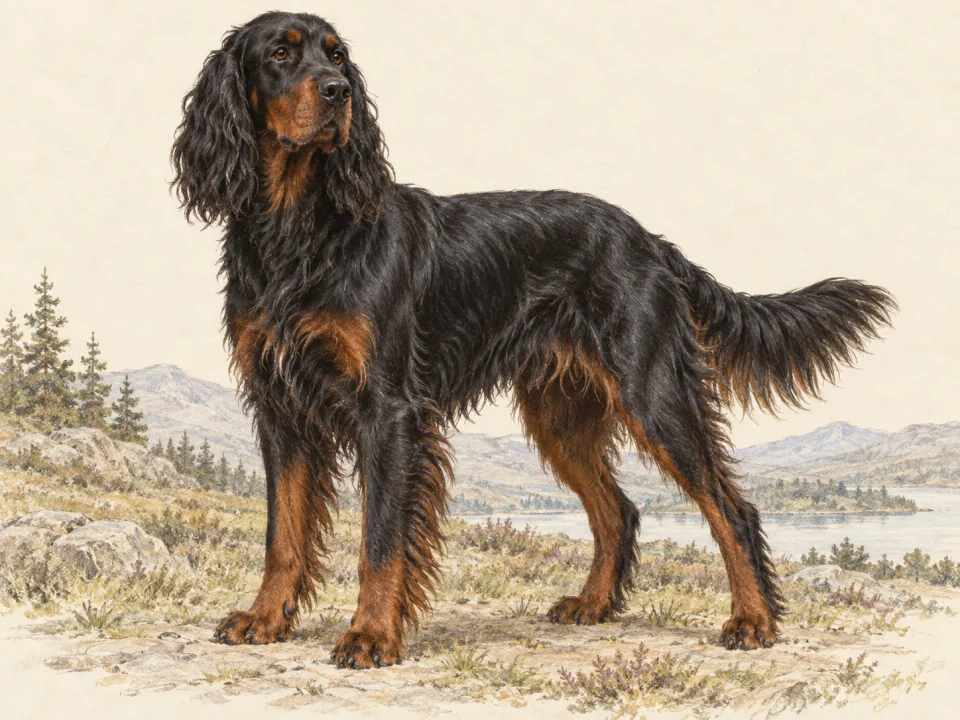
Make room for the feathering after the outing
The long hair on a Gordon’s ears, belly, legs and tail is part of the practical difference between living with this setter and a short-coated sporting dog. AKC recommends at least weekly brushing to prevent mats. Build coat inspection into the return from an outing, especially when the dog has moved through vegetation, rather than waiting until a knot is tight enough to hurt. Ask a groomer to demonstrate safe handling of the feathering and identify areas that need professional trimming. Keep the dog on a comfortable, secure surface and pause if handling causes distress. The routine should leave time for both activity and cleanup. AKC describes a dog that enjoys doing things with its owner; a fenced yard can be useful, but consider whether you also want the shared outings and training that come with a bird dog. Before choosing a puppy, meet adult Gordons and ask about the daily routine behind the groomed photograph. A male can be substantially larger than a female, so assess the individual’s likely size rather than treating all setters as interchangeable.[1]
Why a normal-looking young dog still needs eye-health records
UC Davis describes rcd4-PRA as a late-onset inherited retinal disorder; signs commonly emerge between five and twelve years. A young Gordon navigating normally therefore cannot establish its genetic status by observation. The laboratory distinguishes clear, carrier and two-copy results for the tested variant. It also notes that some PRA-affected Gordons did not have that variant, so a clear rcd4 result does not exclude every cause of PRA. For a breeder conversation, request identifiable DNA reports as well as dated clinical eye findings. For your own dog, take any change in navigation or vision to a veterinarian instead of waiting for a particular age or assuming an old report explains it. Keep the report available, but let the examination determine the next steps. The useful distinction is between inherited information about a specific variant and what a clinician can assess about the eyes now.[2]
Frequently asked questions
Does carrying one rcd4-PRA variant mean a Gordon Setter will develop that form of PRA?
UC Davis describes a one-copy dog as an unaffected carrier of this form. The result matters for breeding decisions and does not exclude unrelated eye disease; review the report with a veterinarian.
Source [1]Which coat areas need attention beyond the Gordon Setter’s back?
The ears, belly, legs and tail carry longer hair. Include those areas in a gentle grooming routine and have a professional show you how to manage tangles safely.
Source [2]FAQ sources
- UC Davis Veterinary Genetics Laboratory — Progressive Retinal Atrophy, rcd4-PRA ↗FAQ reference 1
- American Kennel Club — Gordon Setter ↗FAQ reference 2
Sources & methodology
Breed-level measurements and comparison scores provide context. They do not predict an individual dog's health, behaviour or suitability. Open the original publisher pages below to verify the facts and compare any later updates.
- American Kennel Club — Gordon Setter ↗Reference 1 · reviewed 2026-09-27
- UC Davis Veterinary Genetics Laboratory — Progressive Retinal Atrophy, rcd4-PRA ↗Reference 2 · reviewed 2026-09-27
Make it about your dog
Build a profile around your dog's age, experiences and everyday needs.
Meet your dog →Explore local care