
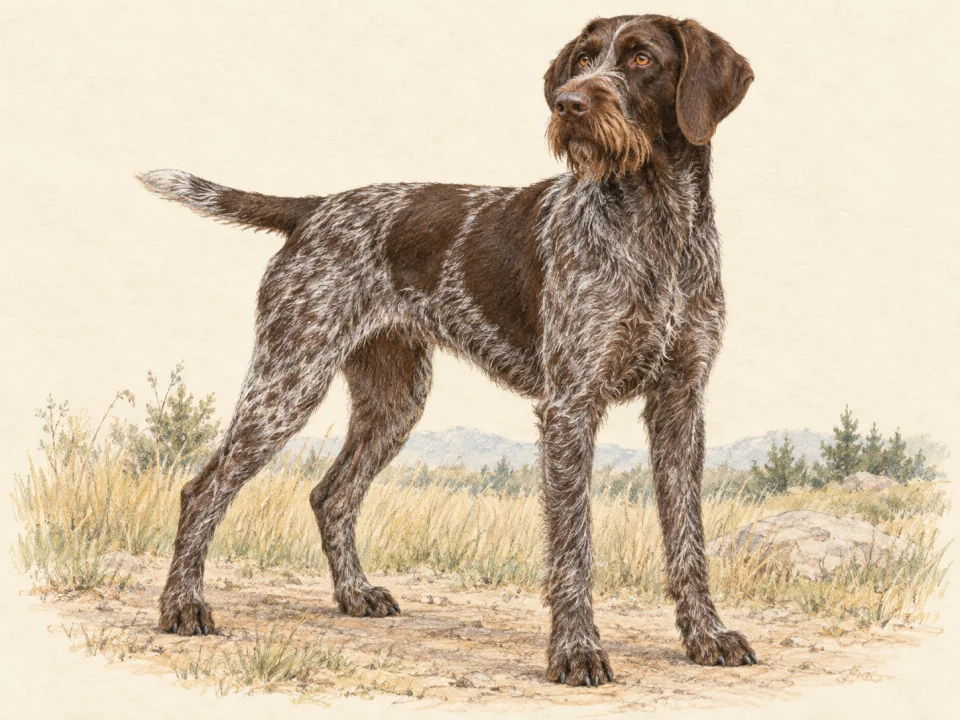
The working coat is more than a beard
The AKC standard describes a harsh outer coat, generally one to two inches long, over an undercoat that changes with the season. Its weather resistance is functional: a soft, woolly coat is not the texture the standard describes. Puppy coats may be shorter than adult coats, so a puppy photograph cannot settle every question about mature grooming. Ask to see the coat close up and have a knowledgeable groomer demonstrate care for the individual dog. A useful handover records the tools used on the body separately from how to handle the face and softer hair between the toes. Do not pull through snagged material simply because the outer coat feels tough. The standard favors a natural presentation; an elaborate sculpted outline is not the objective. Weather resistance also does not establish a safe temperature or duration outdoors for an individual dog. Plan shelter and assess conditions rather than interpreting a breed description as permission for unrestricted exposure.[2]
A sporting partner needs shared time
AKC emphasizes both outdoor activity and human companionship. A garden can provide space, but it does not provide the interaction involved in tracking, training or a walk together. For a prospective owner, an informative visit is one that includes ordinary handling and a transition after activity, not only watching the dog work enthusiastically. Ask the breeder or rescue how this individual responds when an outing ends, when visitors arrive and when a familiar person leaves. These are questions to investigate, not behaviors guaranteed by a breed label. If pursuing a sport, arrange instruction and discuss suitable conditioning with the veterinarian before adding demanding work. For everyday maintenance, AKC suggests a weekly comb and soft slicker brush; adapt that routine to actual dirt and loose hair. After outdoor activity, make time to inspect the dog as well as store the equipment. Record persistent ear irritation or discomfort for veterinary attention instead of treating repeated cleaning as the whole solution.[1]
Frequently asked questions
Should a German Wirehaired Pointer have a soft, woolly body coat?
That is not the coat described in the AKC standard. It calls for a harsh, wiry outer layer and a seasonal undercoat. Ask for grooming advice suited to the actual coat rather than trying to change its texture with forceful grooming.
Source [1]Does a large yard replace activity with the owner?
No. AKC describes a dog that enjoys outdoor activities with people and craves companionship. Available space and time spent together are separate parts of assessing whether the breed fits your home.
Source [2]Is 22 inches the upper height limit for a female?
No. The AKC standard gives 22 inches as the female minimum. It specifies 24–26 inches for males; those figures should not be combined into one identical range for both sexes.
Source [1]FAQ sources
Sources & methodology
Breed-level measurements and comparison scores provide context. They do not predict an individual dog's health, behaviour or suitability. Open the original publisher pages below to verify the facts and compare any later updates.
- American Kennel Club — German Wirehaired Pointer ↗Reference 1 · reviewed 2026-09-27
- AKC Official Standard — German Wirehaired Pointer, effective January 2007 ↗Reference 2 · reviewed 2026-09-27
Make it about your dog
Build a profile around your dog's age, experiences and everyday needs.
Meet your dog →Explore local care