
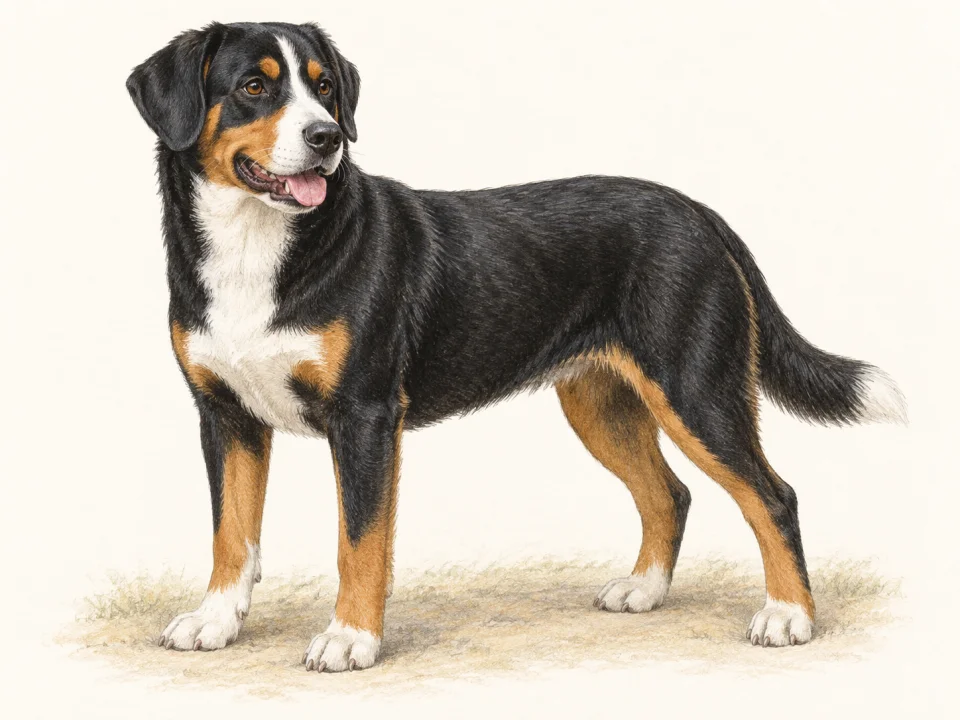
Judge the work involved, not only the height
AKC describes a determined cattle mover and an independent problem solver, rather than a quiet miniature mountain dog. When considering an Entlebucher, identify an activity you genuinely want to teach and practice together, such as a suitable tracking or obedience activity, and find the instruction needed to start it. Do not assume that access to a yard creates a job or that physical exhaustion is the goal of every day. Ask the breeder or rescue what motivates the individual and how it behaves between activities. A useful observation includes both engagement with a handler and recovery afterward. Short-coat maintenance is a separate consideration: the coat is relatively straightforward to care for, but it still sheds. Neither low grooming effort nor a manageable height measures the effort involved in directing an active cattle dog.[1]
Persistent urine leakage is a veterinary question, not a training verdict
NEMDA describes ectopic ureter as a congenital urinary-system abnormality and notes that leakage or recurrent urinary infections may become apparent while a puppy is being house-trained. Persistent dribbling, wet bedding or repeated difficulties deserve a veterinary discussion rather than an assumption that the puppy is defiant. These observations do not establish a diagnosis: a veterinarian must investigate the cause. Prepare a short record of when leakage occurs, whether the dog was asleep or active, and any other changes you noticed. Bring prior veterinary records and the club’s information to the appointment. NEMDA cautions that no breeding line can guarantee a puppy free of this condition, so a reassuring sales phrase should not replace an honest discussion of family history and any examinations actually performed.[2]
Separate a PRA result from the rest of the eye record
NEMDA lists hips, eyes, patellas and PRA among the breed’s CHIC requirements, and emphasizes that eye health can change, making annual examinations important. Its breeder guidance also states that there is currently no genetic test for glaucoma in this breed. A result for PRA therefore should not be presented as excluding every eye condition. Ask for the precise test name, the clinical eye report and its date, rather than accepting an unspecific “eyes clear.” Record which findings belong to each parent and discuss their meaning with your veterinarian. This distinction gives you a more useful comparison between breeders than the number of items on a commercial DNA panel. Continue the individual dog’s recommended veterinary care even when parental records are reassuring.[3]
Frequently asked questions
Does repeated urine leakage mean my Entlebucher puppy needs firmer house-training?
No. Persistent leakage needs veterinary assessment. NEMDA identifies urinary abnormalities as one possible concern; observations alone cannot determine the cause.
Source [1]Does a clear PRA result exclude glaucoma?
No. NEMDA distinguishes PRA testing from other eye conditions and states that no genetic test for glaucoma is currently available for this breed. Ask for clinical eye examination records as well.
Source [2]Is an Entlebucher low-maintenance because it has short hair?
Only considering its coat would miss the larger commitment. AKC describes an energetic, independent cattle dog needing activity, training and time with its people; the short coat also sheds.
Source [3]FAQ sources
- NEMDA — Ectopic Ureter ↗FAQ reference 1
- NEMDA — Selecting an Entlebucher Breeder ↗FAQ reference 2
- American Kennel Club — Entlebucher Mountain Dog ↗FAQ reference 3
Sources & methodology
Breed-level measurements and comparison scores provide context. They do not predict an individual dog's health, behaviour or suitability. Open the original publisher pages below to verify the facts and compare any later updates.
- American Kennel Club — Entlebucher Mountain Dog ↗Reference 1 · reviewed 2026-09-27
- NEMDA — Ectopic Ureter ↗Reference 2 · reviewed 2026-09-27
- NEMDA — Selecting an Entlebucher Breeder ↗Reference 3 · reviewed 2026-09-27
Make it about your dog
Build a profile around your dog's age, experiences and everyday needs.
Meet your dog →Explore local care