
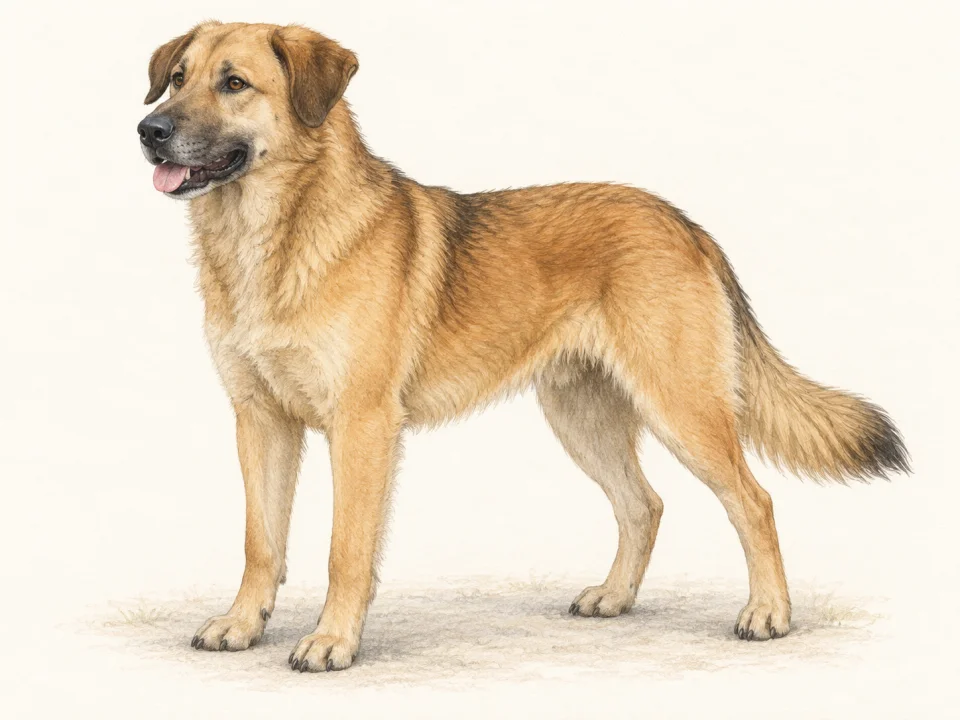
Distinguish a relaxed manner from a sedentary routine
AKC describes a calm companion with a working background combining freighting power and sledding ability. Ask about the individual’s normal activity and recovery rather than judging needs from a quiet first meeting. A suitable home offers regular engagement with people. Resting near the family is part of the routine, not evidence that all physical and mental activity can be omitted.[1]
Prepare for an affectionate adult’s size
The cited reference gives males at 55–90 pounds and females at 50–65 pounds. AKC notes that young Chinooks may greet enthusiastically and jump toward faces. Teach approaching with feet on the ground and reward calm contact before that habit becomes physically difficult. Supervise interaction with children and anyone unsteady on their feet despite the breed’s friendly reputation.[1]
Learn pulling activities before attempting them
Sledding, skijoring and bikejoring are among the activities identified by AKC. Seek experienced instruction on equipment and control, and match the workload to the dog’s development and condition. A breed developed for hauling does not automatically understand safe starts, stops or a particular setup. Ordinary appropriate walks and learning tasks can support the routine while those skills are prepared.[1]
Reward cooperation without assuming perfect recall
The cited guidance supports positive reinforcement. Practice returning attention and coming when called in manageable settings, increasing difficulty gradually. Even a reputation for good off-leash responsiveness cannot guarantee a response to every distraction. Use a leash or secure area as needed, and plan outings around the individual’s current skills instead of a general promise about the breed.[1]
Make room for heavier seasonal brushing
AKC recommends weekly brushing of the plush double coat, with daily sessions during heavier shedding. Check the actual coat rather than relying solely on the calendar. Keep sessions comfortable and attend to nails, ears and teeth separately. Regular care also provides an opportunity to notice a new handling sensitivity, which should not be dismissed simply because grooming takes longer that week.[1]
Ask about movement episodes and the screening records separately
The cited health discussion describes unusual movement episodes sometimes called Chinook seizures, while noting uncertainty about that label. Do not self-diagnose an episode from the name. Seek veterinary assessment and provide observations. The recommended panel includes hip and eye evaluations plus chondrodysplasia and MDR1 DNA tests; ask for identifiable reports and interpretation rather than assuming these explain every symptom.[1]
Frequently asked questions
Does a mellow Chinook need little exercise?
Not necessarily. AKC describes a working dog that benefits from consistent shared activity. Judge the individual’s routine rather than its behavior during one quiet meeting.
Source [1]How can I manage an enthusiastic greeting?
Teach approaching with feet on the ground and reward calm contact. An affectionate adult can still knock someone off balance, so supervise interactions.
Source [1]Is a Chinook guaranteed to respond off leash?
No. Practice recall gradually and use suitable physical management. A favorable breed reputation does not guarantee behavior around every distraction.
Source [1]Can a movement episode be diagnosed as a Chinook seizure at home?
No. The cited discussion notes uncertainty around that label. Obtain veterinary assessment and provide specific observations rather than assigning a diagnosis from breed information.
Source [1]FAQ sources
- American Kennel Club — Chinook breed and care guidance ↗FAQ reference 1
Sources & methodology
Breed-level measurements and comparison scores provide context. They do not predict an individual dog's health, behaviour or suitability. Open the original publisher pages below to verify the facts and compare any later updates.
- American Kennel Club — Chinook breed and care guidance ↗Reference 1 · reviewed 2026-09-27
Make it about your dog
Build a profile around your dog's age, experiences and everyday needs.
Meet your dog →Explore local care