
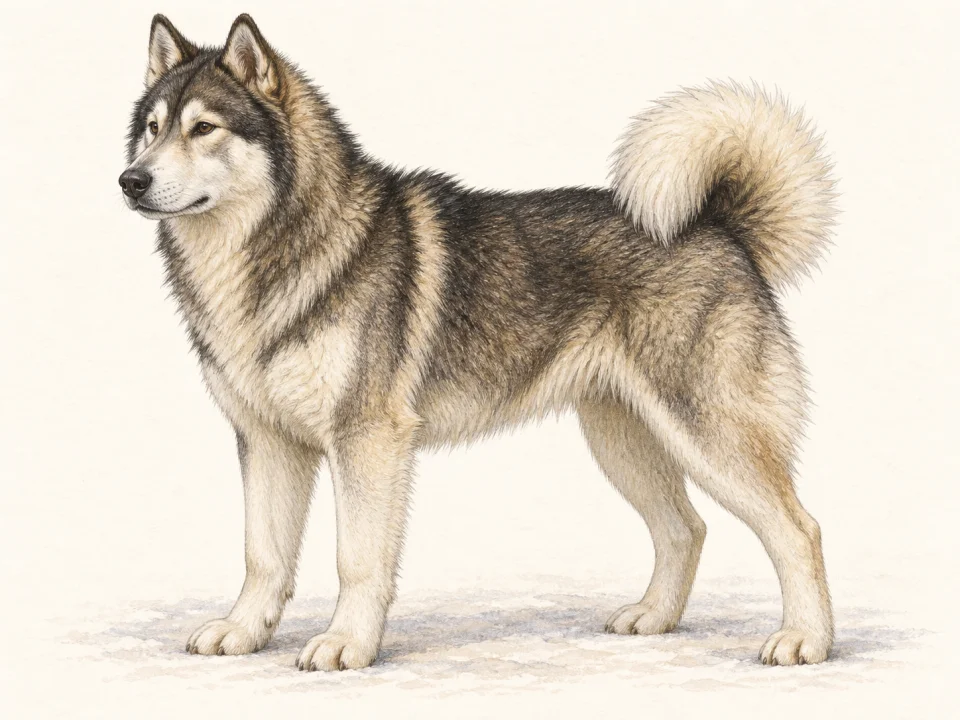
Respect the working history without turning it into a prescription
AKC connects the breed’s history with Inuit communities and describes draft, hunting and pack work in the Arctic. That background explains why purposeful movement matters, but historical accounts of loads and distances are not instructions for a household dog. Ask about the individual’s condition, experience and care requirements before selecting an activity or assuming it can safely repeat historical work.[1]
Check whether your household can support pulling activities
The cited guidance identifies sledding, skijoring, bikejoring and canicross among possible outlets. Each needs preparation beyond attaching a line and starting. Seek experienced instruction about equipment, control and suitable conditions before participating. Choose an option you can realistically maintain where you live, with a backup plan for days when the usual route, weather or trained partner is unavailable.[1]
Keep early learning separate from heavy work
The source distinguishes early light introductions from heavy loads. Do not treat a single birthday or a breed label as proof that a dog is ready for strenuous pulling. Discuss growth, health and conditioning with your veterinarian and an experienced activity instructor. Basic cooperation, comfortable equipment and controlled starts can be learned without asking the dog to perform demanding work prematurely.[1]
Plan for control at the start and finish
For a pulling-oriented companion, the transitions matter as much as movement itself. Practice waiting while equipment is fitted, starting on a clear cue and settling after an appropriate session. Keep early practice in a manageable setting. A written caregiver routine can prevent one person releasing the dog while another is still adjusting gear or preparing to move safely.[1]
Assess companions and space individually
The cited guidance includes fenced play as an activity option, but that is not a guarantee of compatibility with every dog. Ask about existing social experience, supervise introductions and provide separation when needed. Confirm that the outdoor space and equipment suit the individual. Adult size varies by sex in the AKC reference, so measure the actual dog when planning transport and containment.[1]
Ask for a complete care plan where the source is limited
The cited AKC page does not supply a detailed grooming section or a named health-test panel. Request the dog’s records and a demonstrated coat-care routine, and discuss nutrition and screening with a veterinarian. Historical Arctic foods and workloads should not be copied into a modern pet diet. The listed 10–15-year lifespan is a reference, not proof of health or a prediction.[1]
Frequently asked questions
Can I use historical pulling distances as my dog’s exercise target?
No. Historical draft work is background information. Suitable workload depends on the individual’s health, maturity, conditioning, equipment and conditions.
Source [1]Is bikejoring as simple as attaching the dog to a bicycle?
No. Seek experienced instruction on equipment, control and appropriate conditions, and prepare both dog and handler before attempting the activity.
Source [1]Does fenced play mean this breed is safe with every dog?
No. Assess the individual’s experience and compatibility, supervise introductions and provide separation when needed.
Source [1]Does the cited AKC page provide a complete health-screening checklist?
No named panel is provided there. Obtain the individual’s records and discuss screening, nutrition and ongoing care with a veterinarian.
Source [1]FAQ sources
Sources & methodology
Breed-level measurements and comparison scores provide context. They do not predict an individual dog's health, behaviour or suitability. Open the original publisher pages below to verify the facts and compare any later updates.
- American Kennel Club — Canadian Eskimo Dog breed and care guidance ↗Reference 1 · reviewed 2026-09-27
Make it about your dog
Build a profile around your dog's age, experiences and everyday needs.
Meet your dog →Explore local care