
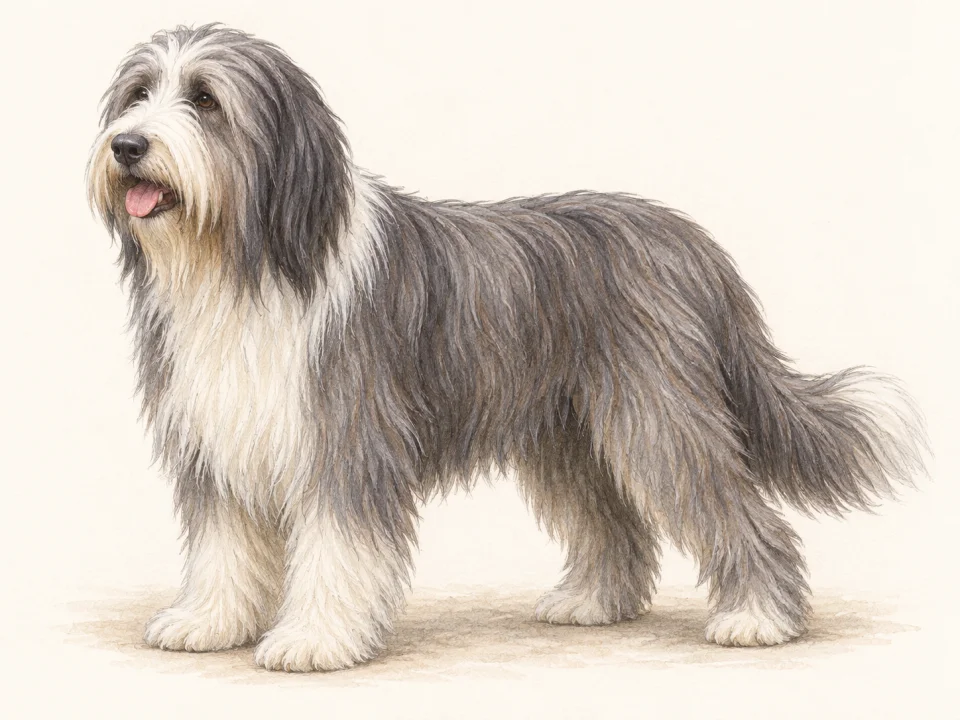
Look beneath the shaggy outline
AKC references males at 21–22 inches, females at 20–21 inches, with a weight range of 45–55 pounds. The coat can make the dog appear broader than its actual frame. Measure for equipment and assess body condition by appropriate hands-on checks with veterinary guidance. Do not use the amount of hair as evidence that the dog is heavy, thin or physically mature.[1]
Separate the quick check from the full groom
The AKC routine has two parts: a brief daily removal of tangles and debris, then a more thorough weekly session to work through the coat and remove loose hair. Put both on the household calendar. A rushed pass over the surface should not be counted as the deeper session. Ask a breed-familiar groomer to demonstrate tools and comfortable section-by-section technique.[1]
Build a post-outing habit that prevents accumulation
After outdoor play, inspect the beard, legs and areas touched by equipment for debris or developing tangles. Deal with small manageable problems gently before the next outing adds more material. If grooming hurts or a knot is tight against skin, seek suitable help. Regular attention is easier on the dog than allowing everything to build up for an infrequent marathon session.[1]
Provide activity with a plan for busy days
Beardies are energetic and often enthusiastic about outdoor play. Suitable walks, shared games and dog activities can provide useful outlets, adjusted to development and health. Work out what the routine becomes when weather or work disrupts the usual outing. A big yard offers space, while a person still supplies engagement and observes whether the dog is comfortable and recovering normally.[1]
Make independence compatible with clear teaching
A dog bred to make decisions can lose interest in repetitive instructions. Use short reward-based lessons with a clear achievable action, then increase distractions gradually. Practise a calm greeting before expecting it from an excited adolescent. Family friendliness does not eliminate the need to supervise children or give the dog a quiet resting option when a household gathering becomes busy.[1]
Request the screening results behind general reassurance
AKC lists a lifespan of 12–14 years and recommends hip, elbow, eye and thyroid evaluations. Ask for dates and identities on the actual reports, then discuss wider family history. Keep dental, ear and nail care in the daily-life plan as well. A long coat and an exuberant manner can distract from subtle discomfort, so investigate changes rather than explaining everything through breed personality.[1]
Frequently asked questions
How often does a Bearded Collie need grooming?
The cited AKC routine combines a brief daily tangle-and-debris check with a more thorough weekly grooming session. Surface brushing alone does not replace working through the coat.
Source [1]Can I judge a Beardie’s weight from its fluffy outline?
Not reliably. The coat changes the apparent shape. Use individual measurements and appropriate body-condition assessment rather than judging from hair volume.
Source [1]Does a Bearded Collie need more than yard access?
Yes. Plan suitable shared activity and mental engagement. Available space does not itself provide a consistent routine or supervision.
Source [1]Which health screening records should I ask for?
AKC recommends hip, elbow, eye and thyroid evaluations. Request identifiable dated reports and review wider health history with the breeder and veterinarian.
Source [1]FAQ sources
Sources & methodology
Breed-level measurements and comparison scores provide context. They do not predict an individual dog's health, behaviour or suitability. Open the original publisher pages below to verify the facts and compare any later updates.
- American Kennel Club — Bearded Collie breed and care guidance ↗Reference 1 · reviewed 2026-09-27
Make it about your dog
Build a profile around your dog's age, experiences and everyday needs.
Meet your dog →Explore local care