
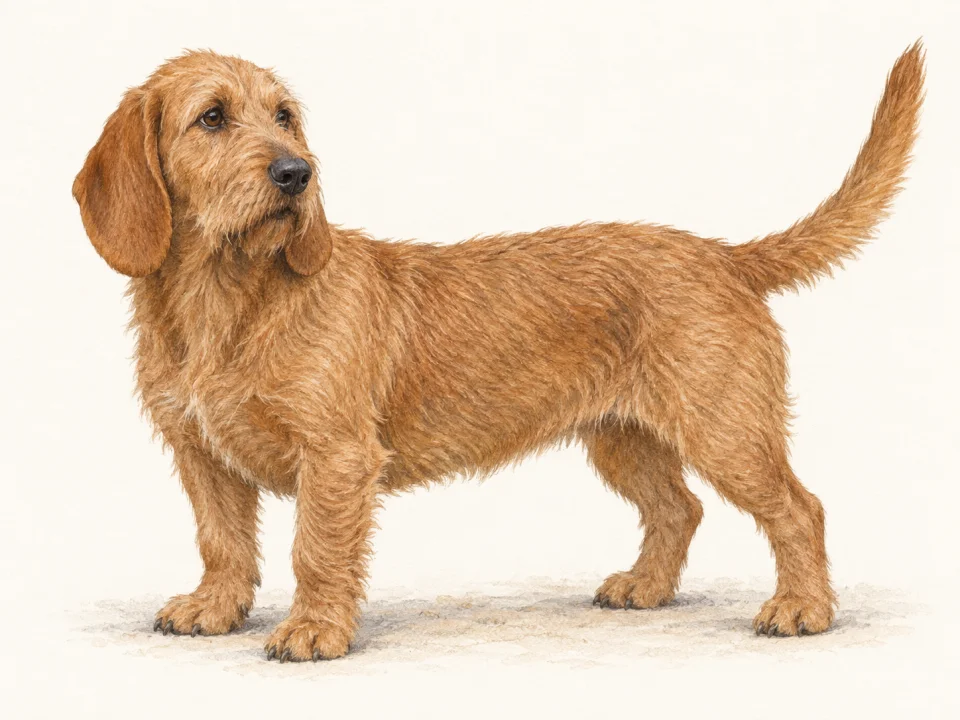
A compact hound still has a strong job instinct
Developed for hunting, including rabbits, the Fauve brings scent interest into everyday outings. AKC lists the breed at 12.5–15.5 inches and 23–39 pounds. Its short stature does not make its attention easy to redirect from an interesting trail. Choose it with an appetite for hound behavior, not merely as a smaller substitute for a different companion breed.[1]
Build walks around safe sniffing
Use a leash outside secure enclosures and inspect gates before off-leash play. Offer time to investigate safe scents, then practise returning attention to the handler for a reward. A route with varied smells can be engaging without becoming an endurance outing. Do not depend on an apparently reliable recall when a new animal trail suddenly becomes more interesting.[1]
Make a searching game easy to succeed at
Start by hiding a familiar toy in plain view and reward the dog for finding it. Gradually make the hiding place less obvious while keeping the area safe. Stop before frustration takes over. This gives the nose a household task and offers a useful alternative on days when outdoor plans are limited, without claiming that a game replaces all exercise.[1]
Train through determination rather than against it
A cheerful hound can also be persistent about its own objective. Teach one clear action in a quiet setting, reward it and add distractions gradually. Avoid repeating a cue while the dog is fully occupied by a scent. Move to an easier situation instead. Consistent practice is more informative than interpreting a difficult moment as a permanent personality flaw.[1]
Wiry does not mean no shedding
The rough coat can shed seasonally and benefits from weekly combing and brushing. Some longer coats may need hand-stripping; discuss the actual coat with a breed-familiar groomer. After a walk, check feet and furnishings for trapped material. Look at the skin while grooming so an irritated patch or a new lump is not hidden beneath a tidy surface.[1]
Review health records with the same care as temperament
AKC lists a lifespan of 13–16 years and recommended patella, cardiac and eye evaluations. Ask for the tested dog’s identity and the date of each result. Discuss the individual dog’s history as well, especially when adopting an adult. Good records help you make a decision but cannot promise a specific lifespan or replace future veterinary care.[1]
Frequently asked questions
What is the Basset Fauve de Bretagne’s temperament?
It is generally a cheerful, determined scent hound. Expect interest in following smells and use consistent reward-based training; individual behavior still depends on experience and context.
Source [1]Can a Basset Fauve de Bretagne walk off leash?
Use a leash unless the area is securely enclosed. A scent trail can draw a hound away, so recall practice should not be treated as a substitute for containment.
Source [1]Does a Basset Fauve de Bretagne shed?
Yes, including seasonal shedding. Weekly brushing and combing help, and some longer coats may need hand-stripping rather than being left unattended.
Source [1]How long does a Basset Fauve de Bretagne live?
AKC gives a typical range of 13–16 years. Review patella, cardiac and eye screening records while remembering that a breed range cannot predict one dog’s lifespan.
Source [1]FAQ sources
Sources & methodology
Breed-level measurements and comparison scores provide context. They do not predict an individual dog's health, behaviour or suitability. Open the original publisher pages below to verify the facts and compare any later updates.
- American Kennel Club — Basset Fauve de Bretagne breed and care guidance ↗Reference 1 · reviewed 2026-09-27
Make it about your dog
Build a profile around your dog's age, experiences and everyday needs.
Meet your dog →Explore local care