
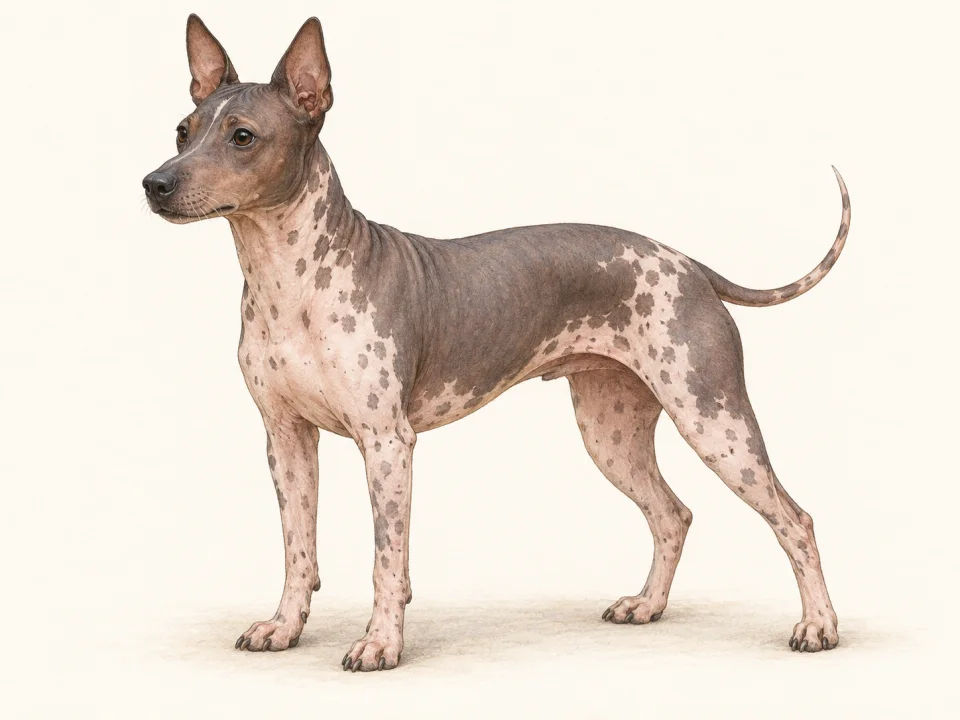
Confirm the variety instead of assuming no coat
Despite its name, this breed includes a short-coated variety as well as a hairless one. AKC lists a height of 12–16 inches and a weight range of 12–28 pounds. Ask which variety an individual puppy is, then plan care accordingly. Neither the breed name nor the coat alone establishes whether a particular person will tolerate living with the dog.[1]
Make outdoor protection part of the outing
A hairless dog lacks the covering that would otherwise protect its skin, so sunburn and cold exposure need deliberate planning. Choose conditions, shade and suitable protective clothing with the dog’s comfort in mind. Ask a veterinarian about appropriate skin protection products instead of improvising with household creams. Check areas where clothing or a harness rubs after the outing.[1]
Keep the care routine appropriate to the coat
The coated variety usually needs only a brief weekly brushing and bathing when necessary. The hairless variety needs skin observation and protection rather than a brushing routine copied from another terrier. Both still need nail, dental and ear care. Introduce touch gently in short sessions so a small maintenance task does not become an uncomfortable restraint exercise.[1]
Moderate exercise can still be purposeful
Regular walks and short play sessions can provide useful daily activity, adjusted to weather, age and condition. Include a simple find-the-toy game or another learning task rather than assuming every outing must be longer. Offer a comfortable place to rest afterward. An energetic burst does not mean the dog needs an endurance workout, especially when skin exposure limits outdoor time.[1]
Use curiosity to build useful habits
Teach waiting while a harness is fitted, returning for a reward and settling beside the household. Start where success is easy and add distractions gradually. A quick learner still needs clear repetition and consistent cues between people. Positive introductions to new surroundings should remain manageable; do not force close contact simply to complete a socialization checklist.[1]
Ask for screening even when care looks simple
AKC lists a lifespan of 14–16 years and recommends patella, hip and cardiac evaluations. Request dated results identifying the breeding dogs and ask about wider family history. Little grooming does not mean no healthcare responsibilities. A new skin change, limp or discomfort should be assessed on its own merits rather than dismissed as a predictable feature of hairlessness or terrier activity.[1]
Frequently asked questions
Can an American Hairless Terrier have a coat?
Yes. The breed has hairless and short-coated varieties. Confirm the individual variety before planning grooming and outdoor protection.
Source [1]Does a hairless dog need sun protection?
Yes. Sunburn is a concern for the hairless variety. Plan shade and appropriate protection, and ask a veterinarian about suitable products rather than applying an improvised cream.
Source [1]How much exercise does an American Hairless Terrier need?
The cited AKC guidance describes moderate needs, with regular walks and brief play sessions. Adjust the routine to the individual and account for sun and cold exposure.
Source [1]Which health records should a breeder provide?
Ask for identifiable patella, hip and cardiac evaluation results, along with family history. These address particular risks rather than guaranteeing lifelong health.
Source [1]FAQ sources
Sources & methodology
Breed-level measurements and comparison scores provide context. They do not predict an individual dog's health, behaviour or suitability. Open the original publisher pages below to verify the facts and compare any later updates.
- American Kennel Club — American Hairless Terrier breed and care guidance ↗Reference 1 · reviewed 2026-09-27
Make it about your dog
Build a profile around your dog's age, experiences and everyday needs.
Meet your dog →Explore local care