
Before You Take Your Dog to a Pumpkin Patch: A Go/No-Go and Exit Plan
Planning a dog-friendly pumpkin patch visit? Confirm the rules, choose a quieter time, pack the essentials and use a simple exit plan if your dog is uncomfortable.
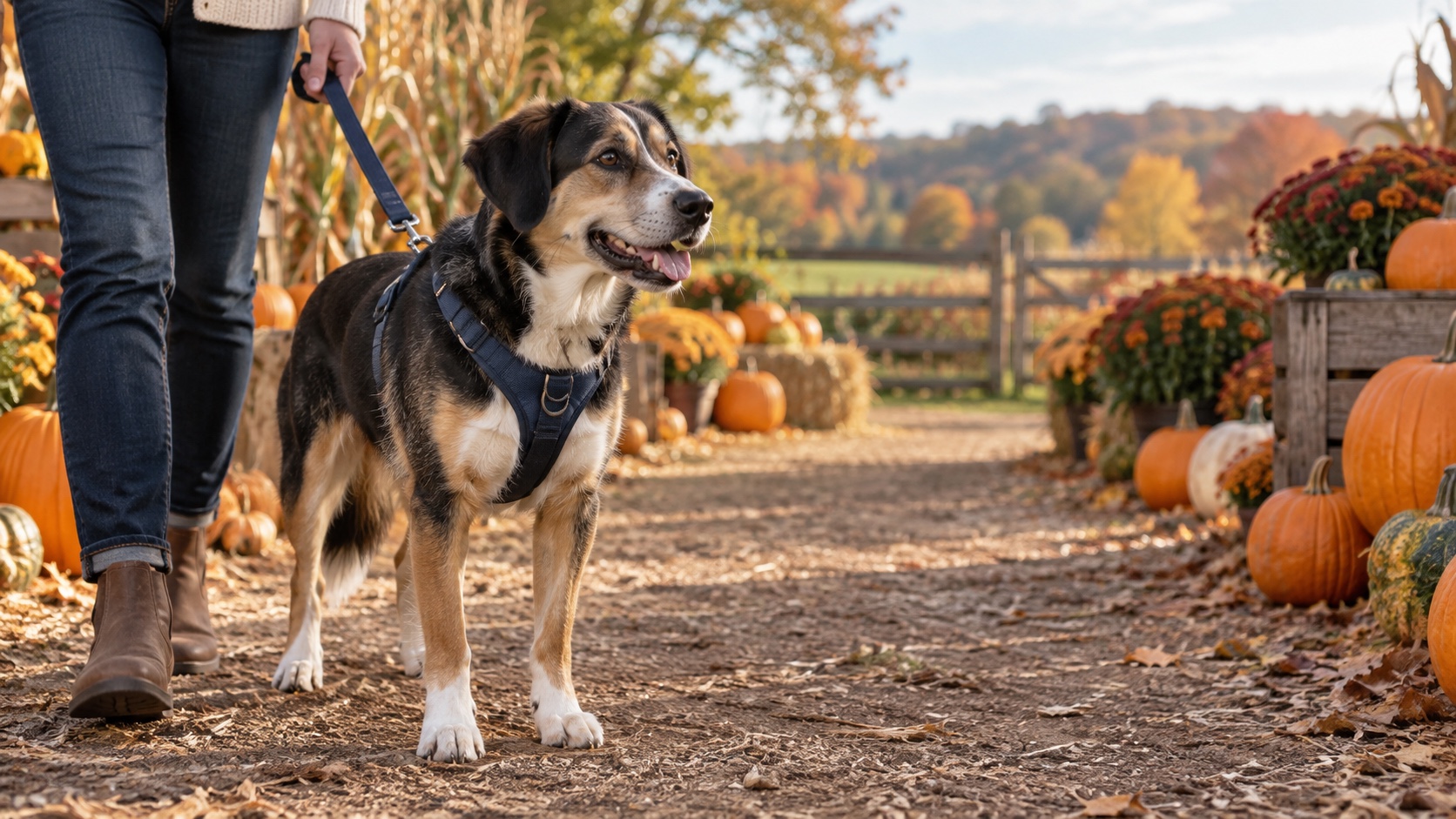
Make the first decision about your dog, not the photograph
A pumpkin patch can look like an easy autumn outing, but the experience may include unfamiliar people, children, dogs, farm smells, uneven ground and sudden noise. A venue allowing dogs does not mean every dog will enjoy the visit. Start with what you already know about your dog in busy outdoor places.
If your dog regularly struggles to recover after seeing strangers, dogs or livestock, choose a quieter walk or a short visit without the dog. The same applies when your dog is unwell, in pain or unable to cope with the expected weather and ground. Leaving a dog at home with suitable care is a complete plan, not a failed day out.
For a dog that has handled similar settings comfortably, keep the first visit modest. Decide in advance that you can leave after ten minutes. A short, calm experience gives you better information than staying until the dog is overwhelmed.
| Check | Go only if | Change the plan when |
|---|---|---|
| Venue policy | The farm confirms where dogs may go | Rules are unclear or the needed area excludes dogs |
| Dog comfort | Similar outings have been manageable | Crowds, dogs or livestock are known triggers |
| Crowd and route | There is space and a simple way out | Queues or narrow gates remove that space |
| Weather and ground | Conditions suit this individual dog | Heat, rain or mud makes the visit unsuitable |
Confirm exactly where the dog-friendly rule applies
Check the venue's current website or contact the farm before travelling. Ask whether dogs are allowed in the pumpkin field, shop, food area, maze, wagon and animal-viewing areas. Confirm lead rules, opening times and any entry conditions. A general dog-friendly label may apply only to part of the property.
Do not rely on an old social post or a directory label when the farm itself can provide the current rule. Seasonal sites change layouts, livestock areas and busy-day restrictions. If different members of staff give different answers, use the more limited plan until the venue confirms it.
Save the farm's contact details and note the nearest exit or quiet edge when you arrive. Tell anyone joining you that the dog's comfort and the venue's rules take priority over completing every activity.
Choose a quiet window and an easy route out
Ask when the site is usually quieter, then check the weather and ground before setting off. Heat, heavy rain, mud or a packed car park can change a reasonable plan. Arriving near opening time may help at some venues, but the farm is the best source for its actual crowd pattern.
From the entrance, identify one simple route and a place where you can turn back without squeezing through a queue. Stay away from narrow gateways if people and dogs are bunching together. If you need two people to carry pumpkins, decide who will handle the dog and who will carry purchases; one person should not try to manage both in a crowd.
Keep the car journey and parking conditions in the plan. Never leave a dog unattended in a vehicle while someone finishes shopping. If the return route becomes blocked or crowded, ask staff for the clearest way out.
Pack for control, water and a clean handover
Use a well-fitted harness or collar and a standard lead that you can hold securely. A long or retractable lead can create problems around queues, vehicles, children and animal barriers. Bring fresh water, a familiar bowl, waste bags, a towel and rewards your dog already accepts comfortably. Make sure the identification details attached to your dog are current.
Keep both hands available when walking through the site. Put phones, tickets and small supplies somewhere you can reach without dropping the lead. If you plan to buy several pumpkins, leave space in the vehicle and bring another adult to carry them.
Do a brief equipment check before leaving home. The pumpkin patch is not the place to discover that a clip sticks, a harness has loosened or a new accessory worries your dog.
Give people, dogs and farm animals more space
Do not assume every child wants to meet the dog or every dog wants to greet yours. Use your body and the route to create space, and decline greetings when you cannot keep the interaction calm. A dog-friendly venue is still a shared public place.
Stay behind all farm barriers and follow staff instructions around livestock. Do not allow nose-to-nose contact through fencing or use farm animals as a training test. The Centers for Disease Control and Prevention notes that farm animals can carry germs even when they look healthy and advises handwashing after contact with animals or their environments. Keep food and drinks away from animal areas and help children follow the same hygiene rule.
After the visit, wash hands and clean visibly dirty footwear and equipment. If you also care for farm animals at home, follow the CDC's stronger biosecurity advice about dedicated footwear or changing clothes after visiting another farm.
Read the dog in front of you and leave early
Watch for changes rather than waiting for a dramatic reaction. Blue Cross lists signs of stress that can include panting when the dog is not hot, repeated lip licking, ears held back, a raised paw, a tucked tail, crouching or shaking. The RSPCA also advises using body language to understand when a dog is worried and needs space.
One sign by itself does not explain the cause. Panting can reflect heat or a health problem, and sudden behaviour change may need veterinary attention. In the moment, the useful response is to create distance, move to the quiet route and reassess. Do not insist on a greeting, a photograph or one last activity.
If your dog cannot settle after moving away, leave the venue. If signs are severe, unusual or continue after the outing, contact your veterinarian for individual advice.
Prevent scavenging and skip the seasonal taste test
Pumpkin displays and food areas can leave stems, wrappers, dropped snacks and damaged produce within reach. Keep your dog close enough that you can steer around debris. Do not encourage the dog to bite a display pumpkin or sample something found on the ground.
If your dog eats an unknown item, move away from further material and contact your veterinarian or an animal poison service for advice. Tell them what you saw, when it happened, the estimated amount if known and any signs present. Do not invent a safe amount or make the dog vomit unless a veterinary professional specifically instructs you.
Rewards brought from home should fit the dog's normal diet and any veterinary guidance. They are for calm handling and familiar check-ins, not for keeping a distressed dog in a setting they want to leave.
Use a ten-minute check and a clear exit phrase
Agree on a simple check shortly after entering: Is the dog taking in the environment without escalating? Can you maintain space? Is the route out still clear? If any answer is no, turn back. Repeat the check after a major change such as entering the field or approaching the shop.
Use one plain phrase with your group, such as “We're taking the quiet exit now.” It prevents a long discussion while the dog remains in a difficult place. One person handles the dog; the other person returns equipment or completes an essential conversation with staff. Shopping and photographs can wait.
At home, make a factual note: time, crowd level, areas visited, the first change you noticed and how quickly the dog recovered. That observation can help you choose a better outing next time without labelling the dog as difficult or antisocial.
| Observe | Continue when | Leave when |
|---|---|---|
| Body language | The dog remains loose and can recover | Stress signs continue after adding distance |
| Available space | You can avoid forced greetings | Crowding closes the quiet route |
| Handler capacity | One adult can focus on the dog | The handler is also carrying or managing purchases |
Questions to answer before you go
Does dog-friendly mean off-lead? No. Follow the venue's current lead rule and keep secure control around roads, crowds and animals.
Can I use a busy patch to socialise a nervous dog? A crowded seasonal venue is not a controlled behaviour plan. Avoid flooding the dog with close contact and ask a qualified reward-based professional for individual help.
What if my dog looks stressed only in the queue? Create distance or leave. The fact that another area may be quieter does not require you to push through the queue first.
Can my dog meet the farm animals? Follow barriers and staff rules. Do not arrange direct contact as part of the visit.
What makes the outing successful? A plan that protects comfort, access and a calm way home. Buying a pumpkin or taking a photograph is optional.
Sources and further reading
Sources checked: 2026-09-13. Educational planning guidance; seek individual professional help for signs of distress.