
Your Dog Found a Mushroom in the Yard: A First-10-Minutes Action Plan
If your dog may have chewed or swallowed a wild mushroom, move them away, contact veterinary help promptly and collect useful evidence without delaying care.
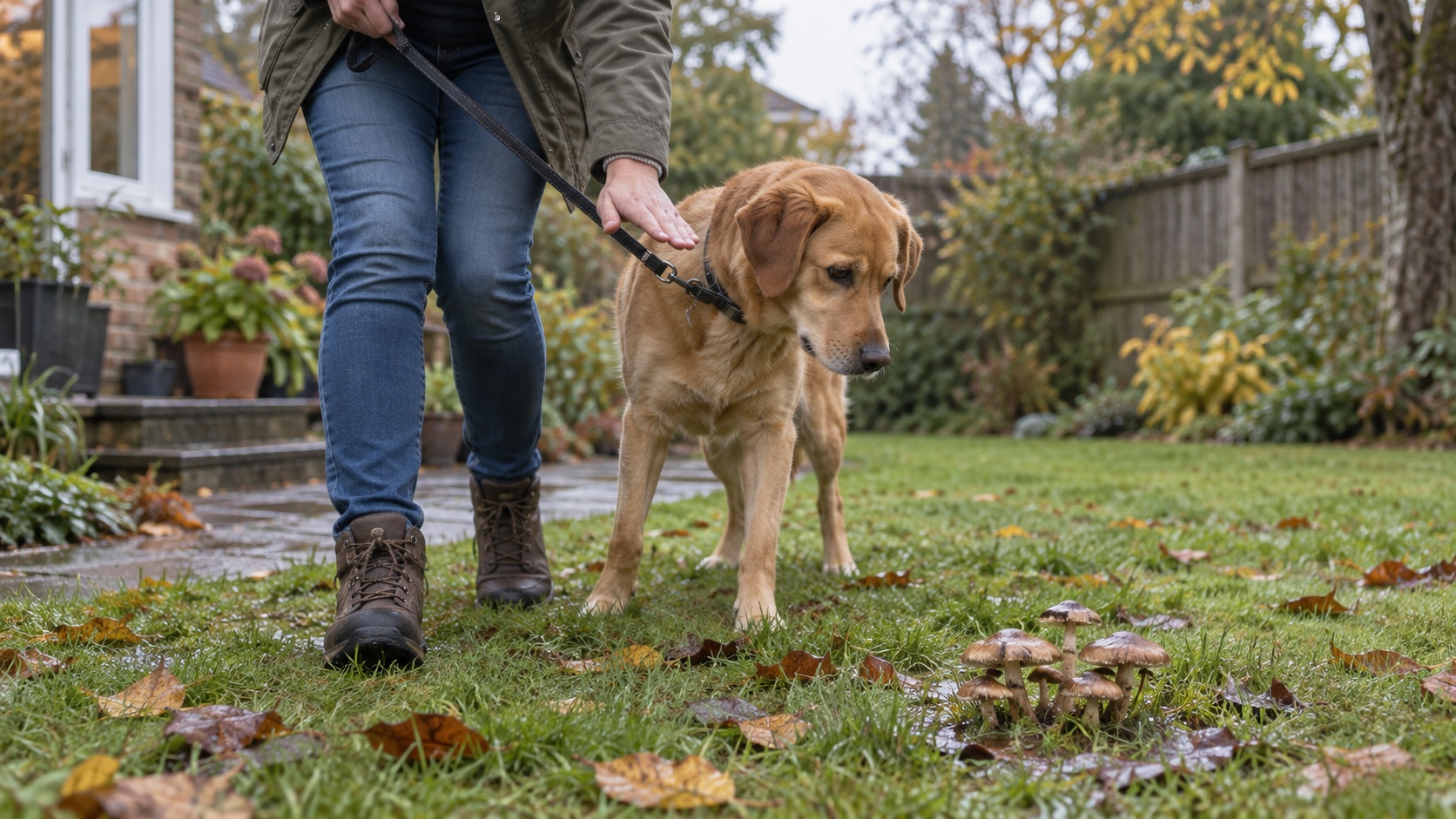
Call now if your dog may have eaten a wild mushroom
Move your dog away from the mushroom and contact your veterinarian, an emergency veterinary clinic or an animal poison control service immediately. Do not wait for symptoms or for someone online to identify the mushroom. Some harmful mushrooms can cause serious illness, and the ASPCA warns that a delay in treatment can be dangerous.
This guide is a communication and prevention plan. It cannot identify a mushroom, calculate an individual dog's risk or replace veterinary care. If your dog is collapsing, having trouble breathing, seizing, severely weak or otherwise acutely unwell, go to emergency veterinary care while following the clinic's instructions.
Keep the dog with a responsible adult and prevent access to any remaining mushrooms. If another person is available, have them gather details while you make the call. The call comes before photographs, cleanup or internet searching.
| Priority | Do this | Do not delay for |
|---|---|---|
| Prevent more access | Move the dog away and supervise | A complete yard cleanup |
| Get professional direction | Call a vet, emergency clinic or poison service | Symptoms or an online identification |
| Share evidence | Give time, amount if known, dog details and current signs | Perfect certainty about what happened |
| Follow instructions | Travel or collect a sample when directed | Home remedies |
Give the clinic facts, including what remains uncertain
Start with the approximate time, the location and exactly what you observed: sniffing, licking, chewing, swallowing or simply finding the dog near a damaged mushroom. Say clearly when the amount or ingestion is uncertain. Add your dog's approximate weight, age, relevant health conditions, medicines and any signs you can see now.
Describe any change in behaviour or movement without interpreting it. Useful observations include vomiting, diarrhea, drooling, weakness, wobbliness, tremors, unusual agitation, disorientation or a seizure. Signs vary by mushroom and amount, and some effects may be delayed, so looking normal immediately does not clear the dog.
Write down the clinic's instructions and repeat them back. Ask where to go, whether to bring a sample, and what changes should trigger an immediate update while travelling. Do not let the information-gathering step delay departure when the clinic tells you to come in.
Photograph or collect evidence only when it is safe
A clear photograph may help a veterinary team or trained mushroom expert, but it must not delay treatment. Photograph the mushroom where it grew, then capture the cap, underside or gills, stem, base and nearby ground if you can do so without touching it or losing control of the dog. Include a wider view that shows the growing area.
If the clinic asks for a specimen, follow its storage instructions. VCA advises wrapping the mushroom in a damp paper towel rather than sealing it in plastic, which helps preserve the specimen. Keep it separate from food, label it clearly and wash your hands after handling. Do not ask a child to collect it.
A phone identification app or social-media answer cannot declare the exposure safe. Mushroom identification is difficult, and the ASPCA recommends relying on trained professionals or mycology experts. Treat the photograph as evidence for the professional conversation, not as permission to wait.
Avoid home treatment unless a professional directs it
Do not make your dog vomit, give activated charcoal, offer food, milk, salt or another home remedy unless the veterinarian or poison specialist handling the case specifically instructs you. Treatment depends on the exposure and the individual dog. A procedure that a veterinarian may use in a clinic is not automatically safe to copy at home.
Do not force water or put your fingers into the dog's mouth. Trying to retrieve material can cause a bite or push it farther back. If a familiar drop cue works immediately and safely, you can use it, but do not turn a suspected ingestion into a prolonged training exercise.
Save product packaging if the mushroom was part of a food, supplement or edible rather than growing outdoors. Tell the clinic about every ingredient you can verify. Chocolate, sweeteners or other ingredients can create additional concerns that the word mushroom alone does not describe.
Use one household handover
Choose one person to communicate with the clinic and one to supervise the dog if two adults are present. Share the exact patch of yard, the last time it was checked, what was seen, the photo or specimen status, and every instruction already received. This prevents a second person from starting over or giving a conflicting home treatment.
During transport, keep the dog safely restrained according to the clinic's advice. Bring the phone, written timeline, medicine list and specimen only if requested. Call ahead if the dog's condition changes so the team can prepare and tell you whether the route or destination should change.
After the immediate event, keep the written note. It can help the veterinary team reconstruct timing, and it gives every dog walker a clear area to avoid until the yard has been checked.
| Detail | Record | Why it helps |
|---|---|---|
| Exposure | Time, exact patch, chewing or swallowing seen, amount known or uncertain | Keeps the account factual |
| Dog | Weight, health history, medicines and current changes | Gives the clinic individual context |
| Evidence | Photo taken, sample requested or unavailable | Avoids delaying care to repeat the search |
| Instructions | Who was called, where to go and what to watch | Prevents conflicting actions |
Clear access to the patch after urgent care is underway
Once the veterinary call and any required travel are underway, stop other pets and children from entering the affected area. Use a lead for toilet trips or create a temporary barrier. Do not let cleanup create another exposure while the first dog is being assessed.
When it is safe to do so, remove visible mushrooms with gloves and dispose of them where pets cannot reach them, following local waste guidance. Check shaded grass, mulch, tree roots, old stumps and damp edges. Mushrooms can appear quickly, especially in warm, wet conditions, so repeat the check after rain rather than treating one cleanup as permanent.
The ASPCA recommends supervising pets outside and preventing access to places where mushrooms may grow. If growth is extensive or identification is needed for the veterinary case, ask a qualified local expert. Lawn appearance is not a safety test; ordinary-looking mushrooms can still be difficult for a non-expert to identify.
Reduce repeat scavenging without punishment
For the next trips outside, use a secure lead and scan the ground before giving the dog access. A familiar cue and high-value reward may help you turn away from a patch, but management remains necessary. Do not scatter treats near mushrooms or repeatedly test whether the dog will ignore them.
If scavenging happens often, discuss the pattern with your veterinarian and an appropriately qualified reward-based trainer. Record the place, what happened immediately before the pickup, the object involved and what helped the dog move away. A sudden increase in eating non-food items also deserves veterinary attention.
A well-fitted basket muzzle can be part of an individual prevention plan for some dogs, but it needs correct sizing and gradual positive introduction. It should not be improvised during an emergency or used as punishment. Continue yard checks and supervision even when equipment is part of the plan.
Questions people ask after finding a yard mushroom
My dog looks normal. Can I wait? Contact veterinary help now. Some effects may be delayed, and appearance immediately after the event does not establish safety.
What if I only saw chewing? Report exactly that. Chewing can still be relevant, and the professional can decide the next step from the full history.
Can a photo identify the mushroom? A photo can help a trained expert, but an app or casual online opinion should not delay care or clear the exposure.
Should I remove every mushroom before the dog goes outside again? Prevent access and remove visible mushrooms when the urgent response is already handled. Repeat checks because new growth can appear quickly.
What is the shortest useful message to another walker? “Keep the dog on lead; avoid the damp corner by the tree; the yard was last checked at this time; call this clinic if another mushroom is touched or eaten.”
Sources and further reading
Sources checked: 2026-09-14. Educational planning guidance; seek individual professional help for signs of distress.