
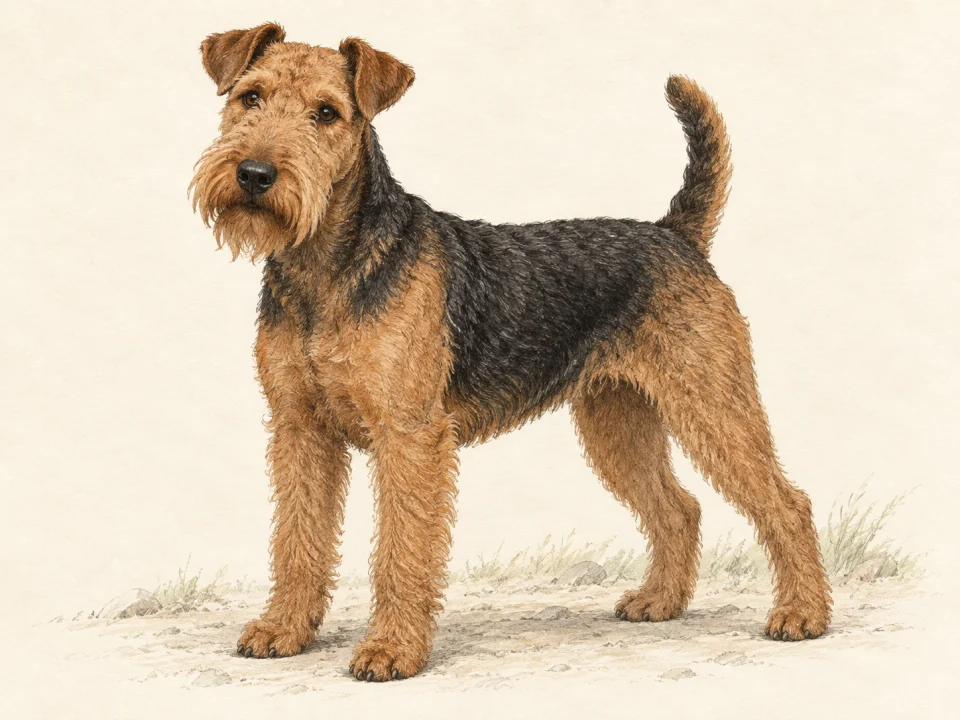
Adult size and what to measure
The AKC reference gives males about 15 inches at the shoulder and 20 pounds, with proportionally smaller females. For equipment, record the individual dog’s measurements rather than shopping by the word small. Note chest, neck and resting-space requirements separately. Recheck fit after growth or a change in body condition, and ask the supplier or a qualified professional how the particular product should fit.[1]
Clipping and hand-stripping are different choices
The parent-club leaflet describes a wiry outer coat over a softer undercoat. It distinguishes hand-stripping for show presentation from clipping that may be used for pets. Ask a groomer what each option means for this dog, what maintenance you must do between appointments and how discomfort is identified. A photograph of a show coat is not enough information to choose a care routine.[2]
Practice through distractions without forcing a response
The Welsh Terrier club leaflet describes a hunter readily distracted by sights, sounds and scents, and advises patient practice using food and praise rather than rough handling. If your dog answers a cue in the kitchen but loses focus near a squirrel, make the next practice easier instead of assuming defiance. Work at a manageable distance and reward attention to you. Ask a reward-based trainer to help if you cannot find a setting where the dog can comfortably engage.[2]
Make room for an active terrier
AKC describes the Welsh Terrier as energetic and recommends activity with the owner, including opportunities in a secure area. Map the opportunities your household actually has: routes, travel time, weather alternatives and who is available. Discuss puppy, senior or medical limitations with a veterinarian. An exercise promise that depends on a single person being free every evening needs a backup.[1]
Check the social situations you will encounter
Ask the current carer about passing dogs on a leash, visitors and handling during grooming. Choose one real situation to observe at a manageable distance rather than collecting labels such as friendly or stubborn. Record what the handler does, how the dog responds and whether it can settle afterward. This creates useful information for a trainer without testing the dog by provoking a reaction.[1]
Inspect the fence at ground level
The club warns that Welsh Terriers may dig to escape and does not recommend electronic fences for a dog that may pursue prey. Before using a yard, walk its boundary and check beneath gates as well as the fence itself. Ask about this dog’s digging and escape history, and supervise its first outings. Do not test recall by releasing it near wildlife or traffic. A secure physical enclosure and a leash outside it are practical arrangements; a small adult size does not make a chase harmless.[2]
Frequently asked questions
How big is a Welsh Terrier?
The reference male is about 15 inches tall and 20 pounds; females are proportionally smaller. Those figures are breed guidance rather than an individual weight target.
Source [1]Does a Welsh Terrier have a double coat?
Yes. The breed-club leaflet describes a softer undercoat beneath the wiry outer coat. The coat needs maintenance even when little loose hair is noticeable.
Source [2]Must a pet Welsh Terrier be hand-stripped?
Not necessarily. The club distinguishes hand-stripping for show dogs from clipping that may suit pets. Discuss the individual coat and your goals with a skilled groomer.
Source [2]How often should I brush a Welsh Terrier?
The club advises regular weekly brushing and combing. Ask the groomer to demonstrate what is needed between appointments for your dog’s coat and chosen trim.
Source [2]Is the Welsh Terrier a low-activity small dog?
No. AKC describes a high-energy terrier that needs opportunities for activity. Plan the routine around the individual’s age, health and ability to recover.
Source [1]FAQ sources
- American Kennel Club — Welsh Terrier ↗FAQ reference 1
- Welsh Terrier Club of America — owner leaflet ↗FAQ reference 2
Sources & methodology
Breed-level measurements and comparison scores provide context. They do not predict an individual dog's health, behaviour or suitability. Open the original publisher pages below to verify the facts and compare any later updates.
- American Kennel Club — Welsh Terrier ↗Reference 1 · reviewed 2026-09-27
- Welsh Terrier Club of America — owner leaflet ↗Reference 2 · reviewed 2026-09-27
Make it about your dog
Build a profile around your dog's age, experiences and everyday needs.
Meet your dog →Explore local care