
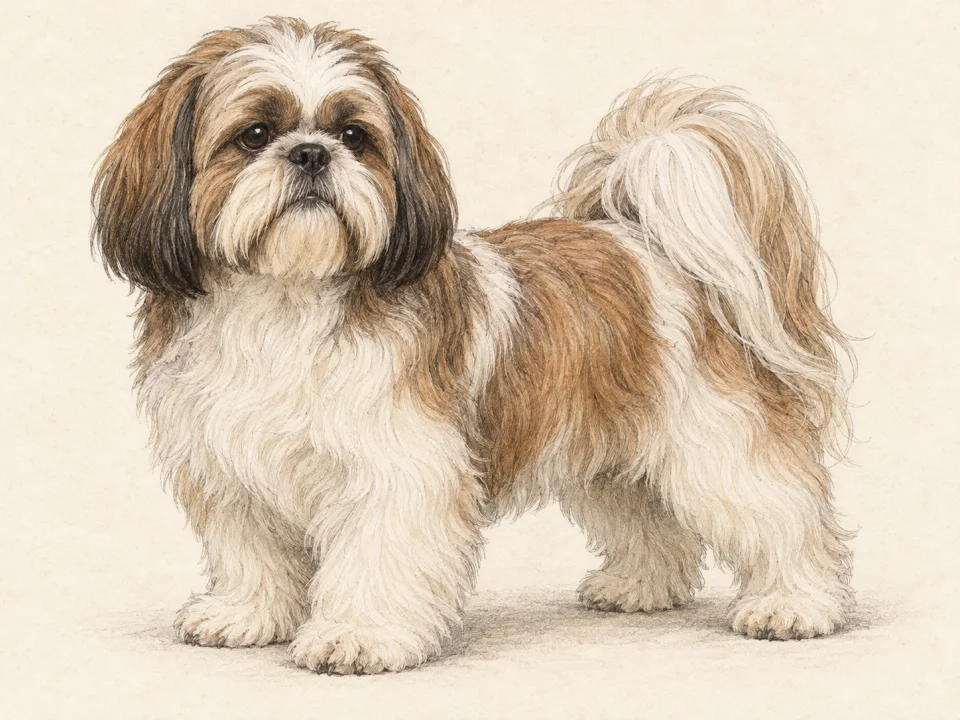
Plan around a true companion dog
AKC describes the Shih Tzu as playful, affectionate, outgoing and strongly people-oriented. Many adapt well to apartments and family homes, but they still need daily movement, learning, rest and social contact. An individual dog's history and body language matter more than a breed stereotype.[1]
Use rewards and introduce skills gradually
AKC recommends praise- and reward-based training, early socialisation and patient step-by-step teaching. Keep sessions short and practical: toileting, calm handling, recall, settling and walking on a loose lead. Harsh methods can add fear without teaching the behaviour you want.[1]
Make grooming part of every day
AKC describes daily brushing, regular bathing and daily attention around the eyes and facial hair. Work in small sections, introduce combs and cloths gently and seek professional grooming before tangles or handling distress become established. A shorter pet trim can reduce coat-management demands but does not remove routine care.[1]
Protect the eyes and keep the face clean
Hair around the face can irritate the eyes, so AKC advises keeping it trimmed or secured and cleaning the eye corners gently. Discharge, redness, squinting, cloudiness or rubbing needs veterinary assessment rather than home diagnosis.[1]
Manage heat and water carefully
AKC warns that the short face and heavy coat make heat harder to tolerate and that Shih Tzu are not strong swimmers. Choose cooler times for activity, provide water and shade, and use secure barriers around pools or open water. Breathing difficulty, collapse or marked weakness is an emergency.[1]
Balance companionship with calm alone-time practice
Because the breed was developed for companionship, AKC notes that many struggle with long periods alone. Start with brief, comfortable separations and build gradually while meeting exercise and toileting needs. Persistent distress deserves help from a veterinarian or qualified behaviour professional.[1]
Supervise children and protect rest
Many Shih Tzu enjoy family life, but small size still calls for careful handling. Supervise children, provide a quiet retreat and teach everyone to leave an eating, sleeping or worried dog alone. Friendly breed descriptions do not guarantee that every individual welcomes every person.[1]
Choose the individual and budget for long-term care
Ask a responsible breeder or rescue about temperament, grooming tolerance, veterinary history and documented health screening. Meet the dog more than once when possible and budget for professional grooming, dental work and veterinary care. Historic popularity cannot determine whether a particular dog fits a particular home.[2]
Frequently asked questions
What is an interesting fact about the Shih Tzu?
AKC explains that the breed's 'Lion Dog' nickname reflects lion imagery in Buddhist culture and Chinese art. Modern Shih Tzu were preserved from a very small group of dogs imported into Europe during the twentieth century.
Source [1]What should a Shih Tzu home avoid?
Avoid harsh training, neglected coat and eye-area care, extended isolation, overheating and unsupervised access to deep water. AKC recommends reward-based teaching and notes that the breed's short face and heavy coat reduce heat tolerance and that Shih Tzu are not strong swimmers.
Source [2]Why do Shih Tzu often seem calm at home?
AKC describes an adaptable companion that often enjoys close contact and lap time. Calm behaviour is not guaranteed: age, health, exercise, environment, learning history and the current situation all affect an individual dog's behaviour.
Source [2]Do Shih Tzu love everyone?
AKC describes the breed as outgoing, affectionate and social, but no breed label guarantees comfort with every person. Let the individual approach voluntarily, supervise children and give the dog space when its posture or behaviour shows worry.
Source [2]FAQ sources
- American Kennel Club — Shih Tzu history ↗FAQ reference 1
- American Kennel Club — is the Shih Tzu right for you? ↗FAQ reference 2
Sources & methodology
Breed-level measurements and comparison scores provide context. They do not predict an individual dog's health, behaviour or suitability. Open the original publisher pages below to verify the facts and compare any later updates.
- American Kennel Club — is the Shih Tzu right for you? ↗Reference 1 · reviewed 2026-09-09
- American Kennel Club — Shih Tzu history ↗Reference 2 · reviewed 2026-09-09
- American Kennel Club — Shih Tzu breed information ↗Reference 3 · reviewed 2026-09-09
Make it about your dog
Build a profile around your dog's age, experiences and everyday needs.
Meet your dog →Explore local care