
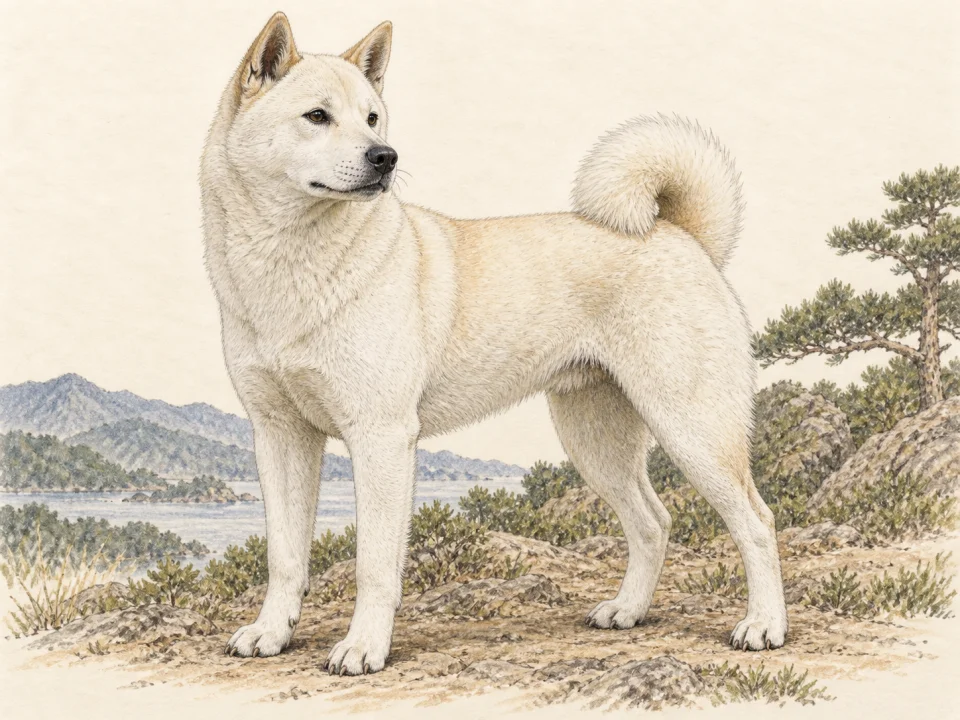
White is not the only recognized Kishu color
The FCI standard lists white, red and sesame, defining sesame as a mixture of black, red and white hairs. It traces the breed to Kishu in Wakayama and Mie and describes a hunting history that includes wild boar and deer. The dog has a straight, harsh outer coat over a soft, dense undercoat, with a curled or sickle-shaped tail. These details provide context for the breed’s appearance, but color is not a reliable shortcut to temperament, health or suitability. When comparing a particular dog with photographs, avoid assuming that an unfamiliar recognized color means the dog must be a different breed. Conversely, appearance alone does not establish its ancestry.[1]
Build an activity partnership without turning training into a contest
AKC recommends daily movement and mental engagement, and describes food and the relationship with the owner as useful training motivators. It specifically discourages harsh or punitive methods. A practical way to start is to choose one observable task, such as returning attention to the handler in a quiet setting, and reward successful attempts before increasing distraction. Keep the session understandable and end before frustration becomes the main event. Hunting heritage makes it particularly important to arrange activity in places where you can manage access to wildlife; do not use a close encounter as an obedience test. Ask the person placing the dog to describe actual outings, handling and recovery after excitement, rather than accepting “loyal” as a complete behavior assessment. Coat care also changes with the season: AKC describes one or two molts a year. Plan additional help with loose undercoat then, using a grooming approach the individual can tolerate comfortably.[2]
Frequently asked questions
Can a Kishu Ken be red or sesame rather than white?
Yes. All three are listed in the FCI standard. Sesame refers to a mixture of black, red and white hairs; a familiar white appearance is not the only recognized color.
Source [1]Does a Kishu Ken need forceful training because it is a hunting dog?
No. AKC advises against harsh or punitive training and describes food and the owner relationship as motivators. Use clear tasks and rewards, and obtain qualified help if training becomes a source of fear or conflict.
Source [2]FAQ sources
- FCI — Kishu standard No. 318, 2017 ↗FAQ reference 1
- American Kennel Club — Kishu Ken ↗FAQ reference 2
Sources & methodology
Breed-level measurements and comparison scores provide context. They do not predict an individual dog's health, behaviour or suitability. Open the original publisher pages below to verify the facts and compare any later updates.
- FCI — Kishu standard No. 318, 2017 ↗Reference 1 · reviewed 2026-09-27
- American Kennel Club — Kishu Ken ↗Reference 2 · reviewed 2026-09-27
Make it about your dog
Build a profile around your dog's age, experiences and everyday needs.
Meet your dog →Explore local care