
Puppy Socialization Before Vaccinations: Safe Outings and Class Checks
Start with calm home experiences; ask your vet about carried outings and screened puppy classes before public-ground walks.
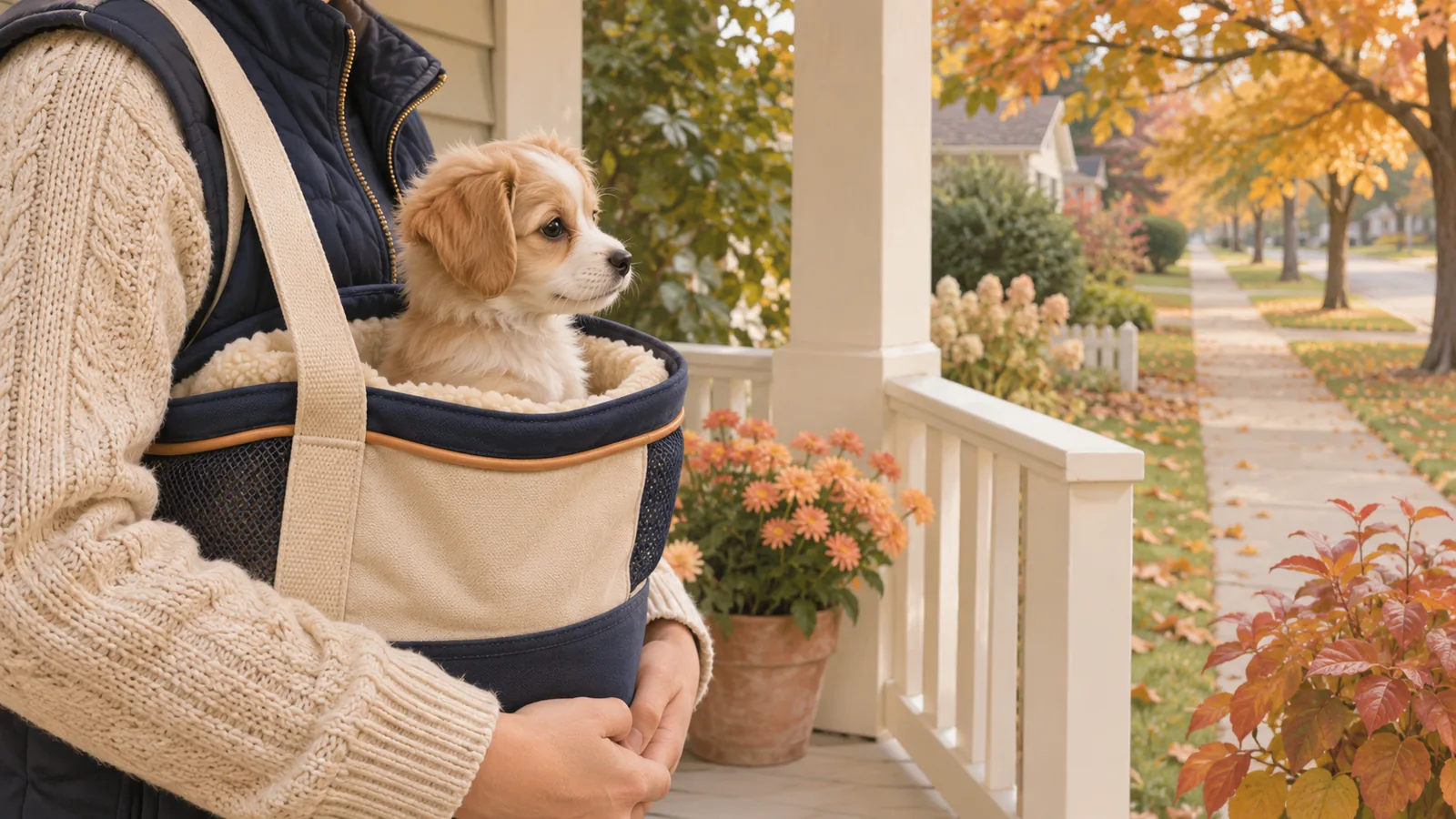
Start controlled experiences while your veterinarian plans ground access
A puppy can learn about the world before finishing vaccinations without walking through a busy dog park. Begin with calm experiences at home, then ask your veterinarian which carried outings, private gardens and puppy classes fit your puppy’s health and local disease risk. A venue allowing dogs does not establish that its ground is appropriate for an incompletely vaccinated puppy.
The American Veterinary Society of Animal Behavior supports safe socialization before the vaccine series is complete, particularly during the first three months. That means pleasant, manageable exposure—not meeting every dog or enduring a crowded event. AVSAB’s puppy socialization statement.
If you are planning a farm visit, separate two decisions: whether the business permits your dog, and whether your veterinarian recommends the particular outing. A quiet observation from a carrier and a walk through an animal area expose a puppy to different conditions. Use the pumpkin-patch planning guide for the venue’s rules; use this plan for your puppy’s readiness.
Take the actual vaccine record to the appointment
Bring dates, vaccine names and records from the breeder, shelter or previous clinic. Ask the veterinarian to write down the next appointments, whether local parvovirus activity changes the plan, and which locations to avoid now. “Had a shot” is not enough information to decide that a puppy is protected.
The AVMA explains that maternal antibodies can interfere with a puppy’s vaccine response. Its parvovirus guidance describes a series beginning at 6–8 weeks, with the final puppy dose at 16 weeks or older for most puppies; individual circumstances can change the schedule. Ask when your puppy may start public-ground walks rather than treating an age or a single injection as automatic clearance. AVMA: canine parvovirus prevention.
Make your question concrete: “We share an apartment dog-toileting strip, want to visit a family with an adult dog, and have a class starting next week. Which can we do, and how?” This gives the clinic a usable description of exposure rather than a yes-or-no question about “outside.”
Choose the setting before choosing the activity
| Setting | A controlled option | Change the plan when |
|---|---|---|
| Home or private patio | Introduce one quiet visitor, texture or household object; allow retreat. | The puppy freezes, avoids the activity or cannot settle. |
| Residential outing | Ask about observing from a secure carrier or stroller without public-ground contact. | The route requires dog-toileting areas or unfamiliar dog greetings. |
| Friend’s private garden | Ask about a supervised meeting with a known healthy, appropriately vaccinated dog. | There has been recent illness or the adult dog is uncomfortable. |
| Puppy class | Check veterinary clearance, entry screening, cleaning and illness rules before booking. | The organizer cannot explain these safeguards. |
| Dog park or crowded pet area | Choose another setting during this stage. | Unknown dogs, feces and shared surfaces make exposure difficult to control. |
These are planning choices, not a ranking that makes any location infection-free. Ohio State’s veterinary resource describes matching the puppy’s prevention plan with cleaning, screening, human hygiene and the setting itself. Carriers and strollers can reduce ground contact where walking would bring unwanted exposure. Ohio State: balancing socialization and infection prevention.
Use a small home session when public outings can wait
Choose a familiar room with secure footing and a route back to the puppy’s resting area. Put one harmless unfamiliar object, such as a closed umbrella, at a distance. Let the puppy notice it, reward a relaxed response and allow the puppy to leave. Introduce sound or movement separately, after the stationary object is comfortable.
A visitor can sit sideways and wait for the puppy to approach instead of reaching over its head. Keep the experience easy enough that you can finish with a comfortable puppy. Repeating a tolerable experience on another day is more useful than adding several new challenges to the same session.
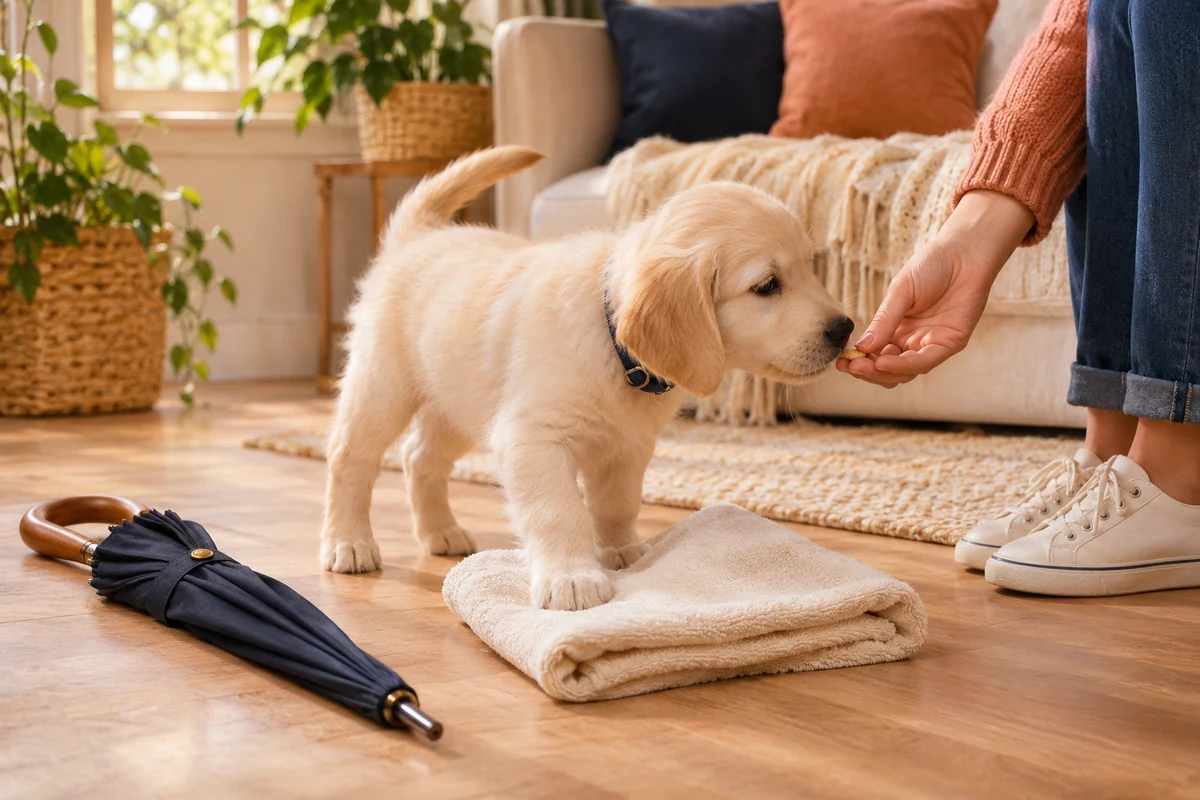
If the puppy withdraws, freezes or becomes frightened, increase distance and end the demand. Ask your veterinarian for help with persistent fear. AVSAB recommends positive experiences without overwhelming the puppy; Ohio State describes introducing unfamiliar objects gradually. AVSAB; Ohio State.
Ask a puppy class five questions before paying
- What minimum age, documented vaccines and deworming are required?
- Will the instructor check records before the puppy enters?
- How are floors and equipment cleaned and disinfected?
- What happens if a puppy is sick or has recently been exposed to illness?
- How are play, size differences and frightened puppies supervised?
AVSAB says classes can generally begin at 7–8 weeks, with at least one vaccine set given a minimum of seven days beforehand, a first deworming, and continuing vaccinations. Those are entry conditions to discuss with your veterinarian and instructor; they do not mean a puppy is ready for unrestricted dog contact. Avoid classes that mix unknown health histories or force worried puppies into play. AVSAB class recommendations.
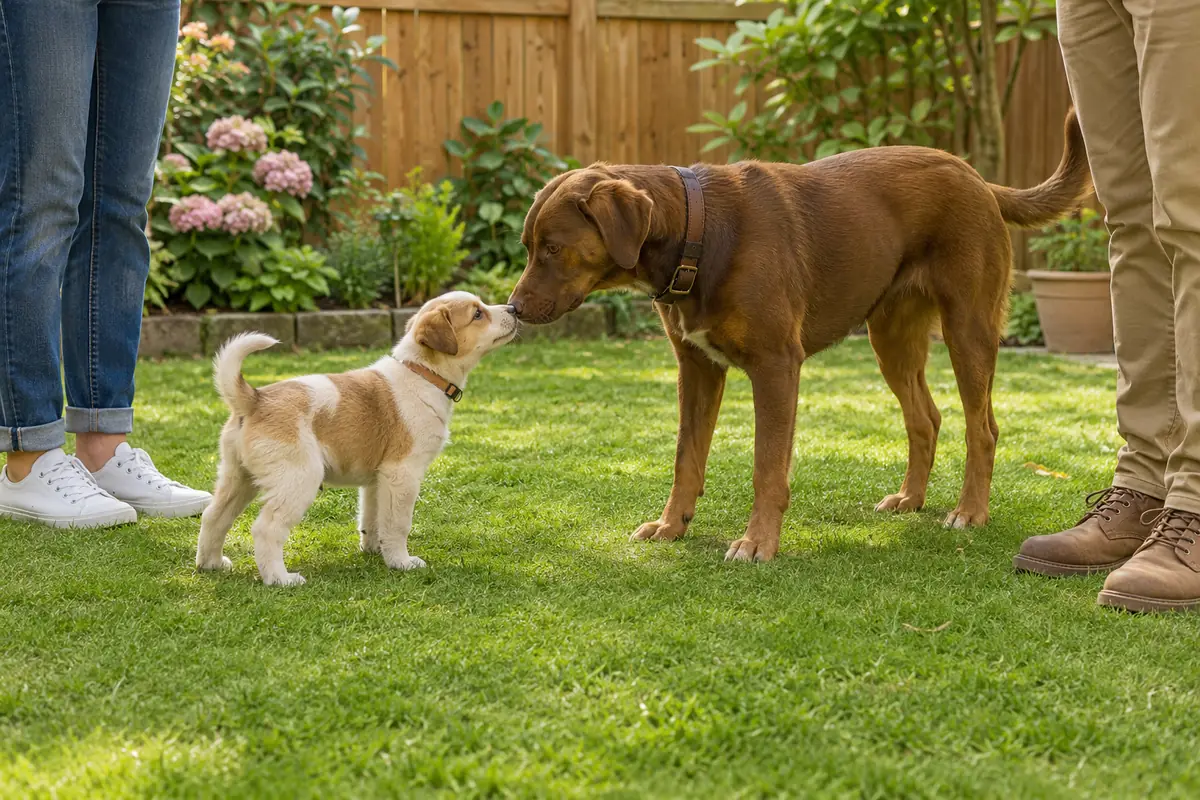
For a private dog meeting, choose a known, healthy dog whose preventive care is current, and supervise closely. Separate the dogs if the adult avoids the puppy or play becomes uncomfortable. Ohio State’s animal-contact guidance.
Call immediately for illness; do not wait for the next vaccine visit
Contact a veterinarian immediately if your puppy develops vomiting, diarrhea—especially bloody diarrhea—marked lethargy or loss of appetite. The AVMA lists these among parvovirus warning signs and explains that vomiting and diarrhea can rapidly cause dangerous dehydration. These signs need assessment even when the cause is something else.
Keep the puppy away from other dogs and call the clinic before arrival so staff can direct you to an appropriate entrance or waiting arrangement. Tell them the puppy’s age, vaccine dates, symptoms, when they began and any recent dog or public-ground contact. Do not take a sick puppy to class. AVMA: signs, transmission and care.
This plan supports a veterinary discussion; your veterinarian should set the vaccination and exposure plan for your puppy. For the next appointment, bring a short note with three headings: experiences that went comfortably, situations you avoided, and symptoms or worries. Use first-week observations to keep that record useful.
Sources and further reading
Checked November 4, 2026.