
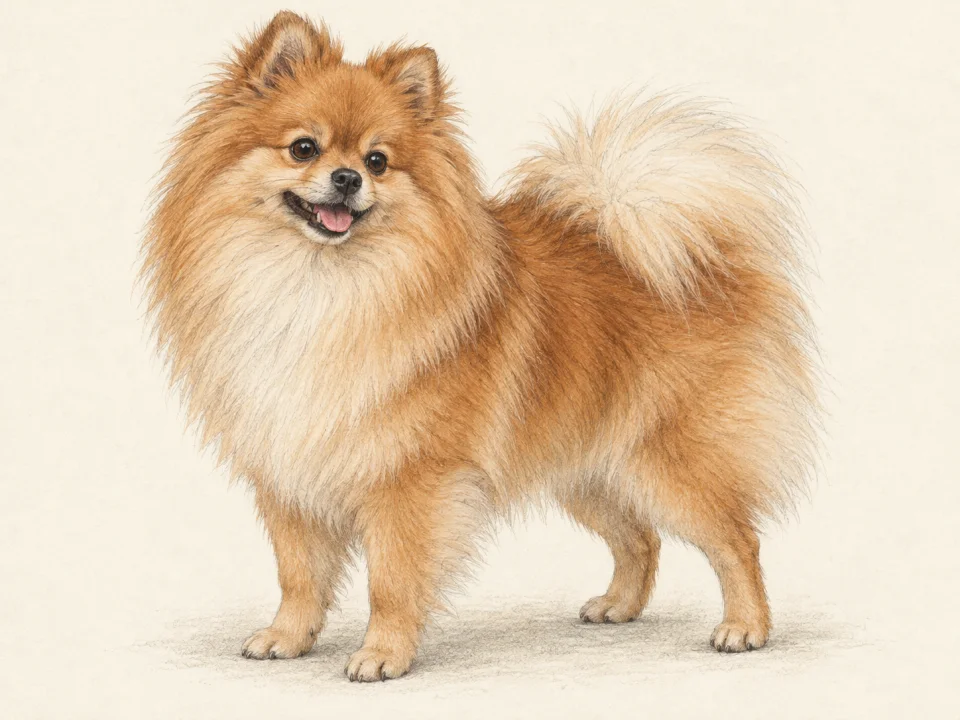
Plan for a lively companion in a small body
AKC describes the Pomeranian as lively, curious, affectionate and people-oriented. Small size can make city living easier, but it does not remove the need for learning, movement, rest and regular social contact. Judge fit by the individual dog's behaviour as well as the breed pattern.[1]
Teach with patience and positive reinforcement
AKC describes the breed as intelligent and trainable while noting that house-training can require patience. Use short sessions, reward the behaviour you want and make toileting opportunities predictable. Increase distractions gradually instead of expecting a skill learned indoors to work everywhere at once.[1]
Combine short activity with mental enrichment
Short walks, safe play and simple training games can meet many Pomeranians' daily needs. Adjust duration for age, weather, body condition and health. Sniffing, food puzzles and learned household tasks add useful mental work without relying on intense exercise.[1]
Brush the double coat all the way to the skin
AKC recommends frequent thorough brushing and describes professional grooming every four to six weeks for owners who cannot maintain the coat at home. Introduce tools gently, work in small sections and seek help before mats or handling fear become established.[2]
Make dental and nail care routine
The AKC breed guidance emphasises dental care along with regular nail trimming. Pair brief handling with rewards and build duration slowly. A veterinarian should assess pain, bleeding, bad breath, reluctance to eat or sudden resistance to touch rather than treating those signs as a training problem.[2]
Protect a small dog from rough handling
AKC suggests the breed may fit best with older children who understand careful interaction. Supervise children and larger dogs, provide an undisturbed resting place and teach everyone to let a worried, eating or sleeping dog leave freely.[1]
Secure doors, fences and tiny escape gaps
AKC notes that Pomeranians can be escape artists. Check spaces under gates and around railings, use secure equipment outdoors and practise recall in safely enclosed places before relying on it. Identification and current contact details add another layer of protection.[2]
Choose the individual and verify health information
Ask a responsible breeder or rescue about temperament, grooming tolerance, dental care, veterinary history and relevant health screening. Meet the dog more than once when possible and budget for lifelong veterinary and grooming costs. No popularity list or intelligence ranking predicts an individual dog.[1]
Frequently asked questions
What are some useful facts about Pomeranians?
AKC describes a compact Toy Group dog descended from larger Nordic spitz dogs, with a double coat, plumed tail and lively companion temperament. The small body still needs training, movement, grooming and careful handling.
Source [1]What is a Pomeranian's intelligence rank?
A single breed intelligence rank cannot predict an individual dog's learning, judgement or household fit. AKC describes Pomeranians as intelligent and trainable; practical results still depend on motivation, health, teaching history and the task being measured.
Source [2]What common care issues should Pomeranian homes prepare for?
AKC highlights regular double-coat grooming, dental care, patient house-training and secure boundaries because small dogs can slip through gaps. A veterinarian should assess any health or behaviour change; general breed information cannot diagnose an individual dog.
Source [3]What do Pomeranians love most?
There is no universal favourite. AKC describes the breed as affectionate and people-oriented, so many enjoy companionship, play and learning with trusted people. Let the individual dog's voluntary choices and body language guide interaction.
Source [2]FAQ sources
- American Kennel Club — Pomeranian facts ↗FAQ reference 1
- American Kennel Club — is the Pomeranian right for you? ↗FAQ reference 2
- American Kennel Club — Pomeranian breed information ↗FAQ reference 3
Sources & methodology
Breed-level measurements and comparison scores provide context. They do not predict an individual dog's health, behaviour or suitability. Open the original publisher pages below to verify the facts and compare any later updates.
- American Kennel Club — is the Pomeranian right for you? ↗Reference 1 · reviewed 2026-09-09
- American Kennel Club — Pomeranian breed information ↗Reference 2 · reviewed 2026-09-09
- American Kennel Club — Pomeranian facts ↗Reference 3 · reviewed 2026-09-09
Make it about your dog
Build a profile around your dog's age, experiences and everyday needs.
Meet your dog →Explore local care