
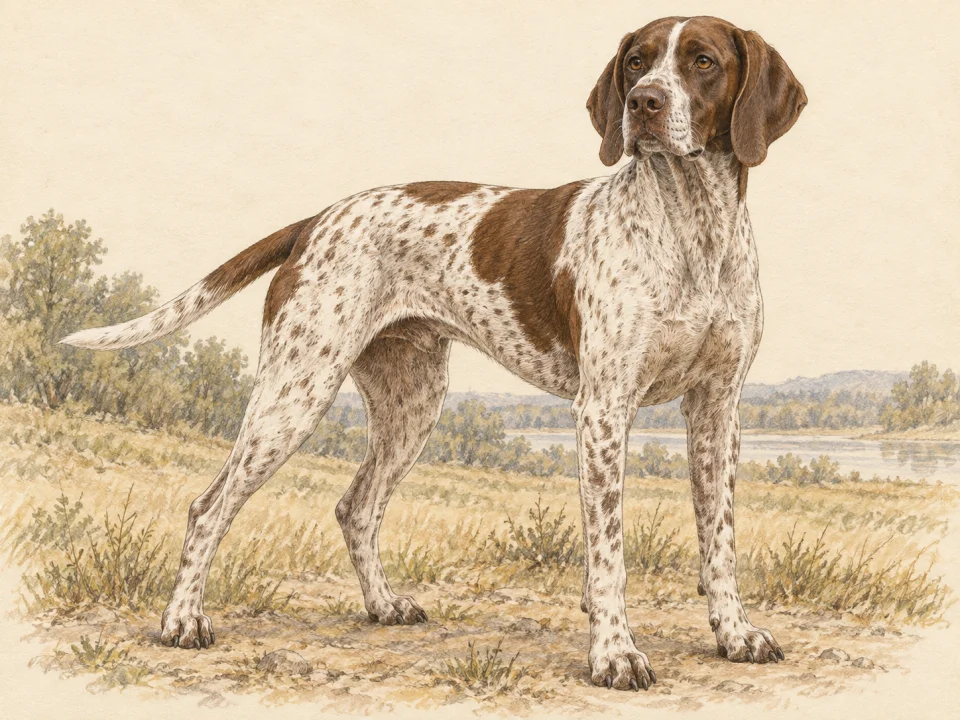
Choose the working relationship, not just the word calm
The FCI standard describes a pointing dog that progresses relatively slowly while maintaining contact with the hunter. This gives a more useful picture than treating every pointing breed as interchangeable. When meeting a breeder or rescue, ask to observe an adult on an ordinary outing as well as at home. Notice how the handler maintains contact, how the dog responds when distracted, and what activity preceded the quiet period indoors. If you do not hunt, discuss suitable scent-based activities and walks that you can genuinely provide. Write out both a normal weekday and a bad-weather day before deciding whether the arrangement fits. A standard describes the intended breed character; it does not prove that an untrained individual will remain close without a leash or settle automatically after any particular amount of exercise.[1]
Prepare for a substantial short-coated companion
AKC describes a short, dense coat, regular brushing and routine ear and nail care. This is a different grooming commitment from maintaining a long coat, but it still benefits from comfortable handling practice. Ask someone experienced to show you the brush and technique, and introduce small handling tasks with rewards rather than trying to finish everything at once. For training, AKC emphasizes calm, consistent cooperation. Keep a shared record of cues and rewards so the people walking the dog do not ask for the same behavior in conflicting ways. Before choosing a puppy, meet adult relatives where possible and discuss their actual size and routine. Test whether your transport, resting space and walking arrangements suit a strongly built dog; a breed’s label as medium-sized is not enough to answer those practical questions.[2]
Frequently asked questions
Are Old Danish Pointer and Old Danish Pointing Dog different breeds?
These names refer to the same Danish breed, listed by the FCI as Gammel Dansk Hønsehund, standard number 281.
Source [1]Does its close working style mean an Old Danish Pointer can walk off leash without training?
No. The standard describes intended working behavior with a hunter, not a guarantee about an individual pet. Develop the skills in secure conditions and use appropriate control around roads, wildlife and other hazards.
Source [1]Is the Old Danish Pointer suited only to an inactive home because it is described as calm?
No. AKC describes a dog that benefits from walks, field work or scent-based activities and regular engagement. Judge the match by the activity and companionship you can provide, rather than assuming calm means inactive.
Source [2]FAQ sources
Sources & methodology
Breed-level measurements and comparison scores provide context. They do not predict an individual dog's health, behaviour or suitability. Open the original publisher pages below to verify the facts and compare any later updates.
- Fédération Cynologique Internationale — Old Danish Pointing Dog, standard 281 ↗Reference 1 · reviewed 2026-09-27
- American Kennel Club — Old Danish Pointer ↗Reference 2 · reviewed 2026-09-27
Make it about your dog
Build a profile around your dog's age, experiences and everyday needs.
Meet your dog →Explore local care